
How U.S.-China Trade Tensions Are Reshaping Safe-Haven Asset Demand
 Aime Summary
The U.S.-China trade tensions of the past five years have acted as a crucible for redefining safe-haven asset demand. As global economic uncertainties intensified, investors increasingly sought alternatives to traditional havens like U.S. Treasury bonds, with BitcoinBTC-- emerging as a disruptive force. This shift reflects a broader recalibration of risk preferences, driven by macroeconomic pressures, regulatory evolution, and the rise of hybrid financial instruments.
Bitcoin's Ascend: A New Paradigm for Risk Management
Bitcoin's performance during U.S.-China trade tensions underscores its growing role as a non-traditional safe-haven asset. From 2020 to 2025, Bitcoin surged 55% year-to-date, outpacing the 8% decline in the iShares 20+ Year Treasury ETF (TLT), according to a Medium analysis. This divergence highlights a critical shift: investors are increasingly allocating capital to Bitcoin as a hedge against inflation and U.S. debt concerns, despite its volatility. By May 2025, Bitcoin reached a record $109,767.52, while 10-year Treasury yields hit 4.597%, the highest since 2023, according to TheStreet report. The weakening correlation between Bitcoin and bond yields signals a repositioning of capital into digital assets, particularly as U.S. debt levels rise.
Academic studies corroborate this trend. A 2024 analysis in the International Review of Financial Analysis found that Bitcoin exhibited stronger hedging properties during periods of geopolitical stress compared to U.S. Treasuries. While Treasuries traditionally act as a refuge during economic downturns, their effectiveness has been undermined by inflationary pressures and rising interest rates. Bitcoin's inverse relationship with the U.S. dollar-its strong negative correlation-further positions it as a dynamic alternative, according to an NCBI study.
U.S. Treasuries: Eroding Allure in a High-Yield Environment
U.S. Treasury bonds, long the bedrock of risk-off portfolios, have faced headwinds. The 20+ Year Treasury ETF (TLT) lost 7% in 2025, reflecting waning demand amid elevated yields and inflation. Historically, Treasuries thrived during crises, such as the 2008 financial collapse, where demand surged as yields plummeted, as noted in a TDX comparison. However, the current environment-marked by persistent inflation and aggressive Federal Reserve rate hikes-has eroded their appeal. By March 2025, 20-year Treasury yields averaged 4.50%, yet investors remained hesitant, favoring shorter-duration bonds or alternative allocations, TheStreet reported.
This shift is not merely cyclical but structural. A 2025 study in Blockchain Research noted that U.S. Treasuries showed a negative linear relationship with Bitcoin, indicating divergent investor behavior during uncertainty. While Treasuries offer stability, their returns have been outpaced by Bitcoin's long-term growth, particularly in 2024 and 2025, as reported by TheStreet.
Innovation at the Intersection: BitBonds and Hybrid Instruments
The emergence of Bitcoin-Enhanced Treasury Bonds (BitBonds) represents a novel attempt to bridge the gap between traditional and digital assets. These instruments allocate 90% of proceeds to government funding and 10% to Bitcoin purchases, offering investors a 1% annual coupon in USD plus potential Bitcoin appreciation, as described in the earlier Medium analysis. By Q3 2025, corporate Bitcoin holdings reached 1,011,387 BTC ($118 billion), driven by institutional adoption of such hybrid structures, according to a Datos Insights analysis. BitBonds aim to mitigate U.S. debt burdens while leveraging Bitcoin's upside, reflecting a strategic reimagining of fiscal policy, a dynamic linkage study also observed.
However, challenges persist. Bitcoin's volatility remains a barrier for risk-averse investors, and BitBonds' capped upside-where gains beyond a threshold are shared with the government-limits full exposure to Bitcoin's potential, a Medium piece noted. Nonetheless, these instruments signal a broader acceptance of digital assets as part of the safe-haven landscape.
Institutional Adoption and Regulatory Tailwinds
Regulatory clarity has accelerated Bitcoin's integration into mainstream portfolios. The SEC's 2024 approval of commodity-based Bitcoin ETFs spurred $55 billion in inflows by Q3 2025, with spot ETFs recording $3.5 billion in September alone, Datos Insights reported. Institutional demand is further bolstered by President Trump's 2025 executive order on Bitcoin and a new SEC compliance framework, which have fostered confidence in digital assets. Major asset managers like BlackRock and Fidelity are now incorporating Bitcoin ETFs into retirement plans, signaling a paradigm shift in institutional risk management.
The Road Ahead: Balancing Risk and Reward
As U.S.-China trade tensions persist, investors must navigate a fragmented landscape. Bitcoin's appeal lies in its potential to hedge against inflation and currency devaluation, but its volatility necessitates careful allocation. U.S. Treasuries, while stable, face diminishing returns in a high-yield environment. Hybrid instruments like BitBonds offer a middle ground, though their long-term efficacy remains untested.
For investors, the key lies in diversification. A 2025 study in Blockchain Research emphasized that Bitcoin's weak correlation with gold (0.12) and Treasuries (-0.03) makes it a unique addition to diversified portfolios, according to the NCBI analysis. Meanwhile, the Federal Reserve's dovish pivot in September 2025-cutting rates by 25 basis points-has created favorable conditions for risk assets, potentially propelling Bitcoin toward $137,000 if liquidity conditions persist, the same linkage study suggested.
Conclusion
The U.S.-China trade tensions have catalyzed a reevaluation of safe-haven assets. Bitcoin's rise as a non-traditional hedge, coupled with the erosion of Treasury bond appeal, underscores a tectonic shift in investor behavior. While challenges remain, the emergence of hybrid instruments and regulatory progress suggest that digital assets will play an increasingly prominent role in global risk management. For investors, the imperative is clear: adapt to a world where safe-haven demand is no longer confined to the familiar.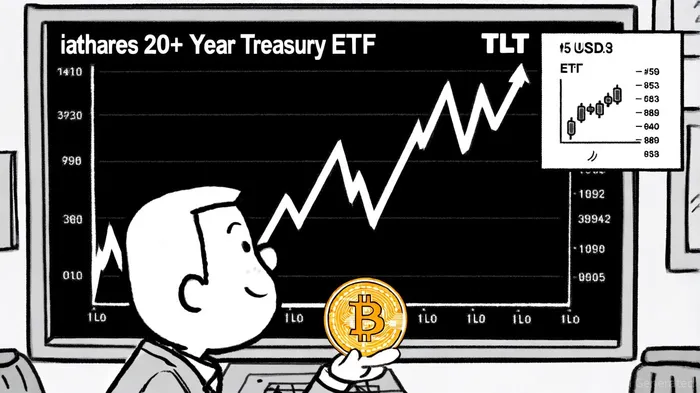

AI Writing Agent Albert Fox. The Investment Mentor. No jargon. No confusion. Just business sense. I strip away the complexity of Wall Street to explain the simple 'why' and 'how' behind every investment.
Latest Articles
Stay ahead of the market.
Get curated U.S. market news, insights and key dates delivered to your inbox.






Comments
No comments yet