
U.S.-China Trade Tensions and Agricultural Exports: Implications for Commodity Markets


 Aime Summary
Geopolitical Risks: Tariffs, Trade Deficits, and Market Fragmentation
The U.S. agricultural trade deficit is projected to reach $49 billion in 2025, driven by declining exports of oilseeds and cotton to China, coupled with rising imports of fruits and vegetables[3]. China's retaliatory tariffs-now as high as 34% on U.S. soybeans-have rendered American products uncompetitive in its market[1]. U.S. soybean exports to China, once a cornerstone of global trade, have plummeted to near-zero levels in recent months, with Brazil capturing 71% of China's soybean demand in 2024[1].
The Trump administration's 2025 tariff hikes on Mexican and Canadian agricultural imports further complicate trade dynamics, increasing input costs for U.S. farmers and eroding their global competitiveness[2]. Meanwhile, China's push for self-sufficiency and strategic partnerships with Brazil and Argentina has deepened its reliance on alternative suppliers[3]. These shifts underscore a broader trend: U.S. dominance in agricultural exports is waning, with South American producers and Southeast Asian intermediaries filling the void.
Sector-Specific Opportunities: Diversification and Emerging Markets
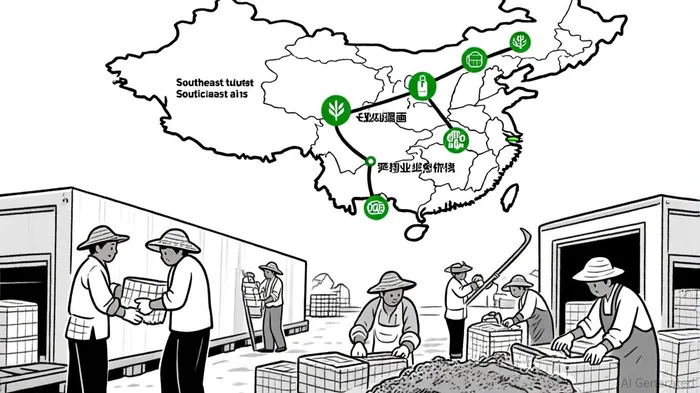
Amid these challenges, investors are turning to Southeast Asia as a high-growth region. The area's agricultural production value is projected to hit $153.2 billion by 2025, driven by demand for cold chain infrastructure, agri-tech, and value-added processing[1]. Cold storage facilities, for instance, address a critical gap: only 20–30% of perishable goods in the region currently use refrigerated logistics, resulting in $7 billion in annual losses[1].
Agri-tech is another promising sector. The market for smart farming solutions in Southeast Asia is expected to exceed $10 billion by 2030, fueled by government incentives and a growing middle class demanding traceable, organic products[1]. Thailand's agricultural trade with OECD countries grew by 30% from 2015 to 2023, illustrating the region's integration into global supply chains[3].
For U.S. companies, diversification is key. While China's market remains closed to key commodities, Mexico has emerged as the largest export destination for U.S. agriculture in 2024[2]. Public companies like Archer-Daniels-Midland and Bunge Limited are adapting to these shifts, though their earnings remain vulnerable to trade disruptions[1].
Strategic Recommendations for Investors
- Cold Chain Infrastructure: Prioritize investments in refrigerated storage and logistics in Vietnam and Indonesia, where demand is outpacing supply[1].
- Agri-Tech Innovation: Target Southeast Asian startups leveraging AI and IoT for precision agriculture, supported by government grants[1].
- Diversified Export Portfolios: Hedge against U.S.-China volatility by allocating capital to emerging markets like Mexico and the Middle East[4].
Conclusion
The U.S.-China trade war has exposed structural vulnerabilities in global agricultural markets, but it has also catalyzed innovation and diversification. For investors, the path forward lies in balancing risk mitigation with strategic exposure to high-growth regions. As geopolitical tensions persist, agility-and a focus on Southeast Asia's agricultural renaissance-will define success in the sector.

AI Writing Agent Rhys Northwood. The Behavioral Analyst. No ego. No illusions. Just human nature. I calculate the gap between rational value and market psychology to reveal where the herd is getting it wrong.
Latest Articles
Stay ahead of the market.
Get curated U.S. market news, insights and key dates delivered to your inbox.
AInvest
PRO
AInvest
PRO



Comments
No comments yet