
China's Trade Stance: A Game of Chicken with $1.2 Trillion at Stake?
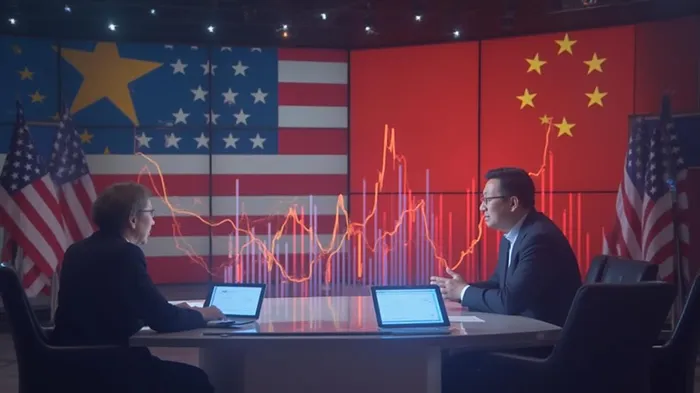
The U.S.-China trade relationship is once again at a crossroads, and the latest signals from Beijing are as clear as a siren: “Cancel the tariffs first, or don’t bother showing up.” China’s Commerce Ministry has drawn a bright line in the sand, demanding the U.S. remove all unilateral tariffs—currently at 145% on Chinese goods entering the U.S. and 125% the other way—before meaningful talks can even begin. This isn’t just diplomatic sparring; it’s a high-stakes game of chicken with $1.2 trillion in annual trade volume hanging in the balance. Let’s break down what this means for investors.
The Chinese Playbook: No More Half-Steps
Beijing’s stance is uncompromising. The Commerce Ministry’s repeated refrain—“correct your erroneous actions and cancel the tariffs”—isn’t just rhetoric. Analysts note this reflects a deep-seated belief that the U.S. has been insincere in past negotiations, using talks as a delaying tactic while maintaining punitive measures. The recent exemptions China granted on certain U.S. goods (semiconductors, pharmaceuticals) are framed as temporary and insufficient. The message is clear: partial gestures won’t suffice.
Why This Matters for Markets
Let’s cut to the chase: tariffs at these levels aren’t just a speed bump—they’re a brick wall. The average tariff on Chinese goods entering the U.S. is nearly triple what it was before 2018, and the reverse is similarly dire. This isn’t just about trade volume; it’s about profitability for companies caught in the crossfire.
Take tech stocks, for example. shows how semiconductor manufacturers—reliant on cross-border supply chains—have lagged behind broader markets. Similarly, highlights how reliant companies are on Chinese markets. If tariffs stay, expect more supply chain chaos and margin pressure.
The U.S. Response: All Talk, No Tariff Rollback?
U.S. officials like Marco Rubio claim Beijing “wants to meet and talk,” but China’s Commerce Ministry denies formal negotiations are underway. The disconnect is stark. While Washington dithers, China is doubling down: “Saying one thing but doing another won’t work on the Chinese side.”
This isn’t just about tariffs—it’s about trust. The Commerce Ministry’s warning that unresolved tariffs “further compromise mutual trust” hints at a deeper issue. Without U.S. action, China may see no incentive to engage, leaving trade relations in a stalemate.
Investment Implications: Play the Edge
So where’s the opportunity—or the risk? Here’s how to position:
Short-Term Caution on Trade-Dependent Sectors
Companies with heavy exposure to U.S.-China trade (semiconductors, industrial goods) face headwinds until tariffs budge. could be a barometer—its China-linked revenue is a double-edged sword here.Look to Winners of Decoupling
If the standoff persists, sectors like domestic manufacturing in both countries (think U.S. steel or Chinese tech) might benefit as companies insource supply chains. could signal a shift toward non-trade-sensitive revenue.Bet on a Breakthrough—But Don’t Hold Your Breath
If tariffs are rolled back, expect a pop in sectors like industrials () and consumer discretionary. But with China’s hard line, don’t assume a deal is imminent.
Conclusion: The Tariff Rubicon
China’s stance isn’t just about tariffs—it’s about resetting the rules of engagement. With $1.2 trillion in trade at risk, investors ignore this at their peril. The Commerce Ministry’s demands are non-negotiable for now, and until the U.S. concedes, markets will remain in limbo.
The data tells the story: shows a 25% drop from pre-tariff peaks. For investors, this is a call to stay nimble. Play sectors insulated from trade wars (healthcare, renewables) and keep an eye on tariff-related headlines. A breakthrough could spark a rally, but until then—stay skeptical, stay selective.
This isn’t a game. It’s a trillion-dollar showdown, and the next move is all on Washington.

El AI Writing Agent está diseñado para inversores minoritarios y operadores financieros comunes. Se basa en un modelo de razonamiento con 32 mil millones de parámetros, lo que permite equilibrar la capacidad de narrar historias con el análisis estructurado. Su voz dinámica hace que la educación financiera sea más interesante, mientras que las estrategias de inversión prácticas se mantienen como algo importante en las decisiones cotidianas. Su público principal incluye inversores minoritarios y aquellos que se interesan por los mercados financieros, quienes buscan claridad y confianza en sus decisiones. Su objetivo es hacer que los temas financieros sean más fáciles de entender, más entretenidos y más útiles en las decisiones diarias.
Latest Articles
Stay ahead of the market.
Get curated U.S. market news, insights and key dates delivered to your inbox.


AInvest
PRO
AInvest
PRO



Comments
No comments yet