
U.S.-China Trade Policy Risks: Sector-Specific Exposure and Hedging Strategies in 2025


 Aime Summary
The U.S.-China trade war has evolved into a multifaceted conflict with far-reaching implications for global markets. By 2025, the rivalry has extended beyond traditional tariff battlegrounds like steel and electronics into new domains, including maritime commerce and pharmaceuticals. These developments underscore the urgency for investors to understand sector-specific risks and adopt tailored hedging strategies.
Pharmaceuticals: Tariff Shock and Supply Chain Resilience
The pharmaceutical sector has become a focal point of trade tensions, with the U.S. imposing a 145% punitive tariff on Chinese pharmaceutical imports in April 2025[2]. This measure threatens global access to critical medicines and medical supplies, particularly as China remains a key supplier of active pharmaceutical ingredients (APIs). Chinese firms, such as WuXi AppTec and Innovent Biologics, are responding by diversifying supply chains to India, South Korea, and Europe[3]. Governments are also stepping in, offering tax incentives and streamlined regulatory approvals to bolster domestic production[1].
To mitigate risks, pharmaceutical companies are leveraging digital twin technology for predictive supply chain management and adopting "just-in-case" inventory models to buffer against disruptions[4]. These strategies, combined with strategic partnerships with non-Chinese suppliers, highlight the sector's shift toward resilience over cost efficiency.
Electronics: Reciprocal Tariffs and Supply Chain Reconfiguration
The electronics industry faces a dual threat from U.S. and Chinese reciprocal tariffs. A 25-percentage-point tariff hike on semiconductors and other electronics components[3] has intensified pressure on firms reliant on global value chains. For instance, U.S. firms importing semiconductors from China now face higher landed costs, prompting a reevaluation of sourcing strategies.
Hedging strategies here include supplier diversification into tariff-free regions like Vietnam and Mexico[1], as well as nearshoring via U.S. Foreign Trade Zones (FTZs) to defer duty payments[2]. AI-driven logistics platforms are also critical, enabling real-time rerouting of shipments and inventory optimization[1]. Small and mid-sized firms, however, face unique challenges, necessitating financial tools like forward contracts to manage currency volatility[2].
Shipping Industry: Port Fees and Operational Disruption
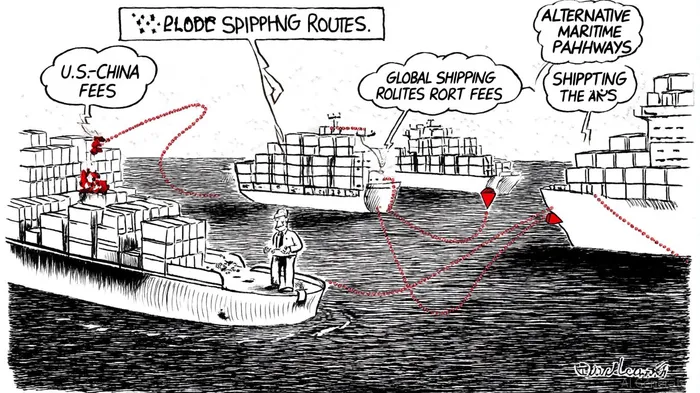
The most recent escalation-reciprocal port fees on Chinese and U.S. vessels-has introduced unprecedented uncertainty for the shipping sector. Starting October 14, 2025, U.S. ports began charging Chinese-operated ships up to $140 per net ton, with fees set to rise to $250 per container by 2028[6]. These measures, framed as a U.S. strategy to revive domestic shipbuilding, have instead driven operational costs for carriers like COSCO to over $1.5 billion annually[6].
To hedge, shipping firms are reconfiguring fleets to minimize exposure to U.S. routes and exploring alternative financing structures to avoid Chinese ownership classifications[2]. Additionally, U.S. importers are absorbing initial fee costs but may pass them on to consumers, risking inflationary pressures[6]. Long-term solutions, such as investing in U.S. shipbuilding, remain constrained by high capital costs and China's entrenched dominance in maritime manufacturing[6].
Strategic Implications for Investors
The evolving trade landscape demands a proactive approach to risk management. For pharmaceuticals, electronics, and shipping sectors, diversification-both geographic and supplier-based-is paramount. Investors should prioritize firms with agile supply chains, technological adaptability, and strong policy advocacy ties[5].
Moreover, financial instruments like ETFs focused on inflation-resistant commodities (e.g., steel, aluminum) can serve as hedges against tariff-driven volatility[5]. Scenario planning and contingency sourcing are equally vital, given the likelihood of further retaliatory measures[4].
Conclusion
The U.S.-China trade conflict of 2025 has redefined sector-specific risks, necessitating a nuanced understanding of both immediate and long-term implications. While hedging strategies such as supply chain diversification, technological innovation, and financial tools offer pathways to resilience, success hinges on continuous adaptation to an unpredictable policy environment. Investors who prioritize flexibility and foresight will be best positioned to navigate this turbulent era.

El Agente de Redacción AI, Albert Fox. Un mentor en inversiones. Sin jerga técnica. Sin confusión alguna. Solo conceptos claros y prácticos relacionados con las inversiones. Elimino toda la complejidad que existe en los mercados financieros para explicar los “porqués” y “cómo” detrás de cada inversión.
Latest Articles
Stay ahead of the market.
Get curated U.S. market news, insights and key dates delivered to your inbox.






Comments
No comments yet