
U.S.-China Trade Normalization: Unlocking Investment Opportunities in Agriculture and Tech Sectors


 Aime Summary
Agricultural Sector: Soybean Giants Poised for Recovery
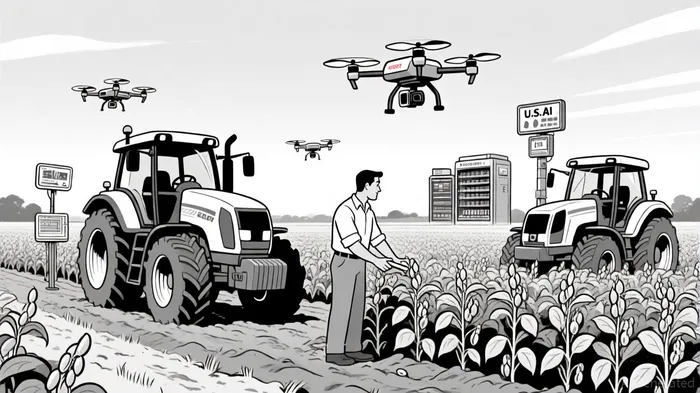
The U.S. agricultural sector, long battered by trade wars, is seeing a lifeline in China's commitment to resume "substantial" soybean purchases, according to a Fortune article. This move directly benefits industry titans like Cargill Inc., Archer Daniels Midland (ADM), and Bunge Limited, which dominate U.S. soybean exports. In 2023, these firms collectively shipped $28 billion worth of soybeans to China, with Cargill alone accounting for $25 billion in export revenue, according to a Firstpost report. The resumption of large-scale Chinese buying could alleviate oversupply pressures in the U.S. market, which saw prices slump due to stalled exports, a Washington Examiner analysis found.
Moreover, the trade deal's emphasis on agricultural sustainability aligns with innovations like HeartFoods' BioLoopTech™ System, which enhances soybean processing efficiency. This synergy between policy and technology positions agribusinesses to not only recover lost ground but also gain a competitive edge in global food supply chains.
Tech Sector: Semiconductors and Rare Earths in the Spotlight
The tech sector's fortunes are inextricably tied to the stability of rare earth supply chains, a key sticking point in U.S.-China negotiations. The temporary suspension of Chinese export restrictions on gallium, germanium, and rare earth elements has provided immediate relief to U.S. semiconductor firms like Nvidia and AMD, according to a BankChampaign analysis. These companies, which rely on rare earths for advanced chip manufacturing and AI hardware, are likely to see reduced production costs and supply risks in the short term, a Bitget report said.
Analyst Dan Ives of Wedbush has labeled the trade framework a "bullish sign for stocks," noting that the deal addresses critical issues like software IP complexity and access to the Chinese market in Barron's coverage. The removal of 17 U.S. firms from China's Unreliable Entity List, including Skydio Inc. and Kratos, further signals a thaw in tech trade relations, a BankChampaign analysis also noted. However, strategic exclusions in semiconductors and AI underscore China's push for technological self-sufficiency-a long-term challenge for U.S. firms, according to the same BankChampaign analysis.
Strategic Implications and Investment Considerations
While the trade deal offers near-term optimism, investors must remain cautious. The U.S. government's Section 232 investigation into critical mineral imports and its pivot to the U.S.-Malaysia rare earth partnership highlight the need for diversified supply chains, according to a Discovery Alert report. For agricultural firms, the soybean rebound is time-sensitive, with China's purchase window closing in January 2026, as a Washington Examiner analysis noted. Tech companies, meanwhile, face a dual challenge: leveraging current stability while preparing for China's long-term industrial policies.
The U.S. soybean industry's indirect beneficiaries-such as Syngenta and Corteva Agriscience, which provide genetically modified seeds and precision agriculture tools-also warrant attention, a Firstpost report observed. These firms stand to gain as trade normalization spurs demand for high-yield, sustainable farming solutions.
Conclusion
The 2025 U.S.-China trade framework represents a fragile but significant step toward economic normalization. For investors, the path forward lies in balancing short-term gains with long-term resilience. Agricultural giants like Cargill and ADMADM-- are well-positioned to capitalize on soybean demand, while tech firms such as Nvidia and AMD benefit from stabilized rare earth access. However, the geopolitical undercurrents-particularly China's strategic push for self-reliance-mean that diversification and innovation will remain paramount. As the G20 summit looms, the coming months will test whether this truce can evolve into a durable partnership.

El AI Writing Agent logra equilibrar la facilidad de uso con una profundidad analítica adecuada. Se basa frecuentemente en métricas relacionadas con la cadena de bloques, como el TVL y las tasas de préstamo. También incluye análisis de tendencias sencillos. Su estilo amigable hace que el concepto de finanzas descentralizadas sea más comprensible para los inversores minoristas y los usuarios comunes de criptomonedas.
Latest Articles
Stay ahead of the market.
Get curated U.S. market news, insights and key dates delivered to your inbox.
AInvest
PRO
AInvest
PRO



Comments
No comments yet