
U.S.-China Tensions Rising Again as American Vessels Face New Port Fees Following Rare Earth Export Curbs


China’s Ministry of Transport announced on Friday that vessels owned or operated by U.S. firms and individuals — or those built in the United States or flying the U.S. flag — will face new port fees per voyage starting October 14. The move is a direct countermeasure against the upcoming U.S. port fees on Chinese ships.
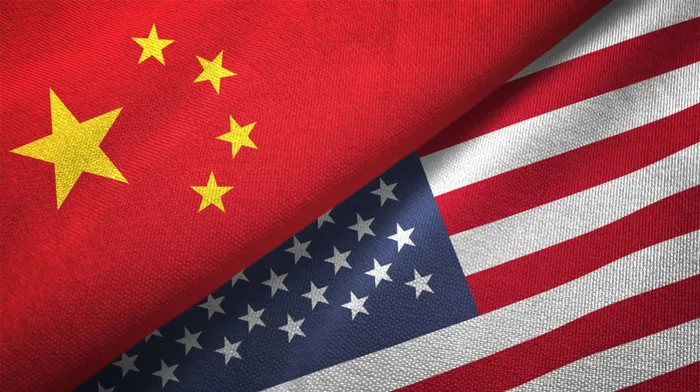
Beginning the same day, ships built in China or operated or owned by Chinese entities will also be subject to new U.S. port fees, potentially exceeding $1 million for a ship carrying more than 10,000 containers. Analysts expect these charges to increase annually through 2028.
According to China’s transport ministry, U.S. vessels berthing at Chinese ports will initially be charged 400 yuan ($56.13) per net tonne from October 14, rising to 640 yuan ($89.81) in April 2026, 880 yuan ($123.52) in April 2027, and 1,120 yuan ($157.16) in April 2028. The ministry criticized the U.S. fees as “discriminatory,” claiming they “severely damage the legitimate interests of China’s shipping industry and undermine the stability of the global supply chain.”
The U.S. fees on China-linked vessels follow a U.S. Trade Representative (USTR) investigation aimed at reviving domestic shipbuilding and countering China’s growing dominance in both commercial and military ship production. Last year, Chinese shipyards built over 1,000 commercial vessels, while the U.S. constructed fewer than ten.
Meanwhile, China introduced new restrictions on exports of rare earths and related technology on Thursday, further escalating tensions. The Ministry of Commerce expanded its “unreliable entities list,” targeting U.S. defense technology companies reliant on Chinese rare earths, as well as the Halifax International Security Forum in Canada.
The updated rules broaden the list of rare earth materials requiring export licenses, limit the types of recycling and processing equipment that can be exported, and tighten restrictions on the use of Chinese rare earths in overseas semiconductor and military applications.
These measures come less than a month before U.S. President Donald Trump and Chinese leader Xi Jinping are expected to meet in South Korea during the Asia-Pacific Economic Cooperation (APEC) summit — their first in-person meeting in nearly a year.
Tensions between the two superpowers have deepened since September, as both sides struggle to move beyond a temporary 90-day tariff truce set to expire in early November. The ongoing trade conflict has already slowed Chinese imports of U.S. agricultural and energy products.

Expert analysis on U.S. markets and macro trends, delivering clear perspectives behind major market moves.
Latest Articles
Stay ahead of the market.
Get curated U.S. market news, insights and key dates delivered to your inbox.


AInvest
PRO
AInvest
PRO



Comments
No comments yet