
China's Tech Sector: Navigating Growth and Contraction in a Fragmented Landscape
 Aime Summary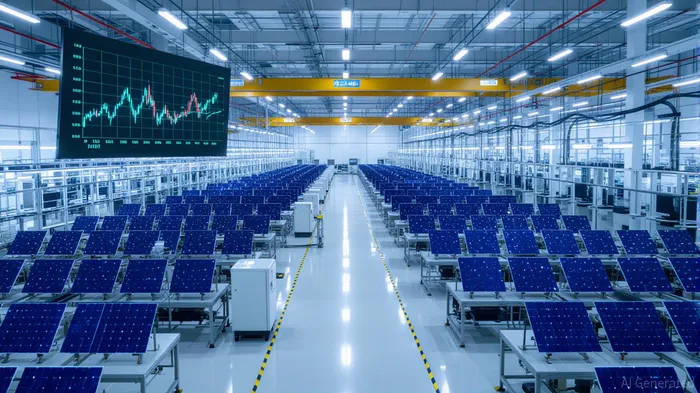
The Chinese technology sector in 2025 is a study in contrasts. On one hand, it remains a global powerhouse of innovation, with high-tech manufacturing sectors like robotics, electric vehicles (EVs), and green energy surging ahead. On the other, structural weaknesses in the broader economy—deflationary pressures, overcapacity, and a collapsing real estate market—are creating headwinds that rippleXRP-- through the supply chain, particularly for semiconductor suppliers. For investors, the challenge lies in disentangling the sector's resilience from its vulnerabilities, and understanding how these dynamics will reshape global tech markets.
The Dual Engine of Growth and Contraction
China's high-tech manufacturing sector has outperformed the broader economy in 2025. Industrial robot production, a key indicator of automation adoption, grew by 37.9% year-on-year in June 2025, while new energy vehicle (NEV) output expanded by 18.8%. Solar cell production also surged by 24.1%, reflecting the government's push for green energy. These figures underscore China's strategic pivot toward self-reliance in critical technologies, supported by state-backed investment and policy incentives.
Yet, beneath this optimism lies a darker undercurrent. The automotive sector, a cornerstone of China's tech-driven industrial strategy, saw profits contract by 12.5% in May 2025 due to aggressive price wars. Mining profits plummeted by 29.6%, and real estate investment fell 11.2% year-on-year in the first half of 2025. These contractions are not isolated; they are symptomatic of a broader economic slowdown driven by weak consumer demand, high youth unemployment (14.5%), and a debt-laden household sector.
For semiconductor suppliers, the implications are twofold. While demand for chips in EVs, robotics, and green energy remains robust, the overcapacity in these sectors—particularly in EVs and solar panels—threatens to erode margins. The People's Bank of China's “moderately loose” monetary policy, including a 1.4% 7-day reverse repo rate and CNY 1 trillion in liquidity injections, has yet to stimulate sufficient demand to offset these pressures.
Geopolitical and Structural Risks
The U.S.-China tech rivalry adds another layer of complexity. U.S. export controls on advanced semiconductors and manufacturing equipment have forced Chinese firms to rely on domestic alternatives, which are less powerful and slower to develop. Huawei's Kunlun and Baidu's PaddlePaddle are notable efforts to bridge this gap, but they lag behind U.S. frameworks like PyTorch and TensorFlow in adoption and performance.
This dependency on domestic substitutes creates a dual risk for global semiconductor suppliers. First, it reduces the market share of foreign firms in China's high-tech sector. Second, it accelerates the development of a parallel ecosystem that could eventually rival global standards. For investors, this means a long-term shift in market dynamics, where early exits from China-focused supply chains could be costly.
Strategic Recommendations for Investors
- Diversify Exposure to Resilient Sectors: While the broader economy struggles, high-tech manufacturing and AI remain growth engines. Investors should prioritize companies with strong R&D pipelines in AI, green energy, and automation. For example, firms like Tencent and Xiaomi, which are expanding into EVs and IoT, offer exposure to China's innovation-driven sectors.
- Hedge Against Overcapacity: The EV and solar panel markets are at risk of deflationary spirals due to overproduction. Investors should monitor inventory levels and pricing trends in these sectors. A could provide insights into how global EV leaders are navigating similar challenges.
- Assess Geopolitical Exposure: Companies reliant on China for semiconductor demand must evaluate the risks of U.S. export controls and domestic substitution. For instance, TSMC's recent investments in U.S. and EU manufacturing hubs reflect a strategic shift to mitigate these risks.
- Leverage AI and ESG Trends: The global AI market is projected to grow at a 29% CAGR from 2024 to 2028, with China's state-backed AI initiatives driving adoption. Similarly, ESG-focused investments in green manufacturing and sustainable supply chains are gaining traction.
The Road Ahead
China's tech sector is at a crossroads. While the government's push for self-reliance and innovation is creating opportunities in AI, robotics, and green energy, the broader economic slowdown and geopolitical tensions pose significant risks. For investors, the key is to balance optimism about long-term growth with caution in the near term.
The ripple effects of China's slowing tech demand will be felt globally, particularly in semiconductor markets. Companies that adapt to this fragmented landscape—by diversifying supply chains, investing in R&D, and aligning with ESG trends—will be best positioned to navigate the uncertainties ahead. As the world watches China's tech sector evolve, the lesson is clear: resilience in the face of complexity is the hallmark of a successful investor.

Stay ahead of the market.
Get curated U.S. market news, insights and key dates delivered to your inbox.


AInvest
PRO
AInvest
PRO



Comments
No comments yet