
China's Teapot Refiners Secure Iranian Crude Amid Falling Prices and Geopolitical Tensions
 Aime Summary
Chinese independent refiners, known as ',' are securing Iranian crude as oil prices fall below $100 per barrel. This follows a U.S.-led two-week ceasefire in the Middle East and assurances from Iran regarding the safe passage of tankers through the Strait of Hormuz.
The Chinese government has allocated a new batch of crude oil import quotas to ensure fuel supply stability amid geopolitical tensions and price fluctuations. Refiners are leveraging lower prices to secure supplies while maintaining production at average rates to meet domestic demand.
- Global fuel supply disruptions, particularly in the , are affecting jet fuel and crude oil supply chains. This has led to a sharp increase in fuel prices and forced airlines to cut flights and raise fares. The situation is particularly acute for carriers without long-term fuel contracts, who are adjusting operations to mitigate losses.
What Drives Chinese Refiners to Secure Iranian Crude?
The recent drop in global oil prices has created an opportunity for Chinese independent refiners to acquire crude oil at lower costs. This is a strategic move to manage supply disruptions and offset high feedstock costs.
The Chinese government's allocation of new crude oil import quotas has enabled refiners to secure Iranian crude oil, ensuring domestic fuel supply amid volatile global markets. This strategy is part of a broader effort to stabilize production and costs.
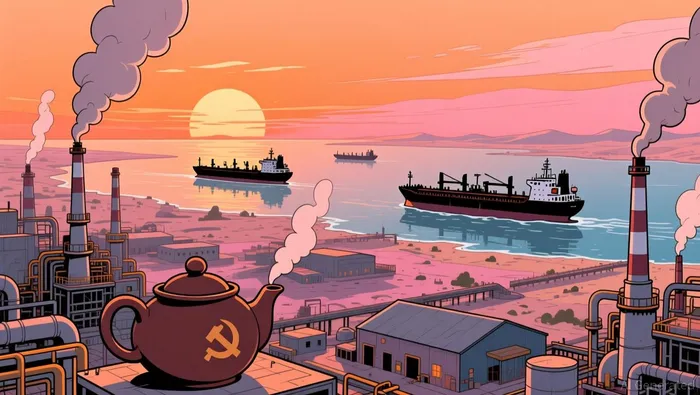
- Despite lower crude prices, refiners are still facing losses due to high feedstock costs, with average losses at nearly $21 per barrel. The government has mandated the refining sector to maintain production levels to ensure fuel supply for the domestic market.
How Are Geopolitical Tensions Affecting Global Fuel Supply Chains?
The closure of the Strait of Hormuz is severely limiting the supply of jet fuel and crude oil, causing a sharp increase in fuel prices and forcing airlines to cut flights and raise fares. This supply disruption is compounding the financial strain on an already pressured industry.
Jet fuel prices have surged to record levels due to the US-Israeli war with Iran, leading to flight cancellations and fare hikes across global airlines. The European benchmark jet fuel price , more than double the pre-war level.
The closure of the Strait of Hormuz has exacerbated the crisis in the airline industry. Airlines are responding by cutting flights and increasing ticket prices to offset fuel costs. The situation is particularly acute for carriers without long-term fuel contracts, who are now forced to implement price hikes and flight reductions to mitigate losses.
The International Air Transport Association () has indicated that even if the Strait of Hormuz reopens, it could take months for jet fuel supply to normalize. The disruption in refining capacity across the Middle East has significantly impacted global supply chains, especially for jet fuel.
Airlines in Asia are particularly affected, with many adding refueling stops and carrying extra fuel from home airports. Lower-income, import-dependent markets like Vietnam and Myanmar are experiencing the most pain as jet fuel prices have nearly doubled. China and Thailand have stopped jet fuel exports, while South Korea has limited them.

Stay ahead of the market.
Get curated U.S. market news, insights and key dates delivered to your inbox.


AInvest
PRO
AInvest
PRO



Comments
No comments yet