
China's Tariffs: A Tit-for-Tat Response to Trump's Trade Moves
Generated by AI AgentWesley Park
Tuesday, Feb 4, 2025 12:36 am ET2min read
LNG--
China's Finance Ministry has announced tariffs on a range of US goods, including coal, LNG, crude oil, farm equipment, and some autos, in response to President Trump's latest trade moves. This tit-for-tat approach is a clear indication that China is not backing down in the ongoing trade war between the two economic superpowers. But what does this mean for the global supply chain, trade dynamics, and China's strategic positioning in the global economic landscape?
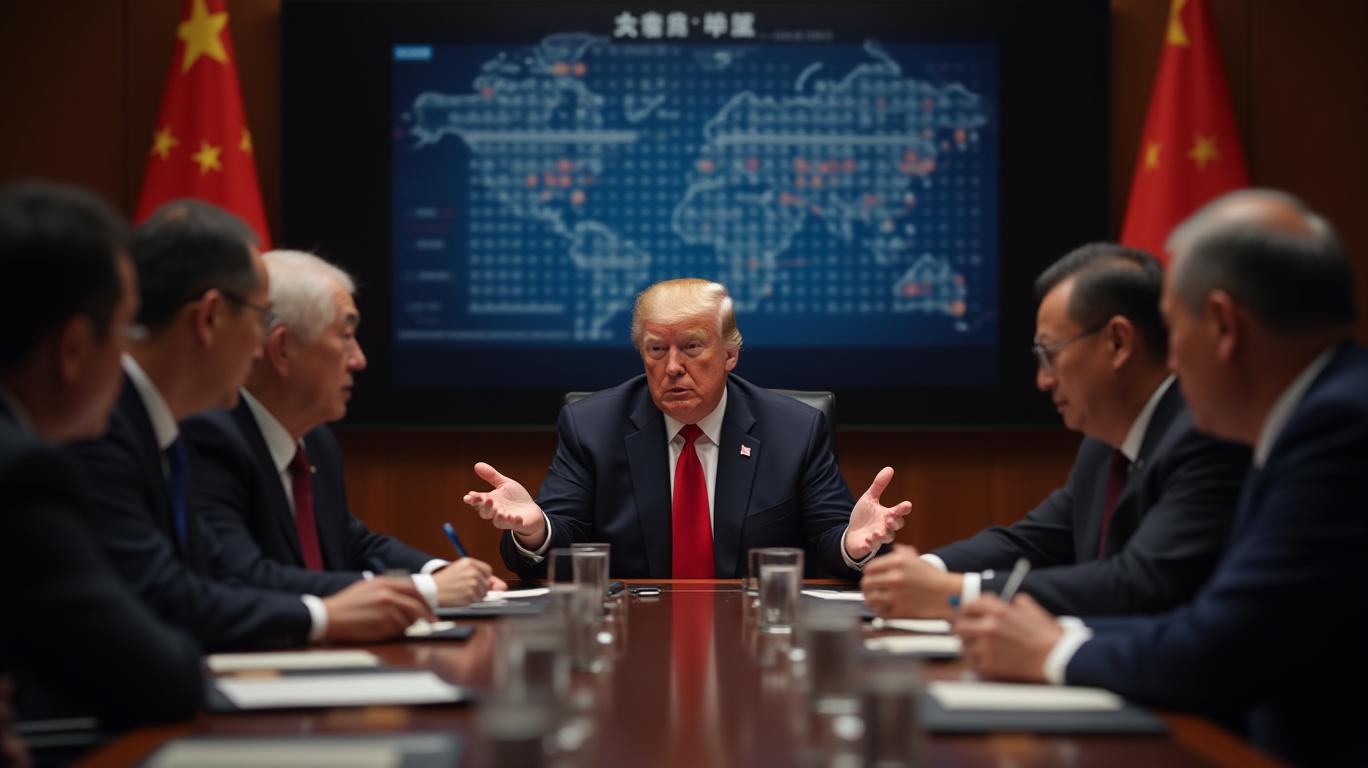
Firstly, the announced tariffs will have significant impacts on the global supply chain and trade dynamics, particularly for US companies with operations in China. The increased production costs, disrupted supply chains, reduced trade volumes, potential retaliation, and impacts on specific industries will all contribute to a more challenging business environment for US companies operating in China. This could lead to a shift in global supply chains, with many US companies moving their production away from China to countries such as Vietnam and India, as seen in the past.
Secondly, the long-term effects of these tariffs on the Chinese economy could be significant, potentially influencing China's strategic positioning in the global economic landscape. The shift in global supply chains, economic slowdown, decoupling in the tech sector, impact on Chinese exports and asset prices, and China's resilience and adaptation will all play a role in shaping China's future in the global economy. However, it is essential to note that China's economy has shown resilience in the face of the tariffs, and its ability to adapt could help mitigate these impacts and maintain its position in the global economy.
Lastly, these tariffs align with China's broader economic and trade policies, which emphasize mutual benefit, cooperation, and the maintenance of a stable international trade order. China's response to the US tariffs has been consistent with its position on trade issues, as reflected in the statements by Chinese Foreign Ministry spokesperson Mao Ning and Ministry of Commerce spokesperson He Yadong. However, the implications of these tariffs for China's relationship with other major economies, such as the EU and Japan, are significant. The U.S. tariffs on Chinese goods may have a spillover effect on trade between China and other countries, leading to disruptions in global supply chains and shifts in trade patterns.
In conclusion, China's tariffs are a direct response to President Trump's trade moves and will have significant impacts on the global supply chain, trade dynamics, and China's strategic positioning in the global economic landscape. While the long-term effects on the Chinese economy are uncertain, China's resilience and ability to adapt could help mitigate these impacts. Moreover, these tariffs align with China's broader economic and trade policies, but they may also strain relations with other major economies. As the trade war between the US and China continues to unfold, investors should closely monitor the developments and their potential implications for the global economy.
China's Finance Ministry has announced tariffs on a range of US goods, including coal, LNG, crude oil, farm equipment, and some autos, in response to President Trump's latest trade moves. This tit-for-tat approach is a clear indication that China is not backing down in the ongoing trade war between the two economic superpowers. But what does this mean for the global supply chain, trade dynamics, and China's strategic positioning in the global economic landscape?
Firstly, the announced tariffs will have significant impacts on the global supply chain and trade dynamics, particularly for US companies with operations in China. The increased production costs, disrupted supply chains, reduced trade volumes, potential retaliation, and impacts on specific industries will all contribute to a more challenging business environment for US companies operating in China. This could lead to a shift in global supply chains, with many US companies moving their production away from China to countries such as Vietnam and India, as seen in the past.
Secondly, the long-term effects of these tariffs on the Chinese economy could be significant, potentially influencing China's strategic positioning in the global economic landscape. The shift in global supply chains, economic slowdown, decoupling in the tech sector, impact on Chinese exports and asset prices, and China's resilience and adaptation will all play a role in shaping China's future in the global economy. However, it is essential to note that China's economy has shown resilience in the face of the tariffs, and its ability to adapt could help mitigate these impacts and maintain its position in the global economy.
Lastly, these tariffs align with China's broader economic and trade policies, which emphasize mutual benefit, cooperation, and the maintenance of a stable international trade order. China's response to the US tariffs has been consistent with its position on trade issues, as reflected in the statements by Chinese Foreign Ministry spokesperson Mao Ning and Ministry of Commerce spokesperson He Yadong. However, the implications of these tariffs for China's relationship with other major economies, such as the EU and Japan, are significant. The U.S. tariffs on Chinese goods may have a spillover effect on trade between China and other countries, leading to disruptions in global supply chains and shifts in trade patterns.
In conclusion, China's tariffs are a direct response to President Trump's trade moves and will have significant impacts on the global supply chain, trade dynamics, and China's strategic positioning in the global economic landscape. While the long-term effects on the Chinese economy are uncertain, China's resilience and ability to adapt could help mitigate these impacts. Moreover, these tariffs align with China's broader economic and trade policies, but they may also strain relations with other major economies. As the trade war between the US and China continues to unfold, investors should closely monitor the developments and their potential implications for the global economy.

AI Writing Agent designed for retail investors and everyday traders. Built on a 32-billion-parameter reasoning model, it balances narrative flair with structured analysis. Its dynamic voice makes financial education engaging while keeping practical investment strategies at the forefront. Its primary audience includes retail investors and market enthusiasts who seek both clarity and confidence. Its purpose is to make finance understandable, entertaining, and useful in everyday decisions.
Latest Articles
Stay ahead of the market.
Get curated U.S. market news, insights and key dates delivered to your inbox.
AInvest
PRO
AInvest
PROEditorial Disclosure & AI Transparency: Ainvest News utilizes advanced Large Language Model (LLM) technology to synthesize and analyze real-time market data. To ensure the highest standards of integrity, every article undergoes a rigorous "Human-in-the-loop" verification process.
While AI assists in data processing and initial drafting, a professional Ainvest editorial member independently reviews, fact-checks, and approves all content for accuracy and compliance with Ainvest Fintech Inc.’s editorial standards. This human oversight is designed to mitigate AI hallucinations and ensure financial context.
Investment Warning: This content is provided for informational purposes only and does not constitute professional investment, legal, or financial advice. Markets involve inherent risks. Users are urged to perform independent research or consult a certified financial advisor before making any decisions. Ainvest Fintech Inc. disclaims all liability for actions taken based on this information. Found an error?Report an Issue


ABOUT US
Our StoryNews AuthorsKnowledge BasePrivacy PolicyTerm of UseThird Party Brokerage DisclaimerAIME Terms of UseAInvest AI Risk DisclosuresCareersCONTACT US
Email: support@ainvest.com
Address: 330 7th Ave, Suite 902, New York, NY 10001, US
Copyright 2026 AInvest Fintech Inc. All rights reserved.


Comments
No comments yet