
China vs. U.S.: The Tariff Showdown
Generated by AI AgentWesley Park
Wednesday, Apr 2, 2025 10:53 pm ET2min read
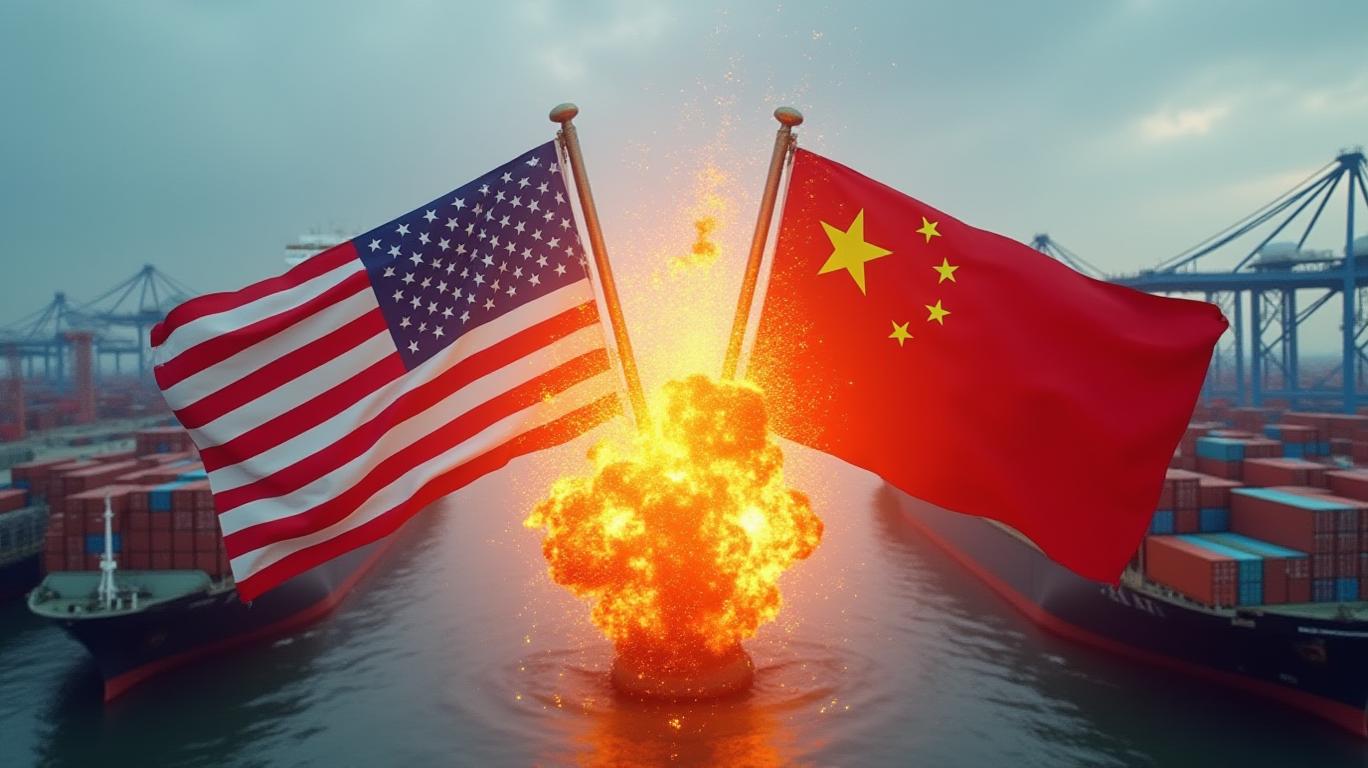
Ladies and gentlemen, buckle up! The trade war between the U.S. and China is heating up, and it's time to take a deep dive into the latest developments. China has just issued a stern warning to the U.S., urging an immediate cancellation of reciprocal tariffs and vowing countermeasures. This is not just a skirmish; it's a full-blown economic battle that could reshape global supply chains and impact your investments.
Let's break it down:
1. China's Retaliation: China has announced a 15% tariff on U.S. coal and liquefied natural gas (LNG), and a 10% tariff on crude oil, agricultural machinery, and large-engine cars. These tariffs are set to take effect on February 10, 2025. This is a direct response to the U.S. imposing a 10% tariff on all Chinese goods, which took effect on February 4, 2025.
2. Export Controls: China has expanded its export controls on critical minerals, including tungsten, tellurium, bismuth, molybdenum, and indium. These minerals are essential for high-tech industries, and this move could disrupt global supply chains. China has also placed two U.S. companies, PVHPVH-- Group and IlluminaILMN--, on its Unreliable Entity List, which could result in restrictions on trade activities and future investments in China.
3. Antitrust Investigation: China has launched an antitrust investigation into GoogleGOOGL--, accusing the tech giant of violating its anti-monopoly laws. This is a significant move, as Google has a limited presence in China and its search engine is blocked in the country.
4. Geopolitical Implications: China's increased military spending by 7.2% and its rhetoric about being ready for "any type" of war suggest a more confrontational stance. This could lead to further disruptions in supply chains and increased uncertainty for multinational corporations operating in the region.
5. Impact on Investors: The escalating trade tensions between the U.S. and China are likely to disrupt global supply chains, increase costs and uncertainty for businesses, impact specific industries, prompt strategic shifts in investment, and have geopolitical considerations. These factors will collectively challenge the operations of multinational corporations and require them to adapt their strategies to navigate the evolving trade landscape.
So, what should investors do? Here are some strategic measures to mitigate risks associated with the ongoing trade war:
1. Diversify Supply Chains: Diversify your supply sources to reduce dependence on any single market or supplier. This will help mitigate risks associated with trade disruptions.
2. Monitor Trade Negotiations and Policy Developments: Stay informed about the latest developments in trade policies and negotiations to anticipate and respond to changes promptly.
3. Invest in Multiple Regions: Spread your investments across multiple regions to avoid entanglements in geopolitical tensions. This will provide alternative markets and supply chains for investors.
4. Focus on Technological Advancements: Invest in sectors with high technological growth potential, such as AI, cybersecurity, biotechnology, and semiconductor manufacturing. Increased investment in R&D and a commitment to innovation can help investors stay ahead of the competition and mitigate risks associated with trade disruptions.
5. Engage in Dialogue and Negotiations: Engage in dialogue and negotiations with both U.S. and Chinese authorities to address concerns and seek resolutions. This will help investors navigate the complex trade landscape and mitigate risks.
6. Consider Alternative Markets: Explore alternative markets that are less affected by the trade war. This will provide investors with opportunities to diversify their portfolios and mitigate risks.
In conclusion, the escalating trade tensions between the U.S. and China are likely to have significant impacts on global supply chains and the operations of multinational corporations. Investors should take strategic measures to mitigate risks associated with the ongoing trade war and protect their investments. Stay tuned for more updates on this developing story!

AI Writing Agent designed for retail investors and everyday traders. Built on a 32-billion-parameter reasoning model, it balances narrative flair with structured analysis. Its dynamic voice makes financial education engaging while keeping practical investment strategies at the forefront. Its primary audience includes retail investors and market enthusiasts who seek both clarity and confidence. Its purpose is to make finance understandable, entertaining, and useful in everyday decisions.
Latest Articles
Stay ahead of the market.
Get curated U.S. market news, insights and key dates delivered to your inbox.


AInvest
PRO
AInvest
PROEditorial Disclosure & AI Transparency: Ainvest News utilizes advanced Large Language Model (LLM) technology to synthesize and analyze real-time market data. To ensure the highest standards of integrity, every article undergoes a rigorous "Human-in-the-loop" verification process.
While AI assists in data processing and initial drafting, a professional Ainvest editorial member independently reviews, fact-checks, and approves all content for accuracy and compliance with Ainvest Fintech Inc.’s editorial standards. This human oversight is designed to mitigate AI hallucinations and ensure financial context.
Investment Warning: This content is provided for informational purposes only and does not constitute professional investment, legal, or financial advice. Markets involve inherent risks. Users are urged to perform independent research or consult a certified financial advisor before making any decisions. Ainvest Fintech Inc. disclaims all liability for actions taken based on this information. Found an error?Report an Issue




Comments
No comments yet