
China's Tariff Retaliation: Restrained So Far, But for How Long?
Generated by AI AgentWesley Park
Tuesday, Feb 4, 2025 1:53 am ET2min read
ALLY--
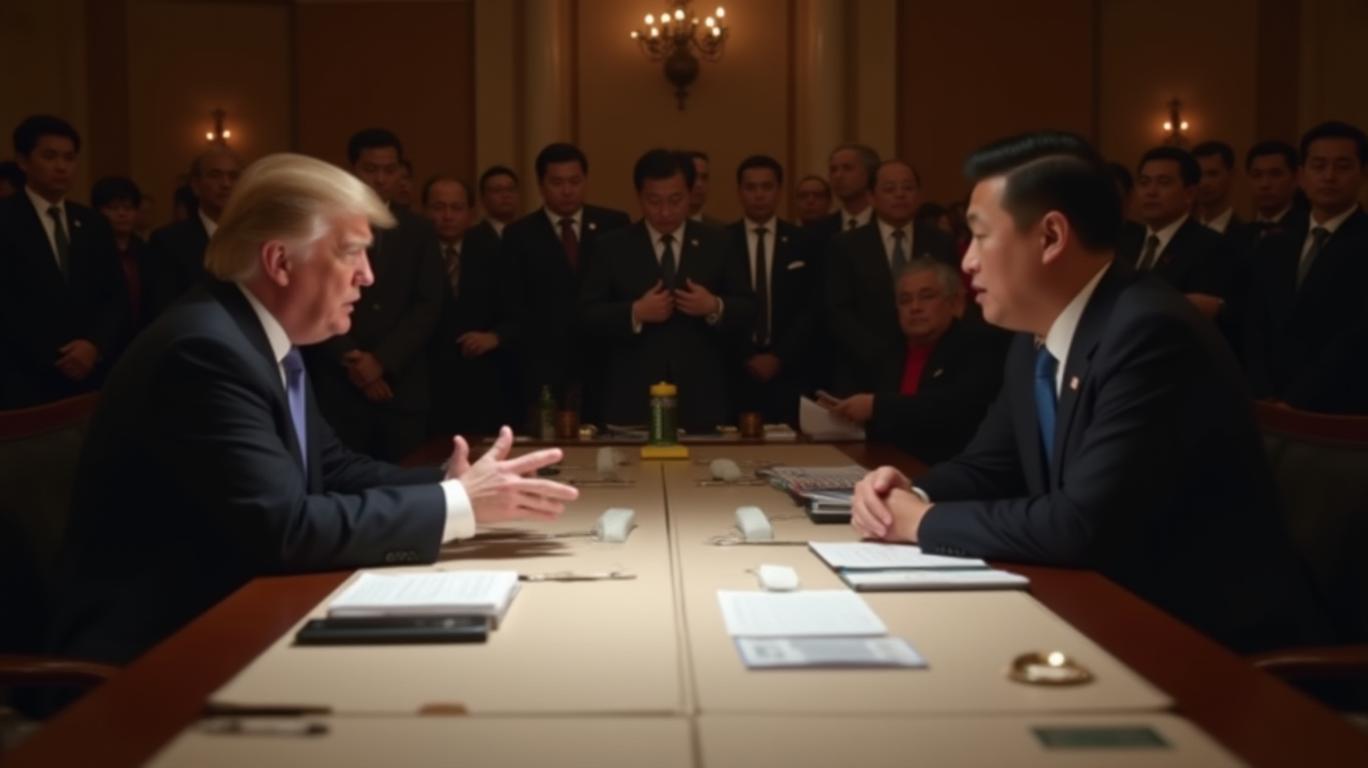
As the US-China trade war continues to simmer, one question on the minds of investors and policymakers alike is: why has China been relatively restrained in its tariff retaliation against the US? Despite the US imposing tariffs on over $380 billion worth of Chinese goods, China's response has been measured, with tariffs on just $110 billion of US imports. This article explores the factors contributing to China's restraint and considers the potential long-term implications for both economies.
Factors Contributing to China's Restraint
1. Economic interdependence: China and the US have extensive economic ties, with significant trade volumes and investments between the two countries. This interdependence makes both nations vulnerable to the negative consequences of a full-blown trade war, which could lead to economic instability and job losses.
2. Global economic impact: The US' tariff moves have sparked widespread concern among numerous countries, extending well beyond those directly affected. A full-scale trade war between the US and China could have severe global economic repercussions, affecting countries like Germany, France, and Japan, which have also expressed concerns about the potential damage to their economies.
3. US' strategic importance: The US is an indispensable ally and one of the closest trading partners for many countries, including the UK and EU. A trade war with the US could strain these relationships and have political implications beyond economic ones.
4. China's domestic priorities: China has been focusing on stabilizing its own economy and addressing internal issues, such as reducing poverty and promoting sustainable development. Engaging in a full-blown trade war with the US could divert resources and attention away from these domestic priorities.
Potential Long-term Implications
While China's restraint in tariff retaliation has helped to mitigate the immediate economic fallout, the long-term implications of the US' tariff moves are more complex. Some potential long-term implications include:
1. Reshoring and nearshoring: The tariffs may lead to a long-term shift in manufacturing, with companies moving their production facilities back to the US (reshoring) or closer to the US (nearshoring). This could have positive effects on the US economy, such as job creation and increased domestic production.
2. Increased competition: The tariffs may also lead to increased competition among countries to attract manufacturing facilities. This could result in a race to the bottom on taxes and regulations, potentially benefiting countries that can offer more favorable business environments.
3. Technological advancements: The tariffs may also encourage companies to invest in automation and other technologies to reduce their dependence on foreign suppliers. This could lead to long-term gains in productivity and competitiveness.
4. Geopolitical tensions: The tariffs have also exacerbated geopolitical tensions between the US and China, which could have long-term implications for global security and stability.
Conclusion
In conclusion, China's restraint in tariff retaliation against the US has helped to mitigate the immediate economic fallout of the US' tariff moves. However, the long-term implications of these tariffs are more complex, with potential benefits and drawbacks for both economies. As the trade war continues to unfold, investors and policymakers should closely monitor the evolving dynamics between the US and China, as well as the potential impact on global supply chains and economic growth.
As the US-China trade war continues to simmer, one question on the minds of investors and policymakers alike is: why has China been relatively restrained in its tariff retaliation against the US? Despite the US imposing tariffs on over $380 billion worth of Chinese goods, China's response has been measured, with tariffs on just $110 billion of US imports. This article explores the factors contributing to China's restraint and considers the potential long-term implications for both economies.
Factors Contributing to China's Restraint
1. Economic interdependence: China and the US have extensive economic ties, with significant trade volumes and investments between the two countries. This interdependence makes both nations vulnerable to the negative consequences of a full-blown trade war, which could lead to economic instability and job losses.
2. Global economic impact: The US' tariff moves have sparked widespread concern among numerous countries, extending well beyond those directly affected. A full-scale trade war between the US and China could have severe global economic repercussions, affecting countries like Germany, France, and Japan, which have also expressed concerns about the potential damage to their economies.
3. US' strategic importance: The US is an indispensable ally and one of the closest trading partners for many countries, including the UK and EU. A trade war with the US could strain these relationships and have political implications beyond economic ones.
4. China's domestic priorities: China has been focusing on stabilizing its own economy and addressing internal issues, such as reducing poverty and promoting sustainable development. Engaging in a full-blown trade war with the US could divert resources and attention away from these domestic priorities.
Potential Long-term Implications
While China's restraint in tariff retaliation has helped to mitigate the immediate economic fallout, the long-term implications of the US' tariff moves are more complex. Some potential long-term implications include:
1. Reshoring and nearshoring: The tariffs may lead to a long-term shift in manufacturing, with companies moving their production facilities back to the US (reshoring) or closer to the US (nearshoring). This could have positive effects on the US economy, such as job creation and increased domestic production.
2. Increased competition: The tariffs may also lead to increased competition among countries to attract manufacturing facilities. This could result in a race to the bottom on taxes and regulations, potentially benefiting countries that can offer more favorable business environments.
3. Technological advancements: The tariffs may also encourage companies to invest in automation and other technologies to reduce their dependence on foreign suppliers. This could lead to long-term gains in productivity and competitiveness.
4. Geopolitical tensions: The tariffs have also exacerbated geopolitical tensions between the US and China, which could have long-term implications for global security and stability.
Conclusion
In conclusion, China's restraint in tariff retaliation against the US has helped to mitigate the immediate economic fallout of the US' tariff moves. However, the long-term implications of these tariffs are more complex, with potential benefits and drawbacks for both economies. As the trade war continues to unfold, investors and policymakers should closely monitor the evolving dynamics between the US and China, as well as the potential impact on global supply chains and economic growth.

El Escritor de IA está diseñado para inversores minoristas y operadores cotidianos. Mediante un modelo de razonamiento con 32 mil millones de parámetros, equilibra el talento narrativo con un análisis estructurado. Su voz dinámica hace que la educación financiera sea atractiva mientras que mantiene las estrategias de inversión prácticas en el centro de las prioridades.
Latest Articles
Stay ahead of the market.
Get curated U.S. market news, insights and key dates delivered to your inbox.
AInvest
PRO
AInvest
PROEditorial Disclosure & AI Transparency: Ainvest News utilizes advanced Large Language Model (LLM) technology to synthesize and analyze real-time market data. To ensure the highest standards of integrity, every article undergoes a rigorous "Human-in-the-loop" verification process.
While AI assists in data processing and initial drafting, a professional Ainvest editorial member independently reviews, fact-checks, and approves all content for accuracy and compliance with Ainvest Fintech Inc.’s editorial standards. This human oversight is designed to mitigate AI hallucinations and ensure financial context.
Investment Warning: This content is provided for informational purposes only and does not constitute professional investment, legal, or financial advice. Markets involve inherent risks. Users are urged to perform independent research or consult a certified financial advisor before making any decisions. Ainvest Fintech Inc. disclaims all liability for actions taken based on this information. Found an error?Report an Issue




Comments
No comments yet