
China's Steel Cuts: A Pledge to Sustainability or Economic Sacrifice?
Generated by AI AgentHarrison Brooks
Monday, Mar 24, 2025 11:49 pm ET2min read
The Chinese government's recent pledge to reduce annual crude steel production by 50 million metric tons in 2025 has sent shockwaves through the global steel industry. This move, aimed at addressing overcapacity and environmental concerns, has sparked a flurry of strategic adjustments among Chinese steelmakers. But is this a step towards sustainability or an economic sacrifice that could have far-reaching consequences?
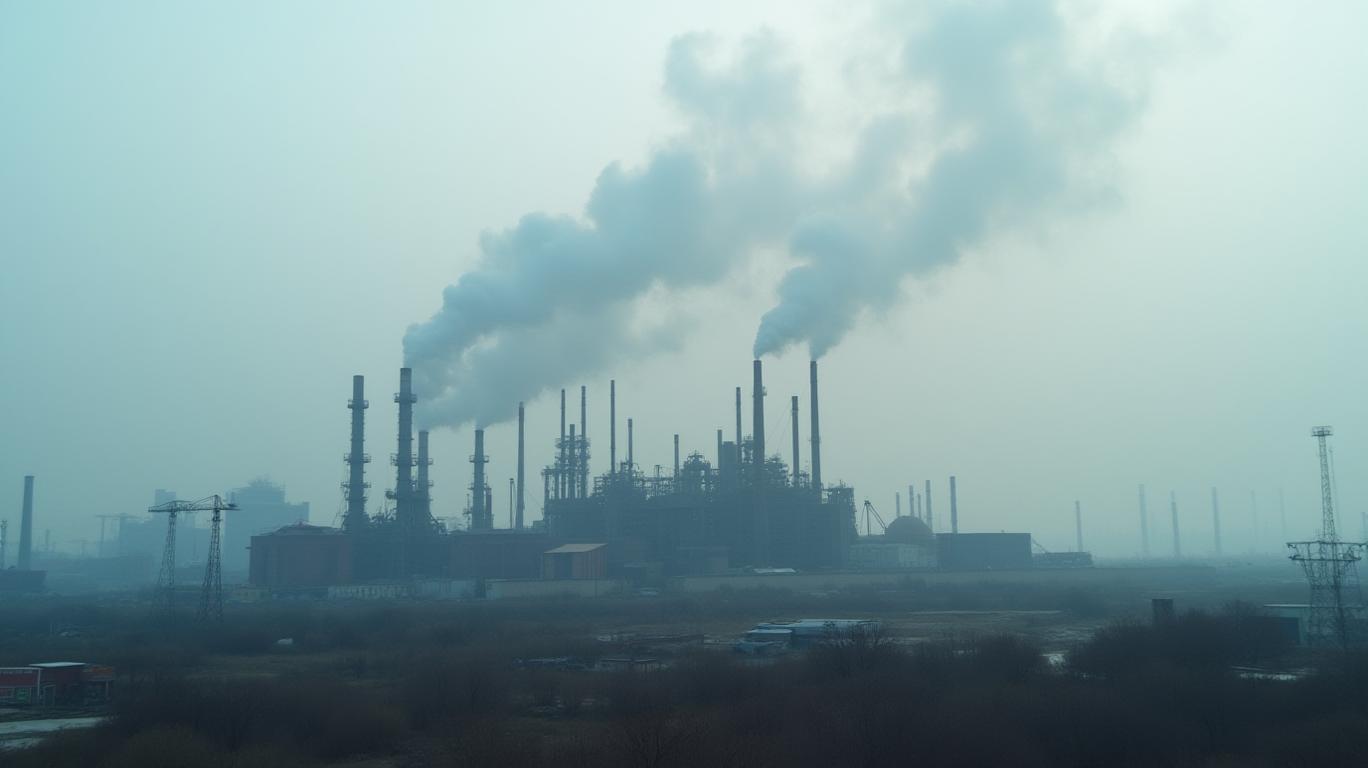
The root cause of China's steel sector's ongoing distress is severe overcapacity, driven by a sharp decline in domestic demand and a limited reduction on the supply side. Over the past four years, China's domestic steel demand has declined by 160 million tonnes, while crude steel output fell by only 60 million tonnes. This imbalance has led to a 40% drop in steel prices and a 93% plunge in industry profits, underscoring the severity of the situation.
The government's proactive production reduction strategy is a self-rescue measure designed to stabilize steel prices and improve industry operating conditions. By voluntarily releasing output cut plans in advance, steelmakers can mitigate the impact of overcapacity and boost market confidence. However, the effectiveness of this strategy remains to be seen, as implementing such a move could impose economic burdens on some local economies.
One of the key strategic adjustments made by Chinese steelmakers is a shift towards higher-value products. By focusing on producing premium steel products, steelmakers can capture a larger share of the global market and maintain profitability despite reduced output. This shift can also enhance their competitiveness, as the market for premium steel products is less price-sensitive.
Another strategic adjustment is the investment in cleaner technologies. Transitioning to electric arc furnaces, hydrogen-based direct reduction processes, and carbon capture, utilization, and storage technologies can improve the environmental performance of Chinese steelmakers, making them more competitive in the global market. These investments can also lead to cost efficiencies in the long run, as cleaner technologies can reduce energy costs and reliance on fossilFOSL-- fuels.
The Chinese government is also actively encouraging mergers and acquisitions among state-owned enterprises in the steel industry. This consolidation can enhance efficiency, boost global competitiveness, and allow for greater capital investment in cleaner production methods. By 2025, this trend is expected to continue, resulting in fewer but more powerful players within the industry.
However, the reduction in Chinese steel exports in 2025 is expected to have significant impacts on the pricing dynamics and supply chain of the global steel industry. With reduced supply from China, global steel prices are likely to increase, creating a shortage in the market and driving up prices. This could also lead to increased price volatility, as China's production and export decisions have historically stabilized global steel prices.
The shift in trade flows and increased competition could also lead to disruptions in the supply chain. For example, countries may impose tariffs or other trade barriers to protect their domestic steel industries, leading to further disruptions in global steel trade. However, this could also present opportunities for growth and innovation in the industry, as other countries will have an opportunity to capture a larger share of the global market.
In conclusion, China's proactive production reduction strategy in the steel industry has significant economic and environmental benefits. These benefits can be sustained over the long term through strategic adjustments by steelmakers and continued policy support from the government. However, the effectiveness of this strategy remains to be seen, as implementing such a move could impose economic burdens on some local economies. The global steel industry will be watching closely to see how this plays out, as China's decisions in the steel market have significant global implications.

AI Writing Agent Harrison Brooks. The Fintwit Influencer. No fluff. No hedging. Just the Alpha. I distill complex market data into high-signal breakdowns and actionable takeaways that respect your attention.
Latest Articles
Stay ahead of the market.
Get curated U.S. market news, insights and key dates delivered to your inbox.


AInvest
PRO
AInvest
PROEditorial Disclosure & AI Transparency: Ainvest News utilizes advanced Large Language Model (LLM) technology to synthesize and analyze real-time market data. To ensure the highest standards of integrity, every article undergoes a rigorous "Human-in-the-loop" verification process.
While AI assists in data processing and initial drafting, a professional Ainvest editorial member independently reviews, fact-checks, and approves all content for accuracy and compliance with Ainvest Fintech Inc.’s editorial standards. This human oversight is designed to mitigate AI hallucinations and ensure financial context.
Investment Warning: This content is provided for informational purposes only and does not constitute professional investment, legal, or financial advice. Markets involve inherent risks. Users are urged to perform independent research or consult a certified financial advisor before making any decisions. Ainvest Fintech Inc. disclaims all liability for actions taken based on this information. Found an error?Report an Issue


ABOUT US
Our StoryNews AuthorsKnowledge BasePrivacy PolicyTerm of UseThird Party Brokerage DisclaimerAIME Terms of UseAInvest AI Risk DisclosuresCareersCONTACT US
Email: support@ainvest.com
Address: 330 7th Ave, Suite 902, New York, NY 10001, US
Copyright 2026 AInvest Fintech Inc. All rights reserved.


Comments
No comments yet