
China's Soybean Leverage and a Broken System Leave U.S. Farmers in Crisis


 Aime Summary
Rural America's farm economy is facing a starkly divergent recovery, with government payouts surging to crisis levels as trade disputes and structural challenges deepen the divide between struggling producers and more resilient sectors. The crisis has been exacerbated by China's reluctance to resume large-scale U.S. soybean purchases, leaving Midwest farmers grappling with plummeting prices, high production costs, and uncertain trade policies. Meanwhile, federal aid programs, while offering short-term relief, have been criticized for failing to address systemic issues in U.S. agriculture.
The soybean trade war between the U.S. and China has become a defining factor in rural economic distress. Since October 2025, China has agreed to purchase 12 million metric tons of U.S. soybeans, a fraction of the 26.8 million metric tons it imported in 2024. This shortfall has left Wisconsin farmers-whose soybean industry generates $1.3 billion annually-facing negative profit margins as global prices collapse. "The randomness of trade policy has put additional stress on producers who are struggling to plan ahead," said Paul Mitchell, a University of Wisconsin-Madison agricultural economics professor according to a report. China's stockpiles, now at multi-year highs, have further weakened demand, with analysts warning that U.S. farmers may not see typical purchase levels for years.
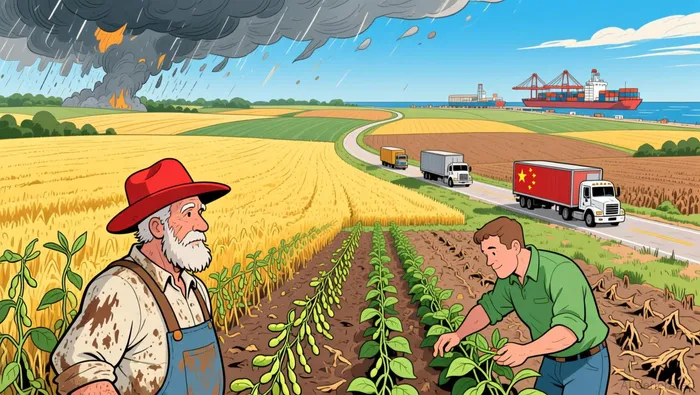
The federal government has responded with emergency aid, including $30 billion in relief programs for the Emergency Commodity Assistance and Supplemental Disaster Relief initiatives. However, these measures have been criticized as insufficient, with experts noting that aid often inflates land prices rather than addressing underlying profitability. "Farmers are living in a broken system," said Joe Maxwell of Action Farm Fund, a farmer-led watchdog group. "We're constantly throwing money at short-term fixes while ignoring the structural problems in agriculture" according to a report. The American Relief Act's $12 billion in planned aid remains delayed due to government shutdowns, compounding uncertainty for producers preparing for the 2026 planting season.
Recent trade policy shifts under President Donald Trump offer mixed signals. On November 13, Trump signed an executive order exempting key agricultural imports-including Indian spices, coffee, and tropical fruits-from 50% tariff hikes, citing domestic inflation concerns. The move, part of broader negotiations with trading partners, aims to lower food costs for U.S. consumers while easing pressure on importers. Separately, China agreed to suspend retaliatory tariffs on U.S. soybeans in exchange for eased U.S. duties, though residual 13% tariffs remain according to reports. These adjustments may provide temporary relief but fail to resolve the deeper issue of China's strategic use of soybeans as a geopolitical lever, a tactic repeated during the 2018–2019 trade war according to analysis.
The farm economy's K-shaped divergence highlights the fragility of rural livelihoods. While corporate agribusinesses and large-scale operations adapt to shifting trade dynamics, smaller producers face existential threats. The Federal Reserve's latest data shows farm debt reaching record highs, with 45% of Virginia families now reporting grocery debt-a sign of broader food insecurity linked to inflation. As trade negotiations continue, the sector's long-term stability will depend on structural reforms, including price regulation and expanded SNAP benefits, to mitigate the risks of a deeply polarized agricultural market.

Stay ahead of the market.
Get curated U.S. market news, insights and key dates delivered to your inbox.






Comments
No comments yet