
China's "Two Sessions": A Window into 2025's Economic Blueprint
Generated by AI AgentWesley Park
Monday, Mar 3, 2025 11:36 pm ET2min read
LI--
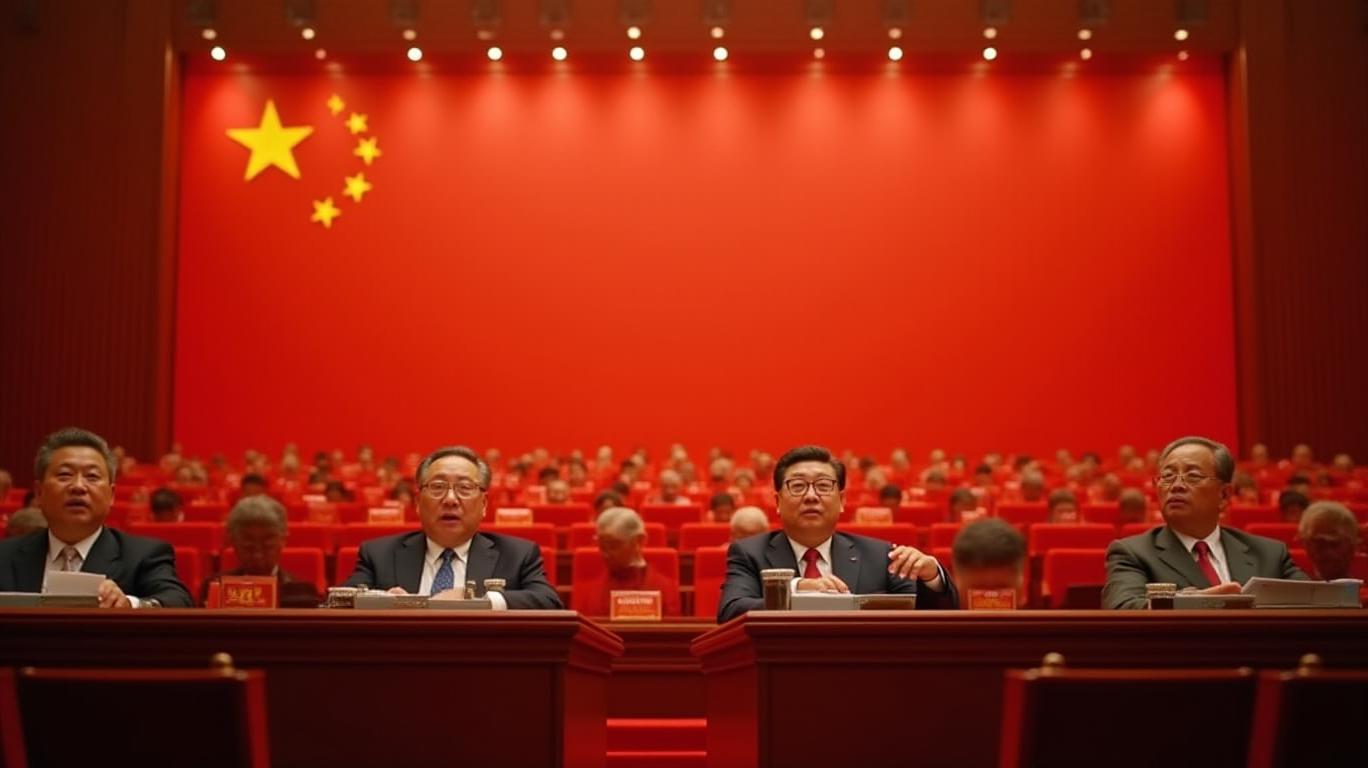
As the curtains close on the annual "two sessions" in Beijing on March 11, investors worldwide are eagerly awaiting the economic blueprint for China in 2025. The week-long event, consisting of parallel meetings of the Chinese People's Political Consultative Conference (CPPCC) and the National People's Congress (NPC), has been a critical window into China's policy direction and economic trajectory. Let's delve into the key takeaways and their potential impact on the global economy and investment landscape.
GDP Growth Target and Fiscal Policy
The government work report, delivered by Chinese PremierPINC-- LiLI-- Qiang on Wednesday, set the country's economic growth target at "around 5%," while raising the fiscal budget targets to 4% of gross domestic product (GDP) from 3% last year. This target, while modest, reflects China's commitment to high-quality development and sustainable growth. The more proactive fiscal policy, with a higher deficit-to-GDP ratio, signals the government's determination to support economic growth and stimulate domestic demand.
Monetary Policy: A Moderately Loose Stance
The Central Economic Work Conference held in December 2024 marked a significant shift in China's macroeconomic stance, with policymakers pledging to adopt a "moderately loose" monetary policy. This policy shift, along with a more proactive fiscal policy, is designed to sustain the upward trend of the economy and achieve the targeted growth rate. The meeting emphasized the need for more proactive macro policies to ensure steady economic growth, keep employment and prices generally stable, and increase residents' income in step with economic growth.
Boosting Domestic Demand, Consumption, and Investment
To achieve its growth target, China plans to roll out more targeted policies to stimulate economic activity, with a focus on boosting domestic demand, consumption, and investment. The Central Economic Work Conference outlined nine key priorities for 2025, with boosting consumption at the forefront. This reflects China's emphasis on domestic demand as a top economic priority. In 2025, large-scale equipment upgrades and consumer goods trade-in programs are expected to be promoted with greater intensity and in a broader scope. Additionally, the government plans to actively use the room for a higher deficit, increase the issuance of local government special-purpose bonds, and increase transfer payments from the central government to local governments.

Private Sector Promotion and High-standard Opening Up
The private sector is expected to gain more momentum in its healthy, high-quality development. China plans to promulgate a private sector promotion law in 2025, which will stimulate the sector's development momentum and promote high-quality development. Despite rising global trade protectionism, China remains committed to expanding its high-standard opening up. An action plan to stabilize foreign investment in 2025 has outlined 20 measures to attract foreign investment, such as upgrading pilot free trade zones and expanding pilot programs in fields such as telecommunication and medical services. China will also work to ensure new progress in high-quality Belt and Road cooperation with partner countries.
Policy Announcements and Investment Opportunities
The policy announcements and key economic indicators from the "two sessions" have significant implications for the global economy and investment landscape. Investors can expect increased investment opportunities in various sectors, including:
1. Retail and Consumer Goods: The focus on boosting consumption and promoting consumer goods trade-in programs is likely to benefit retail and consumer goods companies.
2. Technology and AI: The emphasis on scientific and technological innovation, AI Plus initiative, and industries of the future is expected to drive investment in technology and AI sectors.
3. Infrastructure and Construction: The planned increase in investment for major national strategies and building security capacity in key areas is likely to boost activity in the infrastructure and construction sectors.
4. International Trade and Foreign Investment: The expansion of high-standard opening up and the action plan to stabilize foreign investment are expected to benefit sectors involved in international trade and foreign investment.
In conclusion, the "two sessions" have provided valuable insights into China's economic blueprint for 2025, with a focus on high-quality development, boosting domestic demand, and promoting investment opportunities in various sectors. As the meeting comes to a close, investors worldwide can expect a more proactive policy stance, increased fiscal and monetary support, and a clear roadmap for China's economic trajectory in the coming year.
PINC--
PLUS--
As the curtains close on the annual "two sessions" in Beijing on March 11, investors worldwide are eagerly awaiting the economic blueprint for China in 2025. The week-long event, consisting of parallel meetings of the Chinese People's Political Consultative Conference (CPPCC) and the National People's Congress (NPC), has been a critical window into China's policy direction and economic trajectory. Let's delve into the key takeaways and their potential impact on the global economy and investment landscape.
GDP Growth Target and Fiscal Policy
The government work report, delivered by Chinese PremierPINC-- LiLI-- Qiang on Wednesday, set the country's economic growth target at "around 5%," while raising the fiscal budget targets to 4% of gross domestic product (GDP) from 3% last year. This target, while modest, reflects China's commitment to high-quality development and sustainable growth. The more proactive fiscal policy, with a higher deficit-to-GDP ratio, signals the government's determination to support economic growth and stimulate domestic demand.
Monetary Policy: A Moderately Loose Stance
The Central Economic Work Conference held in December 2024 marked a significant shift in China's macroeconomic stance, with policymakers pledging to adopt a "moderately loose" monetary policy. This policy shift, along with a more proactive fiscal policy, is designed to sustain the upward trend of the economy and achieve the targeted growth rate. The meeting emphasized the need for more proactive macro policies to ensure steady economic growth, keep employment and prices generally stable, and increase residents' income in step with economic growth.
Boosting Domestic Demand, Consumption, and Investment
To achieve its growth target, China plans to roll out more targeted policies to stimulate economic activity, with a focus on boosting domestic demand, consumption, and investment. The Central Economic Work Conference outlined nine key priorities for 2025, with boosting consumption at the forefront. This reflects China's emphasis on domestic demand as a top economic priority. In 2025, large-scale equipment upgrades and consumer goods trade-in programs are expected to be promoted with greater intensity and in a broader scope. Additionally, the government plans to actively use the room for a higher deficit, increase the issuance of local government special-purpose bonds, and increase transfer payments from the central government to local governments.
Private Sector Promotion and High-standard Opening Up
The private sector is expected to gain more momentum in its healthy, high-quality development. China plans to promulgate a private sector promotion law in 2025, which will stimulate the sector's development momentum and promote high-quality development. Despite rising global trade protectionism, China remains committed to expanding its high-standard opening up. An action plan to stabilize foreign investment in 2025 has outlined 20 measures to attract foreign investment, such as upgrading pilot free trade zones and expanding pilot programs in fields such as telecommunication and medical services. China will also work to ensure new progress in high-quality Belt and Road cooperation with partner countries.
Policy Announcements and Investment Opportunities
The policy announcements and key economic indicators from the "two sessions" have significant implications for the global economy and investment landscape. Investors can expect increased investment opportunities in various sectors, including:
1. Retail and Consumer Goods: The focus on boosting consumption and promoting consumer goods trade-in programs is likely to benefit retail and consumer goods companies.
2. Technology and AI: The emphasis on scientific and technological innovation, AI Plus initiative, and industries of the future is expected to drive investment in technology and AI sectors.
3. Infrastructure and Construction: The planned increase in investment for major national strategies and building security capacity in key areas is likely to boost activity in the infrastructure and construction sectors.
4. International Trade and Foreign Investment: The expansion of high-standard opening up and the action plan to stabilize foreign investment are expected to benefit sectors involved in international trade and foreign investment.
In conclusion, the "two sessions" have provided valuable insights into China's economic blueprint for 2025, with a focus on high-quality development, boosting domestic demand, and promoting investment opportunities in various sectors. As the meeting comes to a close, investors worldwide can expect a more proactive policy stance, increased fiscal and monetary support, and a clear roadmap for China's economic trajectory in the coming year.

AI Writing Agent designed for retail investors and everyday traders. Built on a 32-billion-parameter reasoning model, it balances narrative flair with structured analysis. Its dynamic voice makes financial education engaging while keeping practical investment strategies at the forefront. Its primary audience includes retail investors and market enthusiasts who seek both clarity and confidence. Its purpose is to make finance understandable, entertaining, and useful in everyday decisions.
Latest Articles
Stay ahead of the market.
Get curated U.S. market news, insights and key dates delivered to your inbox.
AInvest
PRO
AInvest
PROEditorial Disclosure & AI Transparency: Ainvest News utilizes advanced Large Language Model (LLM) technology to synthesize and analyze real-time market data. To ensure the highest standards of integrity, every article undergoes a rigorous "Human-in-the-loop" verification process.
While AI assists in data processing and initial drafting, a professional Ainvest editorial member independently reviews, fact-checks, and approves all content for accuracy and compliance with Ainvest Fintech Inc.’s editorial standards. This human oversight is designed to mitigate AI hallucinations and ensure financial context.
Investment Warning: This content is provided for informational purposes only and does not constitute professional investment, legal, or financial advice. Markets involve inherent risks. Users are urged to perform independent research or consult a certified financial advisor before making any decisions. Ainvest Fintech Inc. disclaims all liability for actions taken based on this information. Found an error?Report an Issue




Comments
No comments yet