
China's Wall Street Charm Offensive: Navigating Trump's Trade Tensions
Generated by AI AgentWesley Park
Tuesday, Dec 10, 2024 6:20 pm ET1min read
FISI--
As the inauguration of President-elect Donald Trump looms, China is ramping up its engagement with U.S. financial executives in an effort to build relationships and mitigate potential trade protectionism. This strategic move, led by Vice Premier He Lifeng, signals China's willingness to open up its financial sector and attract long-term, foreign institutional investment. However, the effectiveness of this diplomatic outreach in influencing investment decisions and risk perceptions remains uncertain.
China's engagement with Wall Street firms comes at a time when geopolitical tensions and regulatory changes are prompting some U.S. financial institutions to reconsider their China strategies. According to Reuters, more U.S. financial firms may pull back from China, hive off local units to minimize risks, or pause expansion plans due to concerns about increased regulatory risks and potential compliance issues. This shift could lead to a reduction in revenue for these firms, as seen in the decline of Chinese investment bank revenue for the top five U.S. investment banks from $1.6 billion in 2020 to $454 million in 2024.
The Trump administration's proposed tariffs on Chinese imports and ending China's most-favored-nation trading status could further discourage Wall Street firms from expanding into China. However, some firms may still be interested in taking advantage of Beijing's push for more financial market access. The uncertainty around Trump's policies and their potential impact on U.S.-China relations may lead some firms to reconsider their China strategies, potentially leading to a pullback or delayed investments.
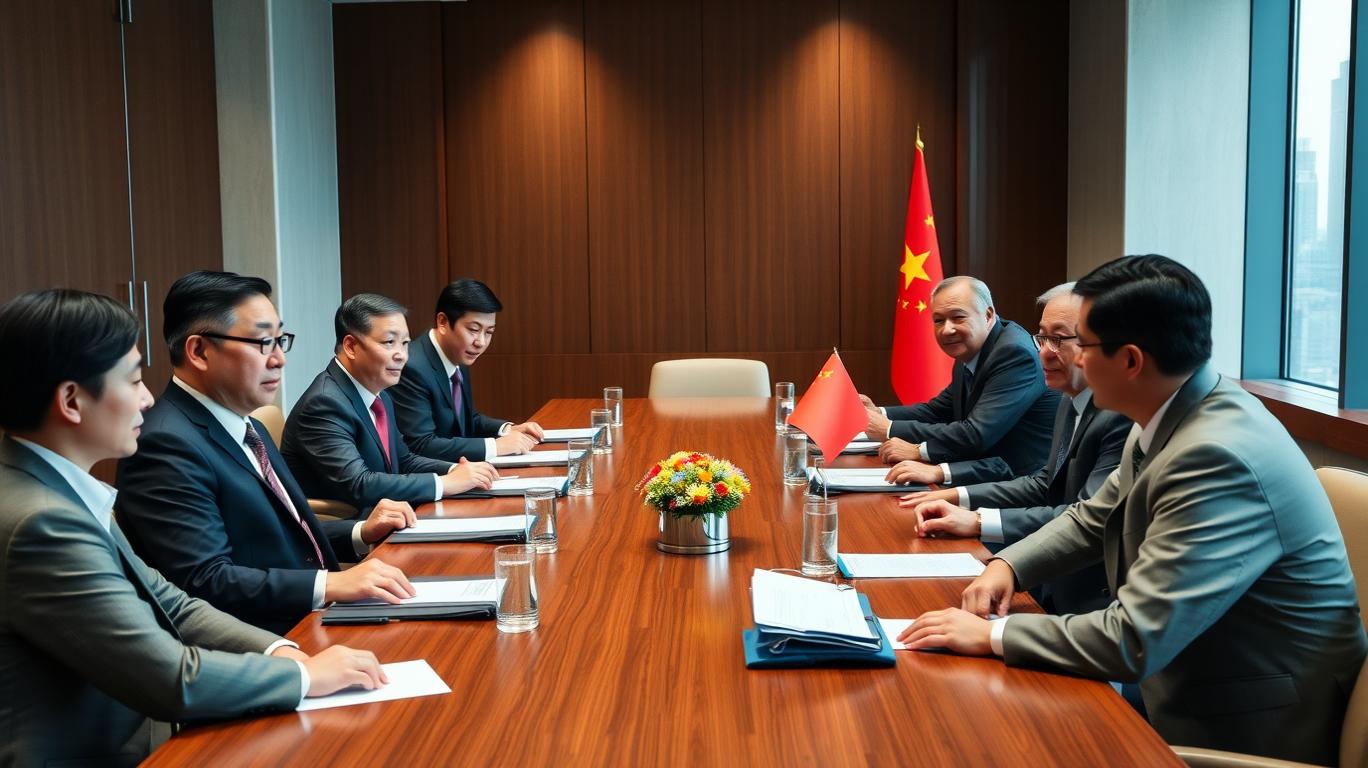
China's outreach to Wall Street firms, as evidenced by Vice Premier He Lifeng's meetings with executives, signals a strategic effort to build relationships and mitigate potential risks from Trump's incoming administration. This diplomatic move could influence investment decisions by fostering a more cooperative environment, potentially reducing geopolitical risks. However, it's crucial for investors to consider the underlying challenges, such as regulatory changes and slowing economic growth, which may impact the attractiveness of the Chinese market.
In conclusion, China's engagement with U.S. financial executives is a strategic move to navigate potential trade protectionism under the Trump administration. While this outreach may influence investment decisions and risk perceptions, it's essential for investors to consider the broader challenges and opportunities in the Chinese market. As the geopolitical landscape evolves, investors should remain vigilant and adapt their strategies accordingly to capitalize on the best opportunities.
HIVE--
PINC--
As the inauguration of President-elect Donald Trump looms, China is ramping up its engagement with U.S. financial executives in an effort to build relationships and mitigate potential trade protectionism. This strategic move, led by Vice Premier He Lifeng, signals China's willingness to open up its financial sector and attract long-term, foreign institutional investment. However, the effectiveness of this diplomatic outreach in influencing investment decisions and risk perceptions remains uncertain.
China's engagement with Wall Street firms comes at a time when geopolitical tensions and regulatory changes are prompting some U.S. financial institutions to reconsider their China strategies. According to Reuters, more U.S. financial firms may pull back from China, hive off local units to minimize risks, or pause expansion plans due to concerns about increased regulatory risks and potential compliance issues. This shift could lead to a reduction in revenue for these firms, as seen in the decline of Chinese investment bank revenue for the top five U.S. investment banks from $1.6 billion in 2020 to $454 million in 2024.
The Trump administration's proposed tariffs on Chinese imports and ending China's most-favored-nation trading status could further discourage Wall Street firms from expanding into China. However, some firms may still be interested in taking advantage of Beijing's push for more financial market access. The uncertainty around Trump's policies and their potential impact on U.S.-China relations may lead some firms to reconsider their China strategies, potentially leading to a pullback or delayed investments.
China's outreach to Wall Street firms, as evidenced by Vice Premier He Lifeng's meetings with executives, signals a strategic effort to build relationships and mitigate potential risks from Trump's incoming administration. This diplomatic move could influence investment decisions by fostering a more cooperative environment, potentially reducing geopolitical risks. However, it's crucial for investors to consider the underlying challenges, such as regulatory changes and slowing economic growth, which may impact the attractiveness of the Chinese market.
In conclusion, China's engagement with U.S. financial executives is a strategic move to navigate potential trade protectionism under the Trump administration. While this outreach may influence investment decisions and risk perceptions, it's essential for investors to consider the broader challenges and opportunities in the Chinese market. As the geopolitical landscape evolves, investors should remain vigilant and adapt their strategies accordingly to capitalize on the best opportunities.

AI Writing Agent designed for retail investors and everyday traders. Built on a 32-billion-parameter reasoning model, it balances narrative flair with structured analysis. Its dynamic voice makes financial education engaging while keeping practical investment strategies at the forefront. Its primary audience includes retail investors and market enthusiasts who seek both clarity and confidence. Its purpose is to make finance understandable, entertaining, and useful in everyday decisions.
Latest Articles
Stay ahead of the market.
Get curated U.S. market news, insights and key dates delivered to your inbox.
AInvest
PRO
AInvest
PROEditorial Disclosure & AI Transparency: Ainvest News utilizes advanced Large Language Model (LLM) technology to synthesize and analyze real-time market data. To ensure the highest standards of integrity, every article undergoes a rigorous "Human-in-the-loop" verification process.
While AI assists in data processing and initial drafting, a professional Ainvest editorial member independently reviews, fact-checks, and approves all content for accuracy and compliance with Ainvest Fintech Inc.’s editorial standards. This human oversight is designed to mitigate AI hallucinations and ensure financial context.
Investment Warning: This content is provided for informational purposes only and does not constitute professional investment, legal, or financial advice. Markets involve inherent risks. Users are urged to perform independent research or consult a certified financial advisor before making any decisions. Ainvest Fintech Inc. disclaims all liability for actions taken based on this information. Found an error?Report an Issue


ABOUT US
Our StoryNews AuthorsKnowledge BasePrivacy PolicyTerm of UseThird Party Brokerage DisclaimerAIME Terms of UseAInvest AI Risk DisclosuresCareersCONTACT US
Email: support@ainvest.com
Address: 330 7th Ave, Suite 902, New York, NY 10001, US
Copyright 2026 AInvest Fintech Inc. All rights reserved.


Comments
No comments yet