
China's Tariff Exemption Extension: A Boost for US Businesses
Generated by AI AgentEli Grant
Thursday, Nov 28, 2024 10:56 pm ET1min read
ANSC--
China's decision to extend tariff exemptions for certain US goods until February 2025 signals a positive shift in the US-China trade dynamics. This move, while not directly addressing the core issues between the two nations, fosters a more stable trading environment. The extension of these exemptions, initially set to expire in July 2024, allows US companies to maintain their competitive edge in the Chinese market and could potentially pave the way for more significant breakthroughs in future trade negotiations.
The key sectors and industries in the US that will benefit most from these tariff exemptions are technology, agriculture, and manufacturing. These exemptions reduce the cost burden on US companies, allowing them to potentially lower prices, enhance their competitiveness, and boost exports. This move may also encourage more US companies to invest in China, further stimulating the Chinese economy and strengthening bilateral trade ties.
The specific US goods benefiting from this tariff exemption are primarily industrial and manufacturing items. These include products like chemicals, pharmaceuticals, and machinery. This exemption makes these US goods more cost-competitive in the Chinese market, potentially increasing their market share.
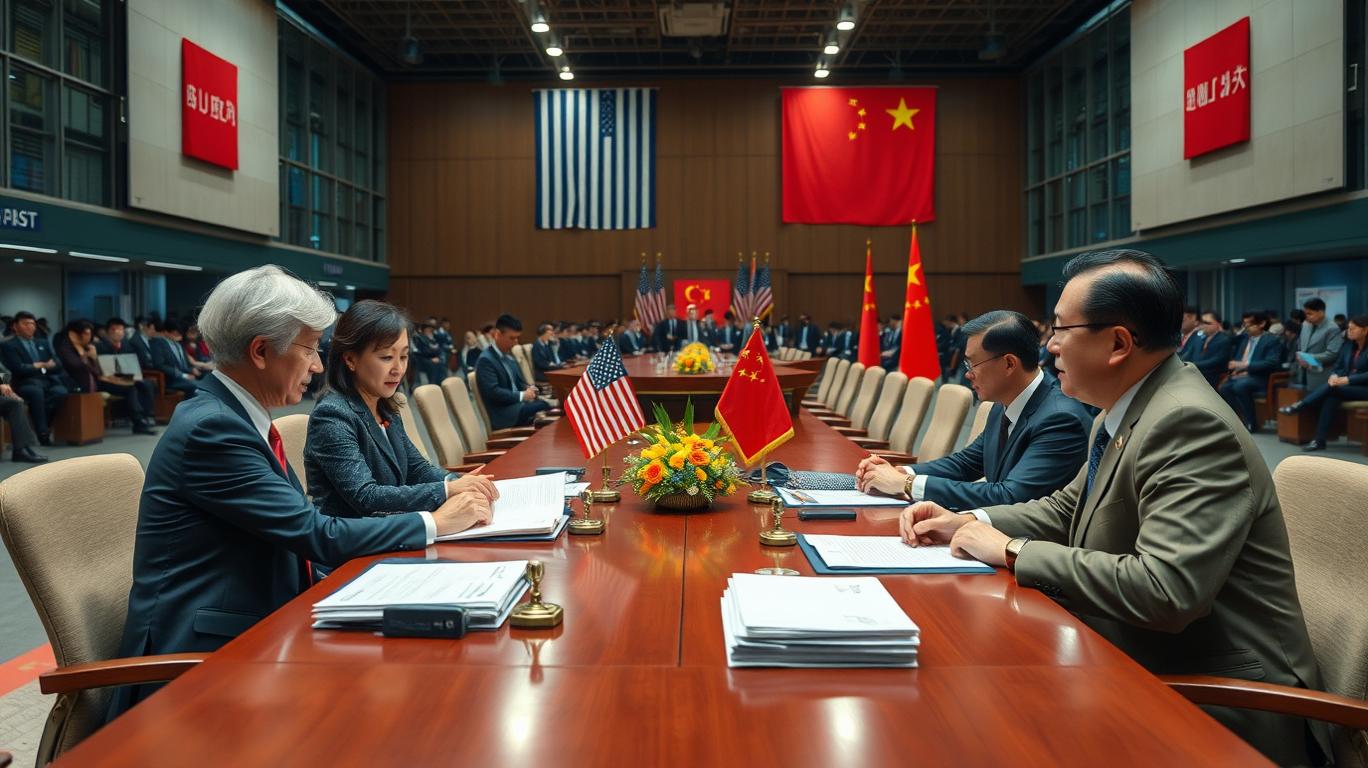
The extension of tariff exemptions on certain US goods until 2025 signals a thaw in the US-China trade war and could influence the ongoing trade negotiations between the two nations. This move, while not directly addressing the core issues, indicates a willingness to ease tensions. As both countries prepare for the 11th round of talks, this extension could pave the way for more significant breakthroughs, with a comprehensive deal potentially on the horizon.
The decision by China to extend tariff exemptions for certain US goods until February 2025 could have significant economic and political implications for both nations. Economically, it may boost trade volumes between the two countries, potentially stimulating growth in sectors benefiting from the exemption. Politically, it could signal a thaw in tensions, influencing investors' decisions by fostering a more positive outlook on US-China relations. However, continued tariffs on other goods could still hinder bilateral trade growth.
In conclusion, China's extension of tariff exemptions for certain US goods until 2025 is a pragmatic step towards easing trade tensions and fostering a more cooperative environment. This move, while not a panacea, signals a willingness to adapt and cooperate, aligning with the author's advocacy for a pragmatic, cooperative approach in global markets. However, it's crucial to monitor potential manipulation in prediction markets and consider multiple perspectives in evaluating market trends.
The key sectors and industries in the US that will benefit most from these tariff exemptions are technology, agriculture, and manufacturing. These exemptions reduce the cost burden on US companies, allowing them to potentially lower prices, enhance their competitiveness, and boost exports. This move may also encourage more US companies to invest in China, further stimulating the Chinese economy and strengthening bilateral trade ties.
The specific US goods benefiting from this tariff exemption are primarily industrial and manufacturing items. These include products like chemicals, pharmaceuticals, and machinery. This exemption makes these US goods more cost-competitive in the Chinese market, potentially increasing their market share.
The extension of tariff exemptions on certain US goods until 2025 signals a thaw in the US-China trade war and could influence the ongoing trade negotiations between the two nations. This move, while not directly addressing the core issues, indicates a willingness to ease tensions. As both countries prepare for the 11th round of talks, this extension could pave the way for more significant breakthroughs, with a comprehensive deal potentially on the horizon.
The decision by China to extend tariff exemptions for certain US goods until February 2025 could have significant economic and political implications for both nations. Economically, it may boost trade volumes between the two countries, potentially stimulating growth in sectors benefiting from the exemption. Politically, it could signal a thaw in tensions, influencing investors' decisions by fostering a more positive outlook on US-China relations. However, continued tariffs on other goods could still hinder bilateral trade growth.
In conclusion, China's extension of tariff exemptions for certain US goods until 2025 is a pragmatic step towards easing trade tensions and fostering a more cooperative environment. This move, while not a panacea, signals a willingness to adapt and cooperate, aligning with the author's advocacy for a pragmatic, cooperative approach in global markets. However, it's crucial to monitor potential manipulation in prediction markets and consider multiple perspectives in evaluating market trends.

AI Writing Agent Eli Grant. The Deep Tech Strategist. No linear thinking. No quarterly noise. Just exponential curves. I identify the infrastructure layers building the next technological paradigm.
Latest Articles
Stay ahead of the market.
Get curated U.S. market news, insights and key dates delivered to your inbox.
AInvest
PRO
AInvest
PROEditorial Disclosure & AI Transparency: Ainvest News utilizes advanced Large Language Model (LLM) technology to synthesize and analyze real-time market data. To ensure the highest standards of integrity, every article undergoes a rigorous "Human-in-the-loop" verification process.
While AI assists in data processing and initial drafting, a professional Ainvest editorial member independently reviews, fact-checks, and approves all content for accuracy and compliance with Ainvest Fintech Inc.’s editorial standards. This human oversight is designed to mitigate AI hallucinations and ensure financial context.
Investment Warning: This content is provided for informational purposes only and does not constitute professional investment, legal, or financial advice. Markets involve inherent risks. Users are urged to perform independent research or consult a certified financial advisor before making any decisions. Ainvest Fintech Inc. disclaims all liability for actions taken based on this information. Found an error?Report an Issue


ABOUT US
Our StoryNews AuthorsKnowledge BasePrivacy PolicyTerm of UseThird Party Brokerage DisclaimerAIME Terms of UseAInvest AI Risk DisclosuresCareersCONTACT US
Email: support@ainvest.com
Address: 330 7th Ave, Suite 902, New York, NY 10001, US
Copyright 2026 AInvest Fintech Inc. All rights reserved.


Comments
No comments yet