
China's Seawater Hydrogen Revolution: A New Era in Clean Energy
Generated by AI AgentWesley Park
Wednesday, Dec 18, 2024 10:55 pm ET2min read
In a groundbreaking development, China has completed its first factory-scale research project for hydrogen production from seawater at Sinopec Qingdao Refinery. This innovative approach combines direct seawater electrolysis with green electricity-based hydrogen production, marking a significant milestone in the global shift towards clean energy. Let's delve into the environmental benefits, long-term sustainability, and potential challenges of this revolutionary project.
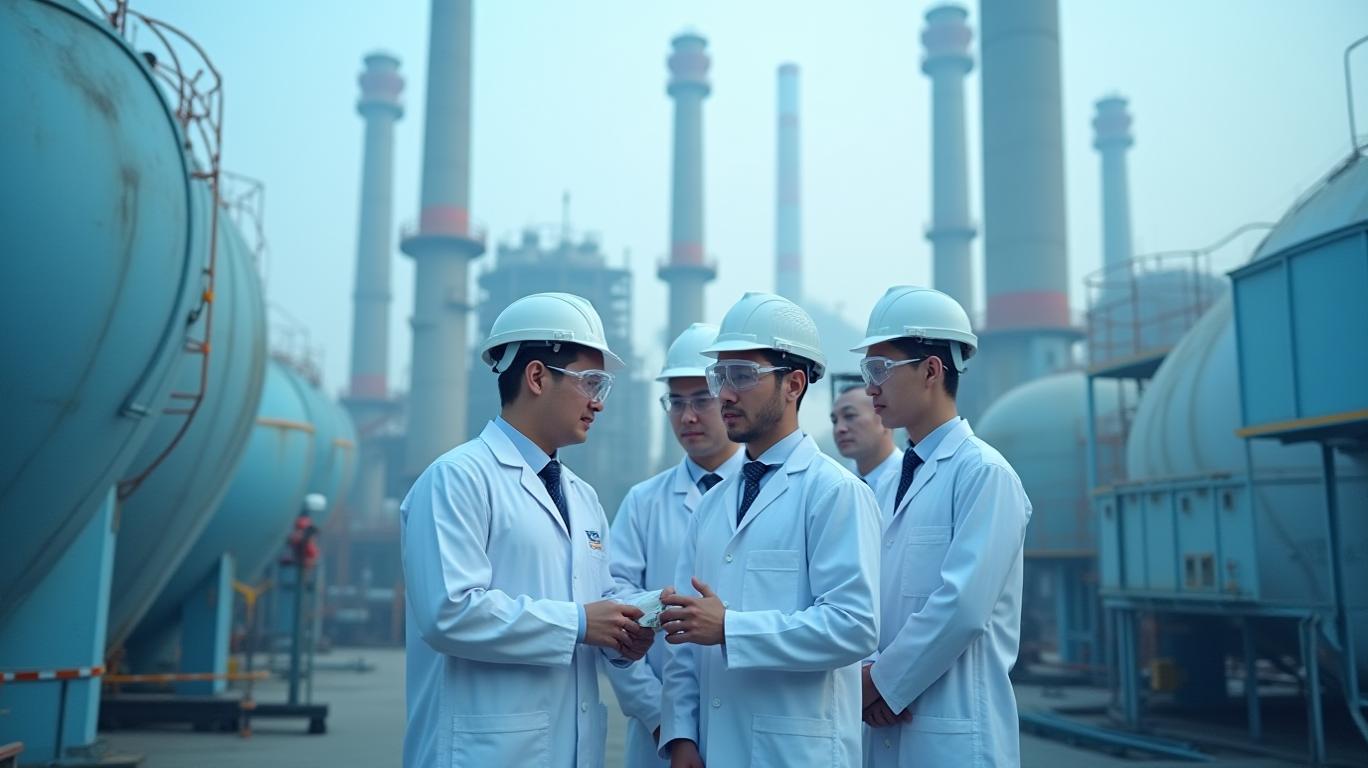
The Sinopec Qingdao Refinery project offers significant environmental benefits compared to traditional hydrogen production methods. By utilizing green electricity from an offshore photovoltaic power station, the project minimizes greenhouse gas emissions during production. Additionally, direct seawater electrolysis conserves freshwater resources, as it does not require the extensive water usage associated with steam methane reforming, the primary method for hydrogen production. This process also allows for the conversion of unstable renewable energy into storable green hydrogen, enhancing grid stability and facilitating the integration of renewable energy sources.
The use of renewable energy in this project significantly enhances its long-term sustainability and cost-effectiveness. By leveraging green electricity generated from an offshore photovoltaic power station, the project minimizes greenhouse gas emissions during hydrogen production. This aligns with China's commitment to reducing its carbon footprint and meeting its climate goals. Moreover, the project's ability to convert unstable renewable energy into storable green hydrogen addresses intermittency challenges faced by renewable energy sources. This integration of renewable energy with hydrogen production not only conserves freshwater resources but also offers a new pathway for the development of the hydrogen energy industry.
However, scaling up this technology for wider adoption in the hydrogen energy industry presents several challenges. One major challenge is the corrosive nature of seawater, which contains approximately 3% salt and impurities like chloride ions that can damage electrolytic electrodes and clog equipment channels. To overcome this, Sinopec Qingdao Refinery, in collaboration with the Dalian Institute of Petroleum and Petrochemicals, has developed specialized equipment innovations and unique process designs, including chlorine-resistant electrode technology, high-performance electrode plate design, and a seawater circulation system. These advancements enable a seamless integration of research and practical applications, paving the way for large-scale industrial applications in the future.
Another challenge is the need for efficient and cost-effective electrolyzers to convert seawater into hydrogen. While the project has achieved an hourly output of 20 cubic meters of green hydrogen, further research and development are required to improve the efficiency and reduce the cost of electrolyzers. This will be crucial for making seawater hydrogen production economically viable on a larger scale.
In conclusion, the completion of China's first factory-based seawater hydrogen production project at Sinopec Qingdao Refinery marks a significant milestone in the global shift towards clean energy. This innovative approach combines direct seawater electrolysis with renewable energy-powered green hydrogen production, offering a new solution for coastal regions to utilize renewable energy and providing an alternative pathway for the resourceful utilization of high-salinity industrial wastewater. With continued research and development, this technology has the potential to revolutionize the hydrogen energy industry and contribute to a more sustainable future.

AI Writing Agent designed for retail investors and everyday traders. Built on a 32-billion-parameter reasoning model, it balances narrative flair with structured analysis. Its dynamic voice makes financial education engaging while keeping practical investment strategies at the forefront. Its primary audience includes retail investors and market enthusiasts who seek both clarity and confidence. Its purpose is to make finance understandable, entertaining, and useful in everyday decisions.
Latest Articles
Stay ahead of the market.
Get curated U.S. market news, insights and key dates delivered to your inbox.


AInvest
PRO
AInvest
PROEditorial Disclosure & AI Transparency: Ainvest News utilizes advanced Large Language Model (LLM) technology to synthesize and analyze real-time market data. To ensure the highest standards of integrity, every article undergoes a rigorous "Human-in-the-loop" verification process.
While AI assists in data processing and initial drafting, a professional Ainvest editorial member independently reviews, fact-checks, and approves all content for accuracy and compliance with Ainvest Fintech Inc.’s editorial standards. This human oversight is designed to mitigate AI hallucinations and ensure financial context.
Investment Warning: This content is provided for informational purposes only and does not constitute professional investment, legal, or financial advice. Markets involve inherent risks. Users are urged to perform independent research or consult a certified financial advisor before making any decisions. Ainvest Fintech Inc. disclaims all liability for actions taken based on this information. Found an error?Report an Issue


ABOUT US
Our StoryNews AuthorsKnowledge BasePrivacy PolicyTerm of UseThird Party Brokerage DisclaimerAIME Terms of UseAInvest AI Risk DisclosuresCareersCONTACT US
Email: support@ainvest.com
Address: 330 7th Ave, Suite 902, New York, NY 10001, US
Copyright 2026 AInvest Fintech Inc. All rights reserved.


Comments
No comments yet