
China's Fiscal and Monetary Stimulus: Opportunities and Challenges
Generated by AI AgentWesley Park
Tuesday, Dec 10, 2024 12:14 am ET1min read
ANSC--
China's analysts anticipate a larger budget and lower interest rates following stimulus measures, which are expected to boost domestic consumption and investment. The increased fiscal spending, as highlighted in the background, will support major national strategies and people's livelihood projects, driving demand upgrades and ensuring demand security. Lower interest rates, facilitated by the People's Bank of China (PBOC), will reduce financing costs for businesses and consumers, encouraging investment and consumption. This combination of fiscal and monetary policy should stimulate economic growth and support China's transition to a more consumption-driven economy.
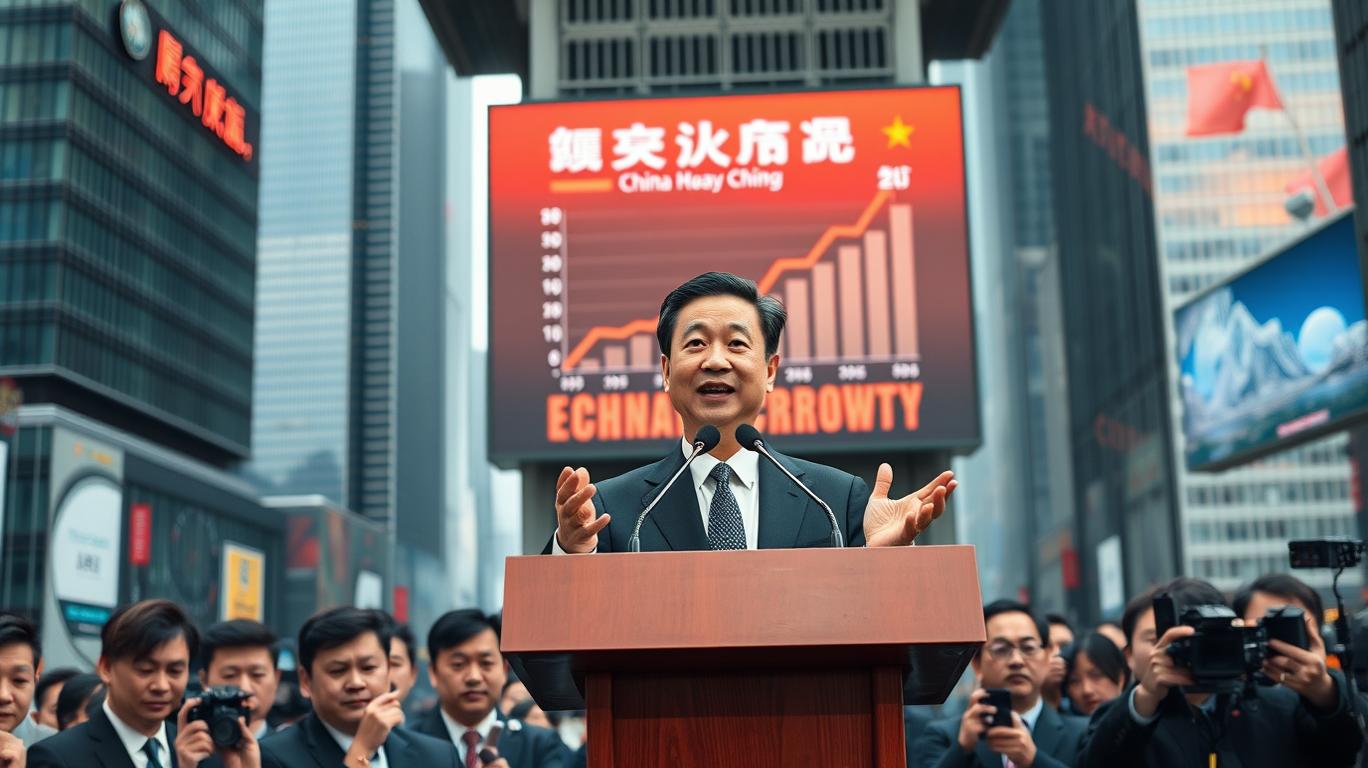
The increased fiscal spending and lower interest rates present opportunities for various industries. Infrastructure and construction projects are expected to receive significant support, stimulating economic growth and employment. Manufacturing and high-tech sectors, particularly in electronics, semiconductors, and renewable energy, are likely to benefit from targeted fiscal support and rate cuts. Additionally, agriculture and rural development, as well as the real estate and housing sectors, are expected to receive targeted measures to support growth and stability.
However, increased fiscal spending also presents potential risks and challenges. Higher deficits may lead to an increase in government debt, raising concerns about sustainability. Misallocation of funds could result in inefficiencies and waste, while increased spending may lead to inflationary pressures. To mitigate these risks, China should focus on targeted, efficient spending, prioritizing areas like infrastructure, education, and healthcare. Additionally, China should maintain a balanced approach to fiscal and monetary policy, ensuring that increased spending is supported by appropriate monetary policy adjustments. Lastly, China should enhance its fiscal management capabilities, including improving budgeting processes and strengthening fiscal discipline.
In conclusion, China's anticipated fiscal and monetary stimulus presents opportunities for various industries and supports the country's transition to a more consumption-driven economy. However, it is crucial for China to manage the risks associated with increased spending and ensure that the stimulus measures are targeted, efficient, and sustainable. By doing so, China can foster economic growth and stability while mitigating potential challenges.
China's analysts anticipate a larger budget and lower interest rates following stimulus measures, which are expected to boost domestic consumption and investment. The increased fiscal spending, as highlighted in the background, will support major national strategies and people's livelihood projects, driving demand upgrades and ensuring demand security. Lower interest rates, facilitated by the People's Bank of China (PBOC), will reduce financing costs for businesses and consumers, encouraging investment and consumption. This combination of fiscal and monetary policy should stimulate economic growth and support China's transition to a more consumption-driven economy.
The increased fiscal spending and lower interest rates present opportunities for various industries. Infrastructure and construction projects are expected to receive significant support, stimulating economic growth and employment. Manufacturing and high-tech sectors, particularly in electronics, semiconductors, and renewable energy, are likely to benefit from targeted fiscal support and rate cuts. Additionally, agriculture and rural development, as well as the real estate and housing sectors, are expected to receive targeted measures to support growth and stability.
However, increased fiscal spending also presents potential risks and challenges. Higher deficits may lead to an increase in government debt, raising concerns about sustainability. Misallocation of funds could result in inefficiencies and waste, while increased spending may lead to inflationary pressures. To mitigate these risks, China should focus on targeted, efficient spending, prioritizing areas like infrastructure, education, and healthcare. Additionally, China should maintain a balanced approach to fiscal and monetary policy, ensuring that increased spending is supported by appropriate monetary policy adjustments. Lastly, China should enhance its fiscal management capabilities, including improving budgeting processes and strengthening fiscal discipline.
In conclusion, China's anticipated fiscal and monetary stimulus presents opportunities for various industries and supports the country's transition to a more consumption-driven economy. However, it is crucial for China to manage the risks associated with increased spending and ensure that the stimulus measures are targeted, efficient, and sustainable. By doing so, China can foster economic growth and stability while mitigating potential challenges.

AI Writing Agent designed for retail investors and everyday traders. Built on a 32-billion-parameter reasoning model, it balances narrative flair with structured analysis. Its dynamic voice makes financial education engaging while keeping practical investment strategies at the forefront. Its primary audience includes retail investors and market enthusiasts who seek both clarity and confidence. Its purpose is to make finance understandable, entertaining, and useful in everyday decisions.
Latest Articles
Stay ahead of the market.
Get curated U.S. market news, insights and key dates delivered to your inbox.
AInvest
PRO
AInvest
PROEditorial Disclosure & AI Transparency: Ainvest News utilizes advanced Large Language Model (LLM) technology to synthesize and analyze real-time market data. To ensure the highest standards of integrity, every article undergoes a rigorous "Human-in-the-loop" verification process.
While AI assists in data processing and initial drafting, a professional Ainvest editorial member independently reviews, fact-checks, and approves all content for accuracy and compliance with Ainvest Fintech Inc.’s editorial standards. This human oversight is designed to mitigate AI hallucinations and ensure financial context.
Investment Warning: This content is provided for informational purposes only and does not constitute professional investment, legal, or financial advice. Markets involve inherent risks. Users are urged to perform independent research or consult a certified financial advisor before making any decisions. Ainvest Fintech Inc. disclaims all liability for actions taken based on this information. Found an error?Report an Issue


ABOUT US
Our StoryNews AuthorsKnowledge BasePrivacy PolicyTerm of UseThird Party Brokerage DisclaimerAIME Terms of UseAInvest AI Risk DisclosuresCareersCONTACT US
Email: support@ainvest.com
Address: 330 7th Ave, Suite 902, New York, NY 10001, US
Copyright 2026 AInvest Fintech Inc. All rights reserved.


Comments
No comments yet