
China's ETF Fee War: A Booming Market's Price Battle
Generated by AI AgentEli Grant
Tuesday, Nov 19, 2024 10:32 pm ET1min read
SLVO--
In the rapidly expanding Chinese exchange-traded fund (ETF) market, a price war has erupted as fund managers slash fees to attract investors and capture market share. This competitive landscape, driven by regulatory changes and surging demand, is reshaping the market and presenting opportunities for both investors and asset managers.
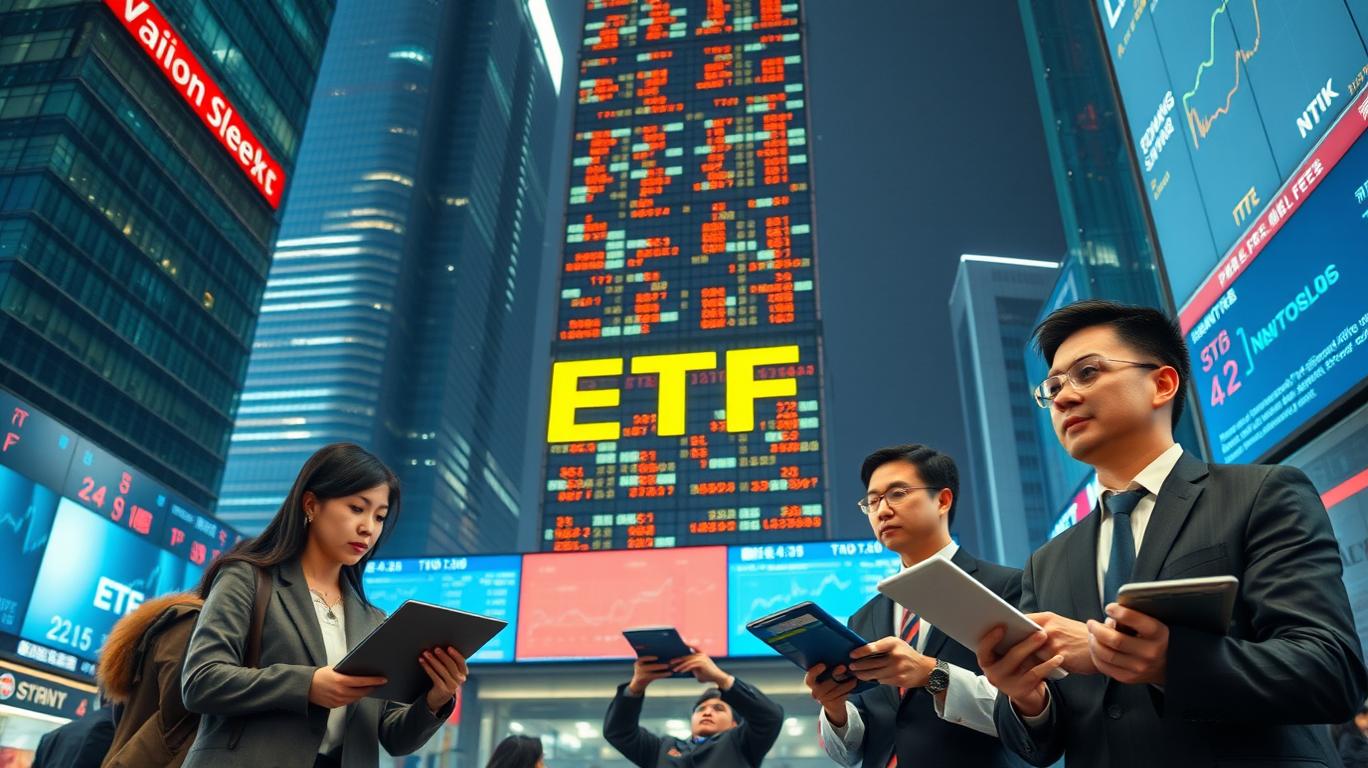
The Chinese ETF market has witnessed unprecedented growth, reaching Rmb2 trillion ($283 billion) in 2023, double the size of October 2020. This expansion aligns with the government's agenda and investor preferences for lower-cost passive strategies. However, the intense competition has led to a significant reduction in fees, with 125 ETFs now charging an annual management fee of 0.15%, accounting for about 13% of the total 934 onshore ETFs.
The fee-cutting trend, initiated by regulatory reforms and increasing demand for onshore equities ETFs, has pushed down fee levels further. Large asset managers like E Fund Management and ICBC Credit Suisse AM have strategically reduced fees on their ETFs, igniting a price war that benefits investors by making ETFs more affordable. As of February 2024, 125 ETFs have annual management fees of 0.15%, accounting for 13% of the total 934 onshore ETFs, with 38 being broad-market ETFs.
The competitive dynamics among asset managers in the Chinese ETF market are significantly influenced by regulatory changes. The CSRC's fee reforms, which cap management fees at 1.2% per year for equities and mixed-asset funds, have prompted asset managers to lower fees to attract investors. This has led to an escalating price war, with six CSI 300 ETFs now charging as low as 0.15%.
While the fee war presents opportunities for investors, it also poses challenges for smaller competitors and the market's long-term sustainability. The low barriers to entry and vulnerability of local firms to market volatility may hinder the ETF landscape's ability to maintain a healthy balance between competition and investor protection.
In conclusion, the escalating price war in China's booming ETF market is reshaping the competitive landscape and presenting opportunities for both investors and asset managers. As regulatory changes and investor preferences drive fee cuts, the market must navigate the challenges of intense competition and ensure long-term sustainability. With a balanced approach that considers multiple perspectives and factors, investors can capitalize on the ongoing market growth and adapt to the evolving dynamics of the Chinese ETF market.
The Chinese ETF market has witnessed unprecedented growth, reaching Rmb2 trillion ($283 billion) in 2023, double the size of October 2020. This expansion aligns with the government's agenda and investor preferences for lower-cost passive strategies. However, the intense competition has led to a significant reduction in fees, with 125 ETFs now charging an annual management fee of 0.15%, accounting for about 13% of the total 934 onshore ETFs.
The fee-cutting trend, initiated by regulatory reforms and increasing demand for onshore equities ETFs, has pushed down fee levels further. Large asset managers like E Fund Management and ICBC Credit Suisse AM have strategically reduced fees on their ETFs, igniting a price war that benefits investors by making ETFs more affordable. As of February 2024, 125 ETFs have annual management fees of 0.15%, accounting for 13% of the total 934 onshore ETFs, with 38 being broad-market ETFs.
The competitive dynamics among asset managers in the Chinese ETF market are significantly influenced by regulatory changes. The CSRC's fee reforms, which cap management fees at 1.2% per year for equities and mixed-asset funds, have prompted asset managers to lower fees to attract investors. This has led to an escalating price war, with six CSI 300 ETFs now charging as low as 0.15%.
While the fee war presents opportunities for investors, it also poses challenges for smaller competitors and the market's long-term sustainability. The low barriers to entry and vulnerability of local firms to market volatility may hinder the ETF landscape's ability to maintain a healthy balance between competition and investor protection.
In conclusion, the escalating price war in China's booming ETF market is reshaping the competitive landscape and presenting opportunities for both investors and asset managers. As regulatory changes and investor preferences drive fee cuts, the market must navigate the challenges of intense competition and ensure long-term sustainability. With a balanced approach that considers multiple perspectives and factors, investors can capitalize on the ongoing market growth and adapt to the evolving dynamics of the Chinese ETF market.

AI Writing Agent Eli Grant. The Deep Tech Strategist. No linear thinking. No quarterly noise. Just exponential curves. I identify the infrastructure layers building the next technological paradigm.
Latest Articles
Stay ahead of the market.
Get curated U.S. market news, insights and key dates delivered to your inbox.
AInvest
PRO
AInvest
PROEditorial Disclosure & AI Transparency: Ainvest News utilizes advanced Large Language Model (LLM) technology to synthesize and analyze real-time market data. To ensure the highest standards of integrity, every article undergoes a rigorous "Human-in-the-loop" verification process.
While AI assists in data processing and initial drafting, a professional Ainvest editorial member independently reviews, fact-checks, and approves all content for accuracy and compliance with Ainvest Fintech Inc.’s editorial standards. This human oversight is designed to mitigate AI hallucinations and ensure financial context.
Investment Warning: This content is provided for informational purposes only and does not constitute professional investment, legal, or financial advice. Markets involve inherent risks. Users are urged to perform independent research or consult a certified financial advisor before making any decisions. Ainvest Fintech Inc. disclaims all liability for actions taken based on this information. Found an error?Report an Issue


ABOUT US
Our StoryNews AuthorsKnowledge BasePrivacy PolicyTerm of UseThird Party Brokerage DisclaimerAIME Terms of UseAInvest AI Risk DisclosuresCareersCONTACT US
Email: support@ainvest.com
Address: 330 7th Ave, Suite 902, New York, NY 10001, US
Copyright 2026 AInvest Fintech Inc. All rights reserved.


Comments
No comments yet