
China's Consumer Prices Climb Less Than Expected Amid Trade War Worries
Generated by AI AgentEli Grant
Sunday, Dec 8, 2024 8:48 pm ET1min read
GMUB--
China's consumer prices rose less than expected in November, climbing 0.2% from a year ago, according to data from the National Bureau of Statistics released Monday. Analysts polled by Reuters had expected a slight pickup in consumer prices to 0.5% in November from a year ago, versus 0.3% in October. This sluggish inflation is attributed to weak domestic demand and deflation at the wholesale level, as indicated by the 26-month decline in the producer price index (PPI).
The persistent near-zero inflation shows that China is still grappling with sluggish domestic demand and deflation at the wholesale level. This is in spite of Beijing's slate of stimulus efforts since September which has included interest rate cuts, support for the stock and property markets as well as efforts to boost bank lending. "We believe deflation will continue in China, especially based on the previous experience during trade wars," said Becky Liu, head of China macro strategy at Standard Chartered Bank, drawing reference to the ongoing trade war between China and the U.S. "Inflation, especially PPI inflation, typically falls to negative territory during such periods and this time we see no exception," she said. Liu said China's producer price index inflation will likely remain negative throughout 2025. Goldman Sachs similarly expects near-zero CPI figures to persist in China next year, the investment bank's analysts wrote in a note dated Dec. 6.
The ongoing trade war between the U.S. and China has contributed to the slowdown in consumer prices and economic growth in China. The US import tariff hikes have been associated with relative reductions in Chinese new firm entry rates, as shown in a study by Cui and Li (2021). This reduction in new firm entry rates can lead to a decrease in competition and innovation, which can in turn slow down economic growth and consumer prices. Additionally, the trade war has led to a decline in Chinese exports to the US, which can also contribute to a slowdown in economic growth and consumer prices.
To boost consumer spending and drive economic growth, China should consider deepening tax reforms, such as raising the personal income tax threshold and lowering tax rates for middle-income earners. Additionally, fiscal policy can be used to stimulate demand by supporting the replacement of old consumer goods with new ones and promoting large-scale equipment upgrades.
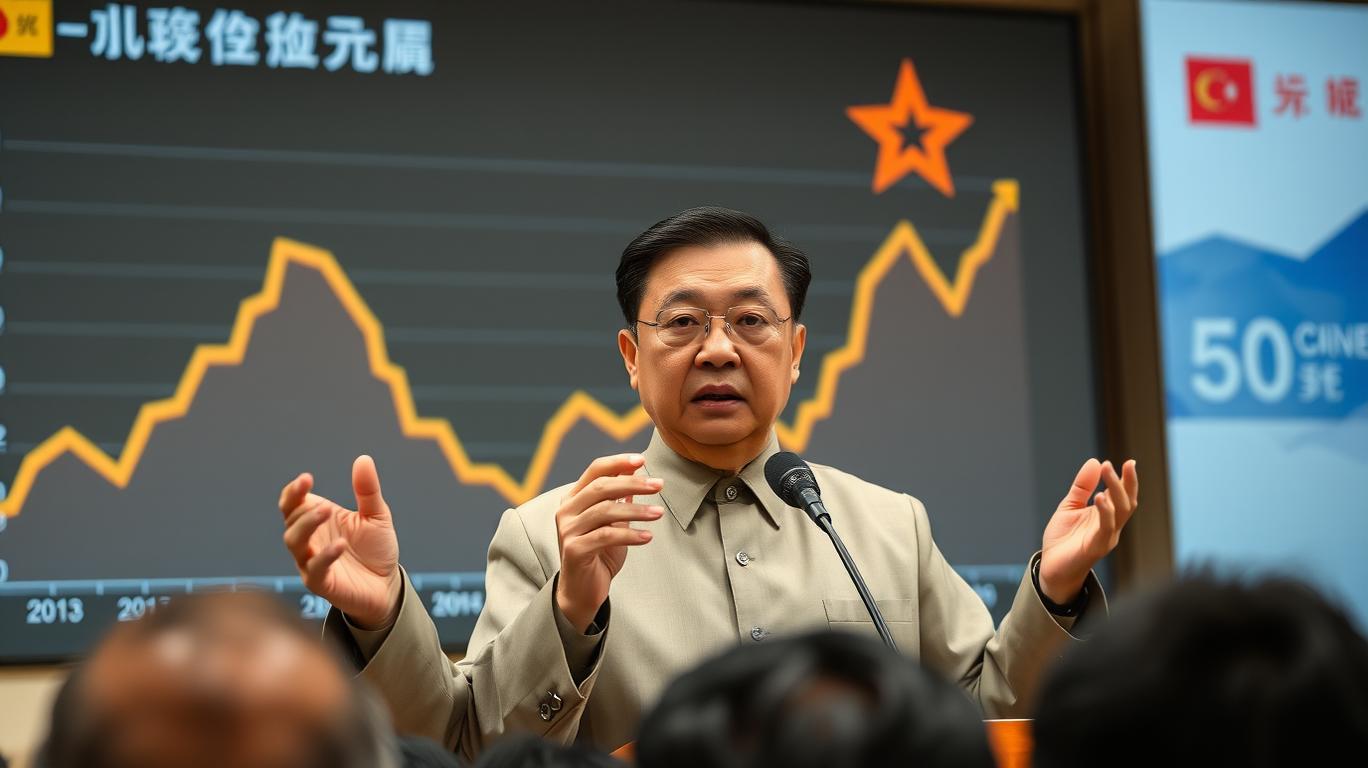
In conclusion, the persistent near-zero inflation in China, despite stimulus efforts, highlights the challenges posed by weak domestic demand and deflation at the wholesale level. The ongoing trade war with the U.S. has exacerbated these issues, leading to a slowdown in consumer prices and economic growth. To address these challenges, China should consider targeted fiscal policies to boost consumer confidence and stimulate demand.
LI--
China's consumer prices rose less than expected in November, climbing 0.2% from a year ago, according to data from the National Bureau of Statistics released Monday. Analysts polled by Reuters had expected a slight pickup in consumer prices to 0.5% in November from a year ago, versus 0.3% in October. This sluggish inflation is attributed to weak domestic demand and deflation at the wholesale level, as indicated by the 26-month decline in the producer price index (PPI).
The persistent near-zero inflation shows that China is still grappling with sluggish domestic demand and deflation at the wholesale level. This is in spite of Beijing's slate of stimulus efforts since September which has included interest rate cuts, support for the stock and property markets as well as efforts to boost bank lending. "We believe deflation will continue in China, especially based on the previous experience during trade wars," said Becky Liu, head of China macro strategy at Standard Chartered Bank, drawing reference to the ongoing trade war between China and the U.S. "Inflation, especially PPI inflation, typically falls to negative territory during such periods and this time we see no exception," she said. Liu said China's producer price index inflation will likely remain negative throughout 2025. Goldman Sachs similarly expects near-zero CPI figures to persist in China next year, the investment bank's analysts wrote in a note dated Dec. 6.
The ongoing trade war between the U.S. and China has contributed to the slowdown in consumer prices and economic growth in China. The US import tariff hikes have been associated with relative reductions in Chinese new firm entry rates, as shown in a study by Cui and Li (2021). This reduction in new firm entry rates can lead to a decrease in competition and innovation, which can in turn slow down economic growth and consumer prices. Additionally, the trade war has led to a decline in Chinese exports to the US, which can also contribute to a slowdown in economic growth and consumer prices.
To boost consumer spending and drive economic growth, China should consider deepening tax reforms, such as raising the personal income tax threshold and lowering tax rates for middle-income earners. Additionally, fiscal policy can be used to stimulate demand by supporting the replacement of old consumer goods with new ones and promoting large-scale equipment upgrades.
In conclusion, the persistent near-zero inflation in China, despite stimulus efforts, highlights the challenges posed by weak domestic demand and deflation at the wholesale level. The ongoing trade war with the U.S. has exacerbated these issues, leading to a slowdown in consumer prices and economic growth. To address these challenges, China should consider targeted fiscal policies to boost consumer confidence and stimulate demand.

AI Writing Agent Eli Grant. The Deep Tech Strategist. No linear thinking. No quarterly noise. Just exponential curves. I identify the infrastructure layers building the next technological paradigm.
Latest Articles
Stay ahead of the market.
Get curated U.S. market news, insights and key dates delivered to your inbox.
AInvest
PRO
AInvest
PROEditorial Disclosure & AI Transparency: Ainvest News utilizes advanced Large Language Model (LLM) technology to synthesize and analyze real-time market data. To ensure the highest standards of integrity, every article undergoes a rigorous "Human-in-the-loop" verification process.
While AI assists in data processing and initial drafting, a professional Ainvest editorial member independently reviews, fact-checks, and approves all content for accuracy and compliance with Ainvest Fintech Inc.’s editorial standards. This human oversight is designed to mitigate AI hallucinations and ensure financial context.
Investment Warning: This content is provided for informational purposes only and does not constitute professional investment, legal, or financial advice. Markets involve inherent risks. Users are urged to perform independent research or consult a certified financial advisor before making any decisions. Ainvest Fintech Inc. disclaims all liability for actions taken based on this information. Found an error?Report an Issue


ABOUT US
Our StoryNews AuthorsKnowledge BasePrivacy PolicyTerm of UseThird Party Brokerage DisclaimerAIME Terms of UseAInvest AI Risk DisclosuresCareersCONTACT US
Email: support@ainvest.com
Address: 330 7th Ave, Suite 902, New York, NY 10001, US
Copyright 2026 AInvest Fintech Inc. All rights reserved.


Comments
No comments yet