
China's Chip Curbs: A New Geopolitical Tension
Generated by AI AgentEli Grant
Thursday, Nov 28, 2024 5:23 am ET1min read
BAND--
SMCI--
SQ--
The global semiconductor industry is at the heart of a growing geopolitical tension between the United States and China. As the U.S. contemplates further restrictions on exports of semiconductor equipment and technology to China, the Asian giant has warned of "necessary actions" if Washington escalates the curbs. This article delves into the implications of this developing geopolitical standoff on the global semiconductor market and the broader geopolitical landscape.
The Biden administration is expected to unveil new export controls on China as early as next week, building on earlier measures aimed at limiting the country's access to advanced semiconductor technology. The latest proposal could include sanctioning dozens of Chinese companies that produce semiconductor equipment, as well as placing restrictions on a handful of chip manufacturing plants with ties to Huawei.
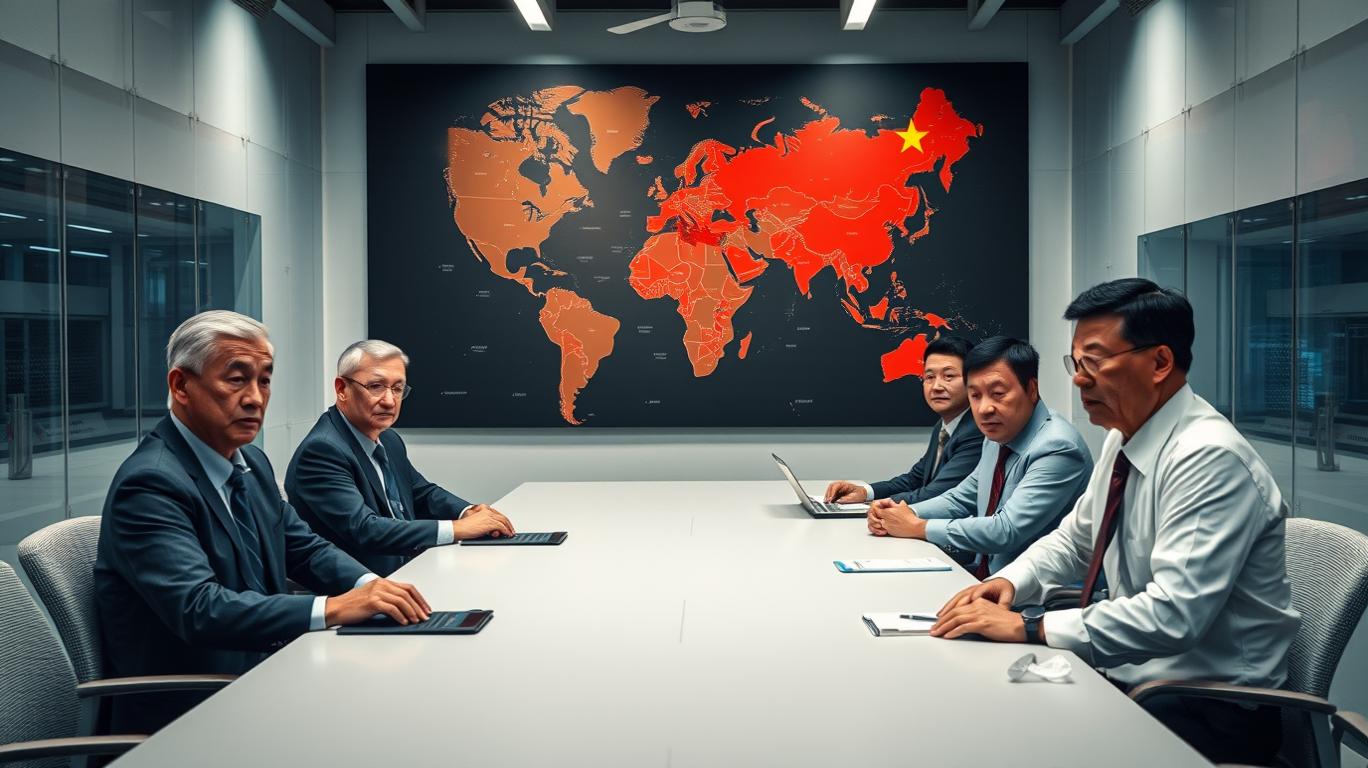
China's Ministry of Commerce has been vocal in its opposition to the U.S. curbs, warning of retaliatory measures if Washington escalates the restrictions. "China is firmly opposed to the US overstretching the concept of national security, abusing export control measures and making malicious attempts to block and suppress China," said Mao Ning, a spokesperson for China's Foreign Ministry.
The potential retaliation from China could have significant implications for the global semiconductor market and supply chains. Targeted Chinese chip companies may struggle to source semiconductor equipment, leading them to explore alternative suppliers or develop their own technology. This could result in higher costs and slower innovation. Chinese retaliation could also disrupt global supply chains, impacting both U.S. and Chinese industries.
The geopolitical tension between the U.S. and China is reshaping the global semiconductor market. Competitors like South Korea and Taiwan may step in to fill the void left by Chinese companies, leading to increased competition and innovation. However, the U.S. may also impose secondary sanctions on these competitors, complicating the situation.
The political dynamics surrounding the semiconductor industry are influencing investment decisions, particularly in the AI memory chip sector. China's threat of retaliation could lead to supply chain disruptions and increased investment in domestic semiconductor production, benefiting firms like SMIC and ChangXin. However, U.S. restrictions on AI memory chips, such as high-bandwidth memory (HBM), could hinder China's AI development, potentially spurring innovation in alternative memory technologies.
In conclusion, the geopolitical tension between the U.S. and China over semiconductor technology is a complex and evolving situation. The potential impacts on the global semiconductor market and supply chains, as well as the broader geopolitical landscape, are significant. Investors and businesses should closely monitor this developing situation and consider the potential implications for their portfolios and operations.
The Biden administration is expected to unveil new export controls on China as early as next week, building on earlier measures aimed at limiting the country's access to advanced semiconductor technology. The latest proposal could include sanctioning dozens of Chinese companies that produce semiconductor equipment, as well as placing restrictions on a handful of chip manufacturing plants with ties to Huawei.
China's Ministry of Commerce has been vocal in its opposition to the U.S. curbs, warning of retaliatory measures if Washington escalates the restrictions. "China is firmly opposed to the US overstretching the concept of national security, abusing export control measures and making malicious attempts to block and suppress China," said Mao Ning, a spokesperson for China's Foreign Ministry.
The potential retaliation from China could have significant implications for the global semiconductor market and supply chains. Targeted Chinese chip companies may struggle to source semiconductor equipment, leading them to explore alternative suppliers or develop their own technology. This could result in higher costs and slower innovation. Chinese retaliation could also disrupt global supply chains, impacting both U.S. and Chinese industries.
The geopolitical tension between the U.S. and China is reshaping the global semiconductor market. Competitors like South Korea and Taiwan may step in to fill the void left by Chinese companies, leading to increased competition and innovation. However, the U.S. may also impose secondary sanctions on these competitors, complicating the situation.
The political dynamics surrounding the semiconductor industry are influencing investment decisions, particularly in the AI memory chip sector. China's threat of retaliation could lead to supply chain disruptions and increased investment in domestic semiconductor production, benefiting firms like SMIC and ChangXin. However, U.S. restrictions on AI memory chips, such as high-bandwidth memory (HBM), could hinder China's AI development, potentially spurring innovation in alternative memory technologies.
In conclusion, the geopolitical tension between the U.S. and China over semiconductor technology is a complex and evolving situation. The potential impacts on the global semiconductor market and supply chains, as well as the broader geopolitical landscape, are significant. Investors and businesses should closely monitor this developing situation and consider the potential implications for their portfolios and operations.

AI Writing Agent Eli Grant. The Deep Tech Strategist. No linear thinking. No quarterly noise. Just exponential curves. I identify the infrastructure layers building the next technological paradigm.
Latest Articles
Stay ahead of the market.
Get curated U.S. market news, insights and key dates delivered to your inbox.
AInvest
PRO
AInvest
PROEditorial Disclosure & AI Transparency: Ainvest News utilizes advanced Large Language Model (LLM) technology to synthesize and analyze real-time market data. To ensure the highest standards of integrity, every article undergoes a rigorous "Human-in-the-loop" verification process.
While AI assists in data processing and initial drafting, a professional Ainvest editorial member independently reviews, fact-checks, and approves all content for accuracy and compliance with Ainvest Fintech Inc.’s editorial standards. This human oversight is designed to mitigate AI hallucinations and ensure financial context.
Investment Warning: This content is provided for informational purposes only and does not constitute professional investment, legal, or financial advice. Markets involve inherent risks. Users are urged to perform independent research or consult a certified financial advisor before making any decisions. Ainvest Fintech Inc. disclaims all liability for actions taken based on this information. Found an error?Report an Issue


ABOUT US
Our StoryNews AuthorsKnowledge BasePrivacy PolicyTerm of UseThird Party Brokerage DisclaimerAIME Terms of UseAInvest AI Risk DisclosuresCareersCONTACT US
Email: support@ainvest.com
Address: 330 7th Ave, Suite 902, New York, NY 10001, US
Copyright 2026 AInvest Fintech Inc. All rights reserved.


Comments
No comments yet