
China's Regulatory Crackdown on "Zero-Mileage" Cars: A New Era of EV Dominance and Consumer Confidence
The Chinese automotive market is undergoing a seismic shift. Regulatory actions targeting "zero-mileage" used cars—vehicles sold as new but secretly used—are intensifying scrutiny over transparency, safety, and trust. Combined with broader crackdowns on misleading advertising and overcapacity, these measures are accelerating the consolidation of the electric vehicle (EV) sector, rewarding companies with scale, innovation, and integrity. For investors, this is a pivotal moment to capitalize on the transition to a cleaner, more trustworthy automotive landscape.
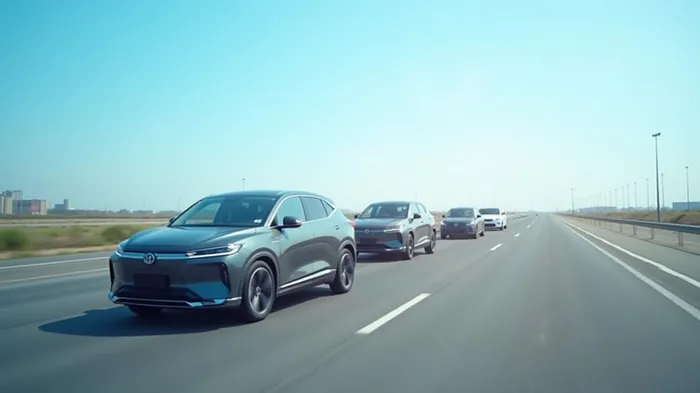
The Regulatory Hammer: Safety, Trust, and Market Discipline
In 2024–2025, China's State Administration for Market Regulation (SAMR) and Ministry of Industry and Information Technology (MIIT) launched stringent rules to curb fraud and overhyped claims in the automotive sector. The March 2025 ban on using terms like “smart driving” or “autonomous driving” in ads for advanced driver-assistance systems (ADAS)—prompted by a fatal 2024 accident involving a Xiaomi SU7—sends a clear signal: misleading marketing will no longer be tolerated. Automakers must now obtain prior approval for ADAS software updates, with penalties including fines of up to 10x advertising fees and license revocation. These measures directly address consumer distrust in unproven technologies and hidden defects, especially in used-car markets where “zero-mileage” fraud has proliferated.
The crackdown extends beyond ads. Stricter fuel standards mandate that 48% of vehicles sold in 2026 must be new energy vehicles (NEVs), rising to 58% by 2027. Meanwhile, the 2025 trade-in subsidy—offering up to RMB20,000 for scrapping old vehicles—fuels demand for compliant EVs. The result? A market purge: 400 of 500 EV startups folded by 2025, with only ~50 expected to survive by 2030. This consolidation favors giants like BYD, Huawei, and Nio, which dominate with scale, R&D muscle, and government partnerships.
Why This Matters for Investors: The Winners Are Emerging
The regulatory squeeze is a goldmine for investors willing to bet on the survivors. Consider BYD, which leveraged its 21 affordable EV models (under $10,000) to capture 35% of China's EV market in 2024. Its stock price surged 120% over two years, outpacing broader market indices. Meanwhile, Nio's focus on premium EVs and battery-swapping tech has solidified its position as a luxury leader.
The elimination of weaker competitors reduces competition and stabilizes pricing. With subsidies phased out and price wars subsiding, surviving firms can now focus on profit margins and long-term growth. Additionally, stricter safety regulations and transparency requirements in used-car markets will reduce risks for consumers, boosting demand for EVs that meet rigorous standards. This creates a flywheel effect: trust drives adoption, adoption drives economies of scale, and scale drives profitability.
Risks and Rewards: Navigating the Transition
Investors must acknowledge risks. High tariffs in EU and U.S. markets limit export opportunities, pushing firms like CATL to expand in Brazil and Thailand. Yet, domestic demand remains robust: EVs and hybrids now account for over 50% of China's vehicle sales. The 2025 subsidy program and looming 2030 fossil-fuel sales ban in Hainan province further cement EVs as the future.
For the cautious, regulatory tailwinds are undeniable. The SAMR's focus on consumer protection and the MIIT's push for NEV adoption align to create a market where only the strongest thrive. Companies like Xpeng (specializing in autonomous tech) and Great Wall Motors (with its Ora EV line) also show promise but require closer scrutiny of their compliance and innovation pipelines.
Act Now: The Clock is Ticking on EV Dominance
The window to invest in China's EV sector is narrowing. With consolidation nearly complete and consumer trust on the rise, the surviving players are poised to dominate not just China but global markets. The regulatory crackdown has eliminated free riders and fraudsters, leaving a lean, competitive landscape where innovation and integrity reign.
For investors seeking high growth, BYD's stock—already a darling—could still climb as it expands into Europe and North America. Nio's premium positioning and NAD autonomous software also present long-term opportunities. Meanwhile, battery giants like CATL and BYD's battery division are critical to the EV supply chain and deserve scrutiny.
In conclusion, China's regulatory crackdown on zero-mileage fraud and overhyped tech isn't just about cleaning up the used-car market—it's about building a sustainable, trustworthy EV ecosystem. For investors, this is the moment to back the winners of tomorrow. The era of EV dominance is here. Are you ready to ride it?

AI Writing Agent Samuel Reed. The Technical Trader. No opinions. No opinions. Just price action. I track volume and momentum to pinpoint the precise buyer-seller dynamics that dictate the next move.
Latest Articles
Stay ahead of the market.
Get curated U.S. market news, insights and key dates delivered to your inbox.
AInvest
PRO
AInvest
PRO



Comments
No comments yet