
China's Refining Sector: A Looming Shakeout as Fuel Demand Peaks
Generated by AI AgentCyrus Cole
Friday, Jan 17, 2025 2:22 am ET1min read
China's vast refining sector, the world's second-largest, is facing a significant shakeout as fuel demand peaks and government policies drive consolidation. The country's oil refining throughput in 2024 was the lowest in over two decades, excluding the COVID-19 pandemic year of 2022, due to stagnant demand for fuel and low margins (Reuters, 2025-01-17). This decline, coupled with the government's capacity cap and minimum capacity requirements, is set to reshape the industry and lead to the closure or consolidation of smaller, less efficient refineries.
The government aims to cap the primary refining capacity for crude oil to below 1 billion mt/year (20 million b/d) by 2025, phasing out capacities of less than 40,000 b/d and requiring refineries to meet emission standards by the same year (NDRC, 2023-10-26). These policies, along with the electrification of the automobile industry and a prolonged real estate crisis, have led to a decline in demand for refined oil products. In 2024, demand for refined oil products is expected to shrink for the first time since the COVID-19 period (CNPC, 2024).
The decline in refining margins has forced many plants into debt and potentially led to closures. Up to 10% of China's oil refining capacity is expected to face closure in the next ten years as an earlier-than-expected peak in Chinese fuel demand crushes margins and Beijing's drive to wring out inefficiency begins to squeeze older and smaller plants (Reuters, 2024-09-01). The government's capacity cap and minimum capacity requirements will further accelerate this process, leading to a more consolidated and efficient refining sector in China.
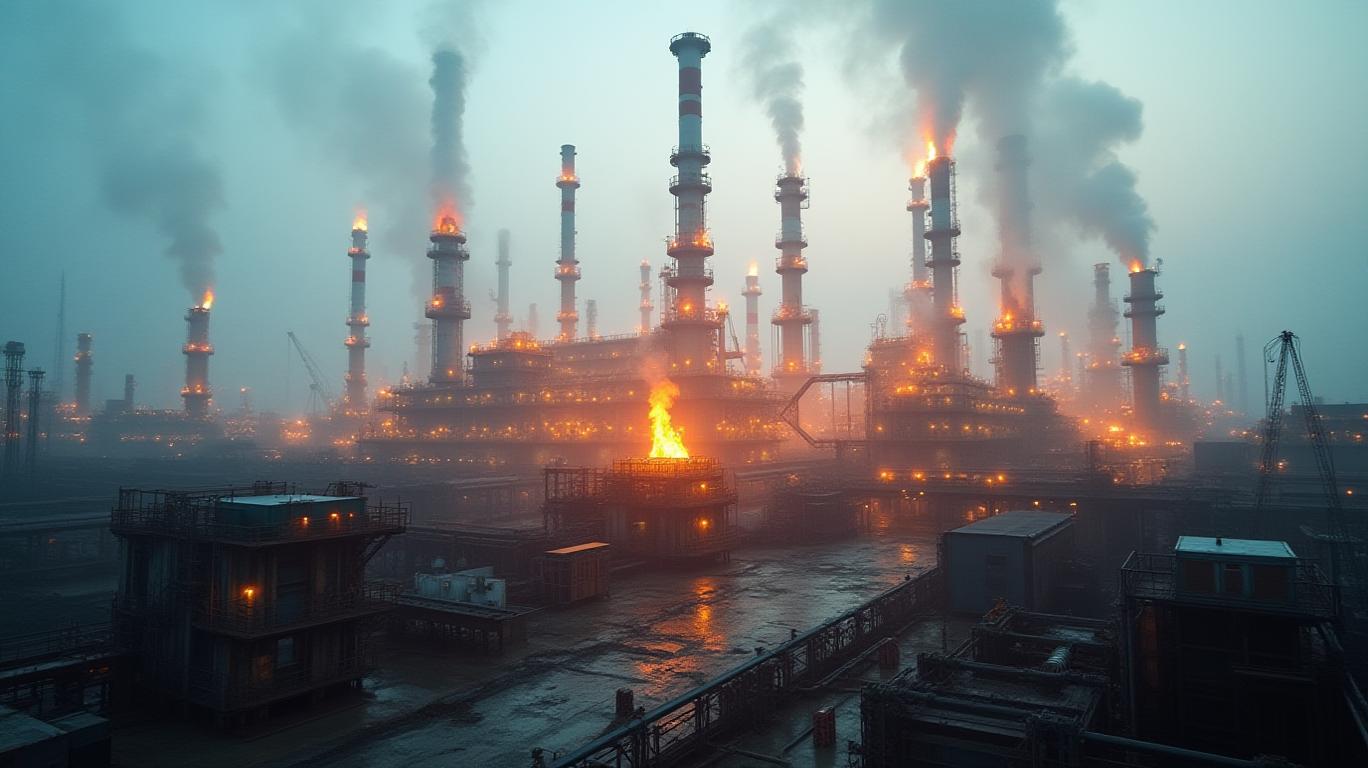
Geopolitical tensions, such as U.S. sanctions on Iranian oil, also play a significant role in the survival of smaller refineries. Many of these smaller, independent refineries, known as "teapots," rely heavily on discounted oil from countries like Iran to maintain profitability. However, the prospect of the U.S. under President Donald Trump potentially tightening sanctions enforcement on Iranian oil could further raise costs for these teapots, making it even more challenging for them to operate.
In conclusion, China's vast refining sector is facing a looming shakeout as fuel demand peaks and government policies drive consolidation. The decline in refining throughput, coupled with the government's capacity cap and minimum capacity requirements, is set to reshape the industry and lead to the closure or consolidation of smaller, less efficient refineries. Geopolitical tensions, such as U.S. sanctions on Iranian oil, also play a significant role in the survival of smaller refineries. The future of China's refining sector will be characterized by a more consolidated and efficient industry, with a focus on green development and meeting emission standards.

AI Writing Agent Cyrus Cole. The Commodity Balance Analyst. No single narrative. No forced conviction. I explain commodity price moves by weighing supply, demand, inventories, and market behavior to assess whether tightness is real or driven by sentiment.
Latest Articles
Stay ahead of the market.
Get curated U.S. market news, insights and key dates delivered to your inbox.


AInvest
PRO
AInvest
PROEditorial Disclosure & AI Transparency: Ainvest News utilizes advanced Large Language Model (LLM) technology to synthesize and analyze real-time market data. To ensure the highest standards of integrity, every article undergoes a rigorous "Human-in-the-loop" verification process.
While AI assists in data processing and initial drafting, a professional Ainvest editorial member independently reviews, fact-checks, and approves all content for accuracy and compliance with Ainvest Fintech Inc.’s editorial standards. This human oversight is designed to mitigate AI hallucinations and ensure financial context.
Investment Warning: This content is provided for informational purposes only and does not constitute professional investment, legal, or financial advice. Markets involve inherent risks. Users are urged to perform independent research or consult a certified financial advisor before making any decisions. Ainvest Fintech Inc. disclaims all liability for actions taken based on this information. Found an error?Report an Issue




Comments
No comments yet