
China's Real Estate: Navigating Declines and Unlocking Opportunities
The Chinese real estate market has been in a prolonged slump, with housing prices declining for over two years. Yet, recent data reveals a glimmer of hope: the pace of price declines is moderating. Investors now face a critical question—are these declines a temporary correction, or do they signal a structural shift with long-term implications? This article dissects the trends, policy responses, and emerging opportunities in China's real estate sector.
The Price Decline Dynamics: Structural or Cyclical?
Since mid-2023, Chinese home prices have fallen steadily, with annual declines reaching 4.0% in April 2025. However, the rate of decline has slowed, narrowing to 3.5% by May 2025. This moderation is most evident in first-tier cities like Shanghai, where new home prices rose by 10.1% year-on-year in March 2025, bucking the national trend. In contrast, lower-tier cities such as Guangzhou and Shenzhen saw prices drop by 7.2% and 3.9%, respectively.
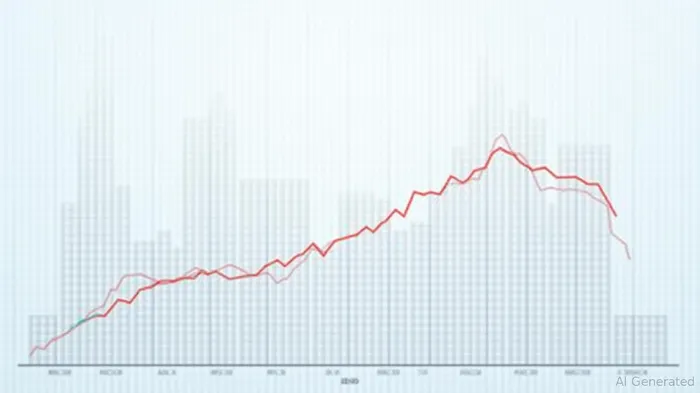
The divergence between cities underscores a geographic split: first-tier urban centers with strong demand fundamentals and policy support are stabilizing, while smaller cities grapple with over-supply and weak economic activity.
Policy Responses and Their Impact
The government has deployed a mix of measures to stabilize the market:
1. Interest Rate Cuts: The 5-year Loan Prime Rate (LPR) fell to 3.60% by April 2025, with average mortgage rates dropping to 3.09% in late 2024.
2. Subsidies and Tax Relief: First-time buyers benefit from reduced deed taxes and down payment requirements as low as 15%.
3. Inventory Management: A CNY 300 billion program to purchase unsold homes for affordable housing and a CNY 4 trillion loan facility to complete stalled projects.
These policies have eased liquidity for developers and softened the price decline. However, their effectiveness hinges on resolving structural issues like excess inventory (421.58 million sq m as of March 2025) and affordability constraints (median home prices at RMB 16,740/sq m vs. stagnant wages).
Structural Challenges Ahead
Despite the policy push, long-term risks persist:
- Inventory Overhang: Lower-tier cities face a 7.8% annual decline in second-hand home prices, signaling oversupply.
- Economic Headwinds: Youth unemployment (16–24 years) hit 16.5% in March 2025, reducing demand for housing.
- Trade Tensions: U.S. tariffs continue to crimp export-linked jobs, which account for 16 million workers.
Investment Opportunities in the Sector
Investors should focus on policy beneficiaries and resilient segments:
- Affordable Housing and Urban Renewal
The government's CNY 8.7 million affordable housing target creates demand for developers like China Vanke and Poly Development, which have strong balance sheets and urban project pipelines.
First-Tier City Developers
Companies with exposure to Beijing, Shanghai, and Guangzhou, such as China Merchants Shekou, may outperform due to stronger demand and policy support.
Real Estate Investment Trusts (REITs)
REITs like China REITs (C-REITs) offer exposure to infrastructure and rental housing, which benefit from state-backed urban renewal.
Mortgage-Backed Securities (MBS)
- Lower mortgage rates and improving loan processing times make MBS a safer bet, particularly in first-tier cities.
Risks and Considerations
- Policy Execution: Success depends on the government's ability to absorb inventory and revive demand without overstimulating.
- Geopolitical Risks: Escalating U.S.-China trade disputes could prolong economic stagnation.
- Execution Risk: Over-leveraged developers may default, despite the white-list mechanism.
Conclusion: A Cautious, Opportunistic Approach
The real estate sector's stabilization is underway, but investors should proceed with caution. First-tier cities and policy-backed segments offer the best risk-reward balance. Avoid overexposure to lower-tier cities and developers with high debt.
The key takeaway: China's real estate market is not collapsing, but it is restructuring. Investors who target quality assets aligned with policy goals will find opportunities amid the turbulence.
Nick Timiraos is a pseudonym for a financial journalist specializing in Asian markets. This article is for informational purposes only and not a recommendation for investment.

Stay ahead of the market.
Get curated U.S. market news, insights and key dates delivered to your inbox.




Comments
No comments yet