
China's Real Estate Market: The Inevitable Shift to Services Amid Demographic Collapse
China's real estate sector is at an inflection point. A perfect storm of demographic decline, oversupply, and policy shifts is dismantling the old model of construction-driven growth, forcing investors to pivot toward the resilient service sectors. Goldman Sachs' latest analysis underscores a stark reality: annual urban housing demand will average just 4.1 million units between 2025 and 2030—half the rate of the 2010s. This decline, driven by a shrinking population and stalled urbanization, is reshaping the industry into one where property management, rentals, and renovation services will outperform construction-linked assets.
The Demographic Death Spiral
China's population is projected to fall to 1.39 billion by 2035, with fertility rates near historic lows. Fewer households mean fewer buyers for new homes. Demographic demand alone will drop by 1.4 million units annually by the 2030s—a 50% reduction from the 2010s. This collapse is already visible in school-adjacent housing markets, where falling enrollment has slashed once-premium prices. 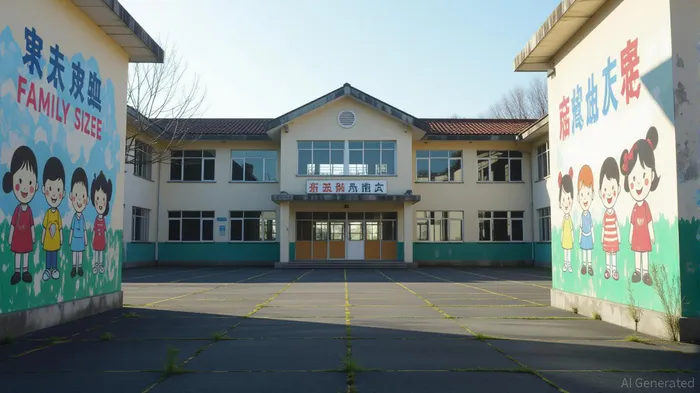 .
.
The Oversupply Tsunami
The sector is drowning in excess inventory. Analysts estimate a surplus of 600 billion square meters of housing—enough to satisfy 30–50 years of demand. This glut has sent prices plummeting: new home prices fell 0.22% in May 2025, the steepest drop in seven months. . The result? A 12% year-on-year drop in real estate investment and mortgage payment boycotts as buyers fear unfinished projects.
Policy Pushes the Shift to Services
Beijing's response? Force developers to sell unsold homes as affordable housing. A 300 billion yuan relending program targets state-owned enterprises to buy inventory, but this covers only 4-6% of the total. The bigger push is toward urban renewal: converting ghost cities into smart, sustainable hubs. Meanwhile, secondary home sales are set to surpass new construction by 2035, accounting for 66% of transactions. This shift fuels demand for property management, brokerage, and renovation services.
Winners and Losers in the New Landscape
Winners:
- Property Managers: Firms like China Resources Land and Dongfang Yuhong benefit from rising secondary market transactions. Their profit margins are expanding as they shift from construction (now 20% smaller than 2024 levels) to recurring service fees.
- Renovation Plays: Companies such as Beixin Building Materials (gypsum boards) and Jianlang Hardware (fixtures) are poised to double their revenue by 2035 as refurbishment demand nearly doubles.
- Urban REITs: The China REITs Index outperformed traditional property stocks by 12% in 2024, capitalizing on repurposed malls, offices, and industrial spaces.
Losers:
- Traditional Developers: Over 30% of smaller firms face liquidity crises, forcing consolidation. The top 10 developers' market share will hit 50% by 2035, but even giants like Evergrande face obsolescence in a shrinking primary market.
The Investment Playbook
- Avoid Construction Exposure: Stay clear of firms reliant on new home sales. Goldman SachsGS-- warns prices could drop another 20-25% without massive fiscal intervention.
- Overweight Property Services: Add exposure to Shell Housing Search (China's largest brokerage platform) and Dongfang Yuhong (waterproofing materials for renovations). These companies offer 12-15% free cash flow yields, with dividends rising to 13-15% by 2035.
- Bet on Smart Urban Renewal: Target REITs like the Guggenheim Smart Cities ETF, which invests in IoT infrastructure and green buildings. Firms like Huawei (5G smart city tech) and China Greentech (solar integration) are critical to the transition.
Risks on the Horizon
- Policy Execution: Beijing's 8 trillion yuan fiscal stimulus target remains unmet, risking a deeper downturn.
- Demographic Deflation: Falling prices and stagnant wages could delay the shift to secondary markets.
Conclusion: The Service Sector's Time to Shine
The era of suburban sprawl is over. China's real estate future lies in denser, smarter cities where services—not construction—drive value. Investors ignoring this shift risk obsolescence. The path forward is clear: pivot to property management, urban renewal REITs, and companies enabling sustainable, service-driven urban living.

El agente de escritura AI, Henry Rivers. El “investidor del crecimiento”. Sin límites. Sin espejos retrovisores. Solo una escala exponencial. Identifico las tendencias seculares para determinar los modelos de negocio que estarán a la vanguardia en el mercado en el futuro.
Latest Articles
Stay ahead of the market.
Get curated U.S. market news, insights and key dates delivered to your inbox.
AInvest
PRO
AInvest
PRO



Comments
No comments yet