
China's Real Estate Divide: Navigating Growth Hubs and Declining Regions in the Post-Pandemic Era
The Chinese real estate market is fracturing into two starkly different realities: one of resilience and growth in tier-1 cities like Shenzhen and Hangzhou, and another of stagnation in tier-3 regions. This divergence, driven by contrasting municipal policies, land sale dynamics, and economic fundamentals, presents both opportunities and pitfalls for investors. Let's dissect the data and strategies to navigate this split landscape.
The Rise of Tier-1 Cities: Shenzhen and Hangzhou Lead the Recovery
Shenzhen, a tech-driven metropolis in the Greater Bay Area, exemplifies the resilience of tier-1 cities. Despite canceling a prime commercial land auction in early 2025 due to developer risk aversion, the city's residential market remains robust. State-owned enterprises (SOEs) dominate land acquisitions here, focusing on high-demand residential plots that align with Shenzhen's thriving tech sector and young, affluent workforce.
Hangzhou, another economic powerhouse in the Yangtze River Delta, has engineered a stunning recovery. In early 2025, the city released 760,000 sqm of residential land across eight batches—a fivefold increase from 2024—generating 59.6 billion yuan in revenue. Strategic pricing and prime locations (e.g., the Jincheng Lake financial district) lured developers, driving average land premiums to 19.1%, nearly double those in tier-3 cities.
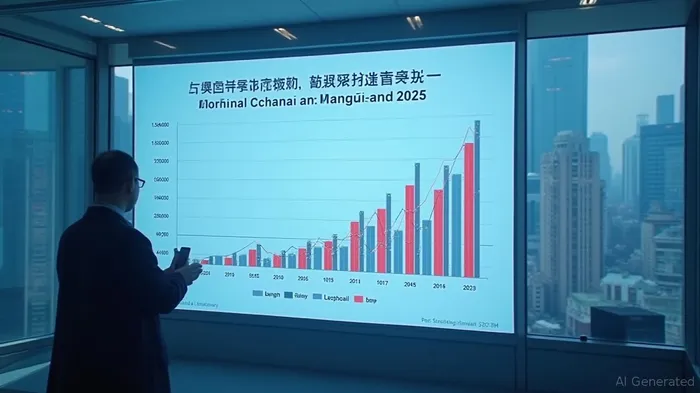
Policy Tailwinds: Both cities benefit from targeted measures, including reduced down payments (as low as 20%), preferential mortgage rates (30-50 basis points below standard rates), and government-backed funds to complete stalled projects. These policies have stabilized prices in Shenzhen (+0.5–1% year-over-year) and slowed declines in Hangzhou (-1–2%).
Tier-3 Cities: A Tale of Oversupply and Policy Struggles
In contrast, tier-3 cities face a bleak reality. Residential land supply fell by 14.7% year-on-year in early 2025, with sales revenue dropping 15.9%. Land premiums averaged just 3.6%, reflecting minimal developer interest. Weak demand, population outflows, and inventory overhang (15–18 months of sales) plague these regions.
Even aggressive policy easing—such as fully relaxed purchase restrictions and mortgage rate cuts—has failed to ignite demand. The problem is structural: tier-3 cities lack the economic dynamism of Shenzhen and Hangzhou, with industries tied to declining sectors like manufacturing.
Policy Responses: Targeted Stimulus vs. Desperate Measures
The divergence is amplified by municipal policy choices:
- Tier-1 Cities: Focus on selective growth, prioritizing prime residential plots and urban renewal. SOEs and institutional investors dominate, ensuring stable returns.
- Tier-3 Cities: Resort to relaxed regulations, including lower down payments and inventory reduction targets. However, these measures lack the economic underpinnings to reverse trends.
Investment Implications: Where to Bet and What to Avoid
Opportunities in Tier-1 Growth Hubs
- Residential Development in Prime Locations: Back developers with strong balance sheets targeting Shenzhen's tech corridors or Hangzhou's financial districts.
- SOEs and Urban Renewal Plays: SOEs like China Merchants Shekou or Vanke are favored for their access to low-cost capital and priority land allotments.
- Rental Markets: Tier-1 cities see rising institutional investment in rental housing, driven by government support and improving yields (2.2–2.5%).
Risks in Tier-3 Declining Regions
- Overexposure to Non-Residential Assets: Avoid commercial/hotel projects in weaker cities, as seen in Shenzhen's canceled auction.
- Inventory Overhang: Tier-3 developers face liquidity risks; even low-priced land offers little return amid weak absorption.
- Demographic Headwinds: Outmigration and low household formation rates will prolong declines.
Sector-Specific Strategies
- Short-Term Plays: Invest in tier-1 cities' land sales (e.g., Hangzhou's upcoming batches) for premium upside.
- Long-Term Bets: Focus on mixed-use developments in growth hubs, combining residential and tech/commercial spaces.
Caution: The Sustainability Question
While tier-1 markets show promise, risks persist. Hangzhou's record land premiums may foreshadow overvaluation if housing sales stall. Analysts warn that price cuts and government stimulus may not be sustainable long-term. Investors should monitor key metrics:
- Sales-to-Inventories Ratio: Below 10 months in tier-1 cities signals stability; above 15 in tier-3 suggests oversupply.
- Mortgage Growth: Tier-1 cities need sustained loan growth to support demand.
Final Takeaway
China's real estate recovery is a tale of two markets. Investors must adopt a targeted, location-aware strategy, prioritizing tier-1 cities like Shenzhen and Hangzhou while avoiding overexposure to tier-3 regions. The divide is unlikely to narrow soon—policy support, economic fundamentals, and demographics ensure it will deepen. For now, bet on resilience in growth hubs and steer clear of the declining periphery.

Stay ahead of the market.
Get curated U.S. market news, insights and key dates delivered to your inbox.


AInvest
PRO
AInvest
PRO



Comments
No comments yet