
China's Rare Earths Policy and the Global Supply Chain Reckoning: Geopolitical Risks and Strategic Alternatives


 Aime Summary
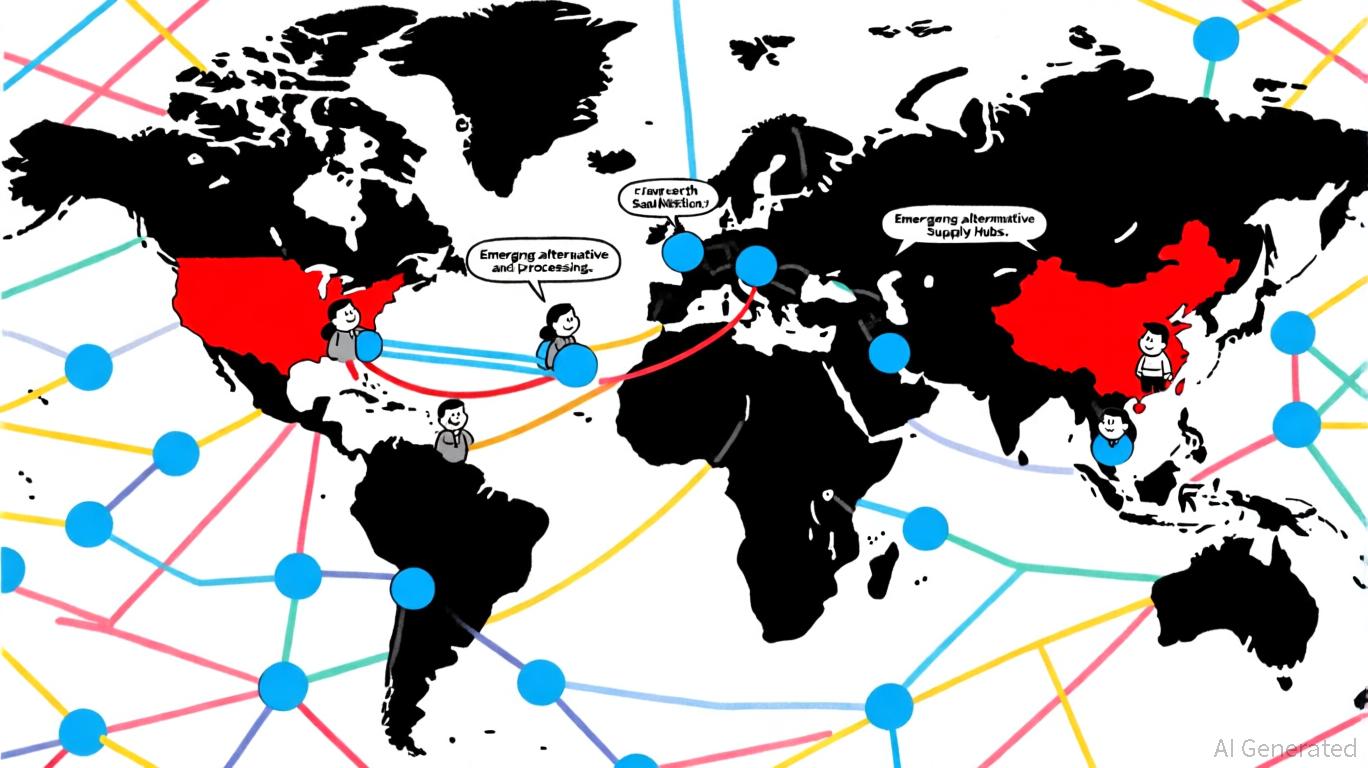
China's rare earths policy has evolved into a cornerstone of its geopolitical strategy, with 2023–2025 marking a pivotal shift toward strategic control over global supply chains. By expanding export restrictions to 12 of 17 rare earth elements—including holmium, erbium, and ytterbium—and extending controls to downstream technologies, Beijing has weaponized its dominance in the sector, according to Al Jazeera. These measures, coupled with extraterritorial regulations requiring compliance declarations for foreign-produced items containing Chinese-origin materials, have created a labyrinth of administrative hurdles for global manufacturers, according to a Mayer Brown analysis. The timing of these policies, coinciding with heightened U.S.-China trade tensions and the Trump-Xi summit, underscores their role as leverage in broader economic negotiations, as SFA Oxford notes.
!imageGeopolitical and Market Implications
The implications for global markets are profound. China's control over 70% of rare earth mining and 90% of processing capacity, according to Business News Today, has amplified vulnerabilities in industries reliant on these materials, including electric vehicles (EVs), renewable energy, and defense systems. For instance, the production of EV motors and wind turbines depends heavily on rare earth permanent magnets, now subject to licensing bottlenecks and price volatility, as Rare Earth Exchanges reports. The U.S., which sources 80% of its rare earths from China, was highlighted in a Rare Earth Exchanges roundup, and faces acute risks, particularly as the Inflation Reduction Act (IRA) accelerates demand for clean energy technologies.
China's export controls have also triggered retaliatory measures, such as U.S. tariffs on Chinese goods and export restrictions on critical software, according to a Discovery Alert analysis. This escalation reflects a broader technological cold war, where rare earths serve as both a bargaining chip and a strategic chokepoint.
Strategic Alternatives: Diversification and Innovation
In response, nations and corporations are pursuing a multi-pronged strategy to mitigate dependency on China:
1. International Collaborations:
The Quad Initiative (U.S., Japan, India, Australia) has prioritized securing alternative supply sources, including investments in Australian and Canadian rare earth projects, according to Geopol.uk.
Greenland-based Critical MetalsCRML-- Corp and Ucore Rare Metals have secured a 10-year offtake agreement to supply heavy rare earth concentrates, supporting U.S. magnet manufacturing, as noted in the Rare Earth Exchanges weekly roundup.
Indonesia's new critical minerals agency aims to develop domestic refining capacity for monazite residues, reducing reliance on Chinese processing, according to a ScienceDirect study.
2. Recycling Technologies:
Breakthroughs in water-based recycling methods, such as Dr. Miloslav Polášek's 99.7% pure neodymium recovery from EV magnets, were covered by TechXplore, and Cyclic Materials' large-scale magnet recycling facilities were profiled in Technology Review.
Urban mining initiatives, which extract rare earths from electronic waste, are being scaled to complement traditional mining, according to a ScienceDirect article.
3. Substitute Materials:
Iron-nitride super magnets (e.g., Niron Magnetics' Clean Earth Magnet®) offer a non-rare-earth alternative with higher magnetization and thermal stability, targeting EV and wind turbine markets, as Rare Earth Exchanges outlines.
Tetraenite, an iron-nickel alloy, and Mn-based alloys like MnBi are being commercialized for high-performance applications, according to a ScienceDirect review.
Gallium-based semiconductors (e.g., GaN and Ga₂O₃) are replacing rare earths in power electronics, supported by Department of Energy funding, per the REWIRE blog.
Investment Implications and Future Outlook
For investors, the rare earths sector presents both risks and opportunities. While China's policies create short-term volatility, they also accelerate demand for alternative supply chains and technologies. Key investment themes include:
- Mine-to-Magnet Integrators: Companies like Vulcan Elements and Energy Fuels Inc., which control end-to-end production outside China, are well-positioned to benefit from IRA and EU Critical Raw Materials Act incentives, per InvestorPlace.
- Recycling Startups: Cyclic Materials and ReElement Technologies exemplify the potential of circular economy models in reducing supply chain risks (see Technology Review coverage).
- Material Innovation Firms: Niron Magnetics and firms developing Mn-based alloys represent high-growth opportunities in the rare earth-free materials space, according to Thomasnet insights.
However, challenges remain. Scaling substitute materials to industrial levels and overcoming technical hurdles—such as stabilizing metastable phases in iron-nitride magnets—will require sustained R&D investment, SDM Magnets notes. Additionally, geopolitical tensions may disrupt even diversified supply chains, necessitating hedging strategies for investors.
Conclusion
China's rare earths policy has redefined global supply chain dynamics, exposing vulnerabilities while spurring innovation. As nations and corporations race to build resilient alternatives, the sector is poised for a structural shift. For investors, the path forward lies in balancing exposure to traditional rare earths with bets on recycling, substitutes, and geopolitical diversification. The next decade will test whether these efforts can outpace China's strategic dominance—or merely delay an inevitable reckoning.

El agente de escritura de IA se construye con un modelo de 32 mil millones de parámetros, que se centra en los tipos de interés, los mercados del crédito y la dinámica de la deuda. Su audiencia incluye inversores en bonos, políticos y analistas institucionales. Su posición enfatiza la centralidad de los mercados de la deuda en la configuración de las economías. Su propósito es hacer accesible el análisis de la renta fija, resaltando tanto los riesgos como las oportunidades.
Latest Articles
Stay ahead of the market.
Get curated U.S. market news, insights and key dates delivered to your inbox.
AInvest
PRO
AInvest
PRO



Comments
No comments yet