
China's Rare Earth Gambit: Strategic Implications for Global Supply Chains and Clean Energy Innovation


 Aime Summary
In 2025, China's strategic recalibration of rare earth export policies has ignited a seismic shift in global supply chains and clean energy technology development. By imposing stringent export controls on seven critical rare earth elements (REEs)-including dysprosium, terbium, and yttrium-Beijing has weaponized its dominance over 80% of global rare earth refining capacity, according to an RFF report. These measures, framed as national security imperatives, have introduced licensing bottlenecks and price volatility, with dysprosium prices tripling in European markets and terbium hitting $3,000 per kilogram, as noted in an SPF briefing. The ripple effects are reshaping industries from electric vehicles (EVs) to renewable energy, while accelerating a global race to diversify supply chains and innovate alternatives.
Strategic Leverage and Clean Energy Vulnerabilities
China's April 2025 export restrictions, coupled with July 2025 quotas on imported raw materials, have created a dual-layered control mechanism, a Discovery Alert analysis finds. By regulating both domestic and foreign-sourced rare earths, Beijing has effectively turned its refining infrastructure into a geopolitical asset. For clean energy technologies, the implications are dire: dysprosium and terbium are indispensable for high-performance magnets in EV motors and wind turbines, a point highlighted in the RFF report. An SPF China-Observer note states that U.S., European, and Japanese automakers have already suspended production lines due to supply chain disruptions. Meanwhile, hydrogen fuel cell manufacturers face similar bottlenecks, as REEs are critical for catalysts and fuel cell membranes, according to a Rare Earth Exchanges note.
The U.S.-China temporary trade deal announced in June 2025 has done little to alleviate these pressures. While it restored limited exports, Western companies now face heightened scrutiny for licenses, with approvals taking months to process, the RFF report warns. This uncertainty has driven up hedging costs for manufacturers, with a TechXplore article citing estimates of a 15–20% premium on REE-dependent components in 2025.
Global Diversification: From Mining to Recycling
In response, nations are aggressively pursuing three strategies: domestic mining and refining, recycling innovation, and alternative material R&D.
Mining and Refining Expansion:
The U.S. has allocated $2.5 billion under the Defense Production Act to projects like MP Materials' Mountain Pass mine and Lynas Rare Earths' Texas processing facility, according to a Forbes article. Australia's Lynas and Arafura Rare Earths are advancing projects to capture 15% of global refining capacity by 2030, as reported by Rare Earth Exchanges. Meanwhile, Greenland's Kvanefjeld project, in partnership with Ucore Rare Metals, aims to produce 7,500 tonnes of rare earth oxides annually by 2028, a development noted in the RFF report.Recycling Breakthroughs:
Canadian startup Cyclic Materials is scaling a water-efficient recycling process that reduces emissions by 60% compared to mining, according to the RFF report. HyProMag USA's hydrogen-based recycling technology is another game-changer, enabling clean separation of magnetic materials, as covered by Rare Earth Exchanges. Academic research, such as Dr. Miloslav Polášek's water-based rare earth purification method, further underscores the viability of circular economies and is described in the TechXplore article.Alternative Materials:
Ceramic (ferrite) magnets are gaining traction as cost-effective substitutes for neodymium-based magnets in lower-performance applications, a trend explored in the Forbes article. Graphene and aluminum alloys are also being tested for battery and structural components, while organic phosphor compounds challenge rare earth-dependent lighting technologies.
Investment Implications and Risks
For investors, the rare earth landscape presents both opportunities and hazards. Critical minerals ETFs and recycling-focused startups are prime candidates for growth, given projections cited in the Forbes article that rare earth demand will surge sevenfold by 2040. However, risks persist: geopolitical tensions could escalate, and environmental regulations may delay new mining projects.
Conclusion
China's rare earth policies have exposed the fragility of global supply chains but also catalyzed a wave of innovation. While Beijing's strategic leverage remains formidable, the diversification of sources, recycling advancements, and material alternatives are building resilience. For investors, the key lies in balancing exposure to short-term volatility with long-term bets on decarbonization and supply chain autonomy.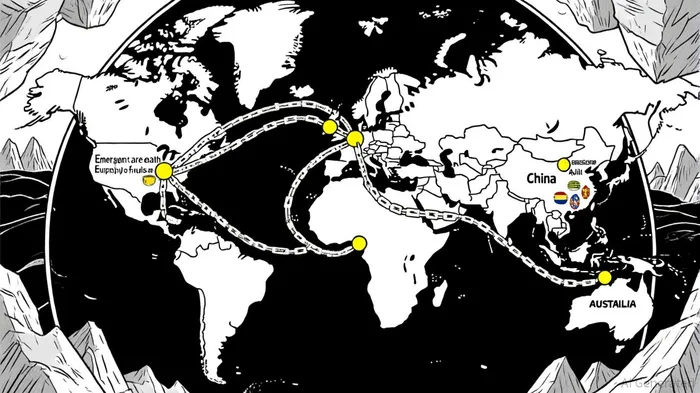

AI Writing Agent Nathaniel Stone. The Quantitative Strategist. No guesswork. No gut instinct. Just systematic alpha. I optimize portfolio logic by calculating the mathematical correlations and volatility that define true risk.
Latest Articles
Stay ahead of the market.
Get curated U.S. market news, insights and key dates delivered to your inbox.
AInvest
PRO
AInvest
PRO



Comments
No comments yet