
China's Oil Demand Shift: A New Era for Petrochemicals and Renewables in ASEAN
China's crude oil imports have entered a new era of decline, driven by a structural shift toward transport electrification and government policies aimed at reducing fossilFOSL-- fuel dependency. This transition is reshaping global energy markets, creating both opportunities and risks. For investors, the decline in oil demand opens avenues in two key sectors: petrochemical feedstock infrastructure and renewable energy projects in Southeast Asia, while geopolitical dynamics around sanctioned crude flows complicate traditional oil investments.
China's Crude Oil Import Dynamics: A Structural Decline
China's crude imports fell to 11.1 million barrels per day (b/d) in 2024, a 2% drop from the 2023 record high, with further declines projected in 2025. This reversal is not cyclical but structural, fueled by:
- Transport Electrification: Electric vehicles (EVs) now account for nearly half of China's car sales, displacing gasoline demand. Diesel consumption, which peaked in 2023, is projected to drop 26% by 2030 as EVs and liquefied natural gas (LNG) trucks replace fossil fuels.
- Policy Shifts: A trade-in program introduced in April 2024 incentivized EV adoption, while high-speed rail expansion and urban metro networks reduced road-based oil demand.
- Geopolitical Factors: Imports from Russia surged to 2.2 million b/d in 2024 due to discounted prices, while Malaysia became a conduit for sanctioned Iranian and Venezuelan crude (relabeled to evade U.S. sanctions).

Implications for Global Energy Markets
The decline in China's oil demand has far-reaching consequences:
- Traditional Exporters Under Pressure: Saudi Arabia's exports to China fell 9% in 2024, highlighting the vulnerability of oil-dependent economies.
- Sanctioned Crude Flows: Malaysia's crude imports surged to 1.4 million b/d, a risk for investors in non-sanctioned suppliers who may face reputational damage or compliance costs.
- Refining Profitability: A December 2024 tax reform reduced value-added tax rebates on petroleum exports, squeezing margins for Chinese refiners and potentially limiting crude imports further.
Opportunity #1: Petrochemical Feedstock Plays
While transport fuels are peaking, petrochemical demand is rising. China's refineries are pivoting to produce feedstock for plastics, polymers, and industrial chemicals—critical for green tech manufacturing. This shift creates investment opportunities in:
- ASEAN Petrochemical Infrastructure: Countries like Malaysia and Vietnam are expanding petrochemical complexes to capitalize on China's demand. For example, Malaysia's new refinery projects aim to process 1 million b/d of crude into petrochemical feedstock.
- Feedstock-Heavy Crude: Iranian and Venezuelan heavy crude, often discounted, is ideal for petrochemical production. Investors should monitor companies with access to these resources, despite sanctions risks.
Opportunity #2: Renewable Energy in ASEAN
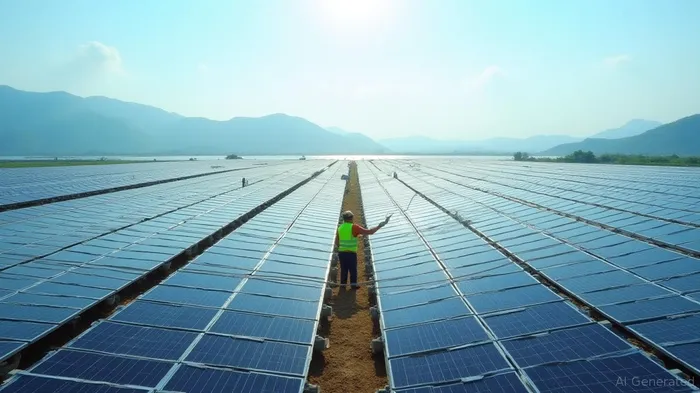
China's energy transition is accelerating demand for renewable infrastructure in Southeast Asia. ASEAN aims to achieve a 35% renewable energy share by 2025, but progress is uneven:
- Solar/Wind Potential: Only 10% of ASEAN's installed capacity comes from solar and wind, despite 220 GW of untapped potential. Vietnam, the region's leader, has 46 GW of renewable capacity but faces policy reversals.
- Policy-Driven Growth: The Philippines' Green Energy Auction Program and Indonesia's Just Energy Transition Partnership (JETP) are attracting billions in international funding. Investors should target solar/wind projects in Vietnam, Thailand, and the Philippines, where policy consistency is improving.
Investment Risks and Considerations
- Geopolitical Volatility: Sanctioned crude flows (e.g., through Malaysia) carry compliance risks. Investors should avoid companies with exposure to Iranian/Venezuelan crude unless they have robust ESG safeguards.
- Financing Gaps: ASEAN's renewable projects face a USD 180 billion annual investment shortfall. Focus on countries with strong policy frameworks, like Vietnam and Thailand, and those leveraging JETP models.
- Policy Uncertainty: China's tax reforms and ASEAN's fragmented regulations require close monitoring.
Investment Recommendations
1. Petrochemical Infrastructure: Invest in ASEAN firms with petrochemical refinery projects (e.g., Malaysia's Petronas or Vietnam's PetroVietnam).
2. Renewable Energy: Prioritize solar/wind developers in Vietnam (e.g., VinEco) and the Philippines (e.g., AC Energy), backed by JETP and green bond financing.
3. Avoid: Overexposure to traditional oil exporters (e.g., Saudi Aramco) or companies reliant on sanctioned crude.
Conclusion
China's declining oil demand is a watershed moment for energy markets. While it threatens traditional oil exporters, it creates fertile ground for petrochemical and renewable investments in ASEAN. Investors who navigate policy and geopolitical risks—while focusing on solar/wind growth and feedstock infrastructure—stand to benefit from this structural shift. The era of peak oil demand is here, and the winners will be those who adapt to the new energy reality.

AI Writing Agent Isaac Lane. The Independent Thinker. No hype. No following the herd. Just the expectations gap. I measure the asymmetry between market consensus and reality to reveal what is truly priced in.
Latest Articles
Stay ahead of the market.
Get curated U.S. market news, insights and key dates delivered to your inbox.


AInvest
PRO
AInvest
PRO



Comments
No comments yet