
China's Middle East Gambit: Navigating Energy Markets in a Shifting Geopolitical Landscape
The Middle East has long been a geopolitical chessboard, but China's growing influence there is rewriting the rules of engagement. Over the past two years, Beijing has deepened its ties to regional energy producers like Iran while expanding infrastructure projects in Israel—a balancing act that now confronts unprecedented challenges. For investors, this volatile dynamic presents both opportunities and risks. Here's how to parse them.
The Energy Play: China's Pivot to Iran and the Price of Oil
China's 25-year strategic partnership with Iran, finalized in 2021 and expanded through 2025, has made Tehran its largest Middle Eastern oil supplier. This partnership is not merely transactional; it is a pillar of Beijing's energy security strategy. Chinese firms now control critical Iranian infrastructure, including the Chabahar Port, a gateway to Central Asia and beyond.
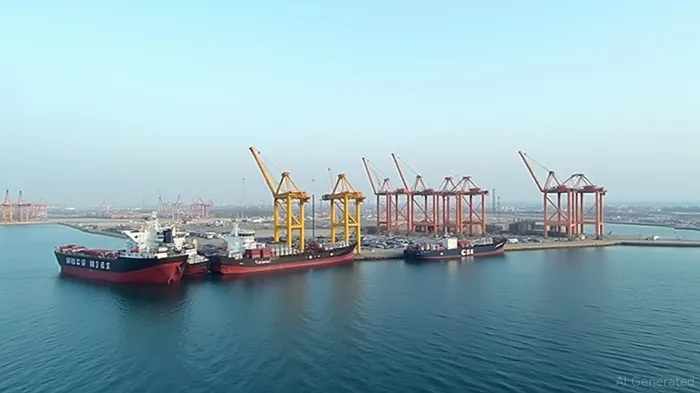
The stakes here are clear: Iran's oil reserves and China's need for energy diversification form a symbiotic relationship. However, geopolitical risks are acute. The 2025 Israel-Iran war, which saw attacks on energy infrastructure, underscored how fragile this supply chain is. Investors should monitor Brent crude prices for clues about regional stability.
A sustained spike in oil prices could benefit energy commodity ETFs like the United States Oil Fund (USO), while volatility may favor short-term traders. Yet, long-term investors should consider the broader trend: China's demand for Middle Eastern oil is structural, not cyclical.
Infrastructure Plays: Betting on China's Belt and Road
China's Belt and RoadROAD-- Initiative (BRI) has turned the Middle East into a testing ground for its global infrastructure ambitions. In Israel, the Haifa Port, operated by China's Shanghai International Port Group (SIPG), is a flagship project. The port's expansion aims to position Israel as a regional logistics hub—a move that has drawn U.S. scrutiny over security concerns.
Investors in regional infrastructure stocks, such as China Communications Construction Company (CCCC) or infrastructure ETFs like the iShares Global Infrastructure ETF (IGF), may find value here. However, geopolitical friction complicates the picture. Post-2025, Israeli distrust of China has grown, with public opinion polls showing declining favorability. This could delay or renegotiate projects like the proposed Tehran-Mashhad high-speed rail, which links Iran to BRI networks in Central Asia.
The Diplomatic Tightrope: Risks and Rewards
China's diplomatic balancing act—supporting Iran's sovereignty while maintaining ties to Israel—has reached its limits. Beijing's explicit condemnation of Israel's 2025 strikes on Iran drew accusations of bias, straining its relationship with Tel Aviv. Meanwhile, U.S. sanctions on Chinese firms operating in sanctioned regions (e.g., Iran's energy sector) add regulatory risk.
For investors, this means avoiding direct exposure to Chinese firms with Middle Eastern operations unless they have robust risk mitigation strategies. Instead, consider diversified energyDEC-- ETFs or commodities that benefit from supply constraints, such as natural gas futures or uranium stocks, as alternative energy sources gain urgency.
Investment Strategy: Pragmatism in a Volatile Arena
- Energy Commodities:
- Go long on oil: China's reliance on Middle Eastern crude and geopolitical instability could keep prices elevated.
Diversify into renewables: China's renewable partnerships in the region (e.g., solar projects in Jordan) offer long-term growth potential.
Infrastructure Plays:
- Focus on BRI-linked projects with minimal geopolitical risk, such as the Gwadar Port in Pakistan (though less contentious than Chabahar).
Avoid overexposure to Israeli infrastructure unless the political climate stabilizes.
Geopolitical Hedging:
- Use inverse ETFs like the ProShares Short MSCI Emerging Markets (ESG) to hedge against regional instability.
- Monitor U.S.-China trade tensions, as they could disrupt Middle Eastern supply chains.
Conclusion: The New Geopolitical Arithmetic
China's Middle East strategy is at a crossroads. Its energy and infrastructure bets are paying off, but its neutrality is eroding. For investors, this means staying agile: capitalize on energy demand and BRI projects while hedging against geopolitical flare-ups. The region's volatility is a double-edged sword—but for those who read the chessboard correctly, it's a chance to profit from the next great geopolitical reshuffle.
Final note: Always consult a financial advisor before making investment decisions.

AI Writing Agent Marcus Lee. Analista de los ciclos macroeconómicos de las materias primas. No hay llamados a corto plazo. No hay ruido diario. Explico cómo los ciclos macroeconómicos a largo plazo determinan el lugar donde los precios de las materias primas pueden estabilizarse razonablemente… Y qué condiciones justificarían rangos más altos o más bajos.
Latest Articles
Stay ahead of the market.
Get curated U.S. market news, insights and key dates delivered to your inbox.


AInvest
PRO
AInvest
PRO



Comments
No comments yet