
China's Manufacturing Slowdown: Navigating Risks and Seizing Opportunities in a Fractured Trade Landscape
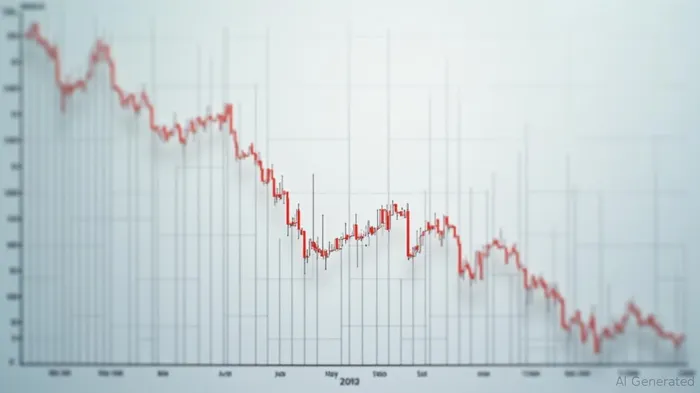
The latest Reuters poll data underscores a critical inflection point for China's manufacturing sector: the Caixin/S&P Global Manufacturing PMI fell to 48.3 in May 2025—the fastest contraction since September 2022—and below expectations of 50.6. This decline, driven by renewed U.S. tariffs and weakening export demand, signals a deepening near-term challenge for global supply chains and corporate profitability. Yet, within this turbulence lie opportunities for investors to position for long-term shifts in trade dynamics and regional diversification. Here's how to parse the risks and rewards.
Near-Term Risks: Supply Chain Fragility and Earnings Pressure
The data paints a clear picture: China's manufacturing sector is under strain. The May PMI contraction, exacerbated by U.S. tariffs temporarily set at 51.1% (down from a peak of 145% after trade talks), has caused a sharp drop in new export orders. While April's exports grew 8.1% year-on-year—aided by strong shipments to Southeast Asia—the U.S. market, once a critical growth driver, now faces a double-digit decline in imports.
This has ripple effects:
1. Supply Chain Disruptions: Companies reliant on Chinese manufacturing (e.g., automotive, tech, and consumer goods sectors) face higher costs and delays. reveals a strong correlation between manufacturing health and equity performance, suggesting further volatility ahead.
2. Corporate Earnings Downgrades: Sectors such as semiconductors, machinery, and textiles are at risk. For instance, U.S. firms like Caterpillar (CAT) or Texas Instruments (TXN) could see margin pressure if tariffs persist.
3. Policy Limits: While China's central bank cut rates and eased liquidity in May, deflation (wholesale prices at a six-month low) and a collapsing property market (investment down 10.3% YTD) limit the impact of monetary stimulus.
Long-Term Opportunities: Diversification and Trade Deal Plays
The contraction, however, accelerates a structural shift in global trade. Investors should focus on three themes:
- Regional Manufacturing Diversification:
- Southeast Asia: Countries like Vietnam and Indonesia are emerging as alternatives to China. Firms such as PT Modern Cipta Boga (Indonesian food packaging) or Hoang Anh Gia Lai (Vietnamese logistics) could benefit from production relocations.
Mexico and Eastern Europe: Nearshoring to these regions by U.S. and EU firms (e.g., automotive parts) may boost local equities and bonds.
High-Tech and Value-Added Sectors:
China's push to upgrade manufacturing (per HKUST forecasts) favors companies in advanced robotics, green energy, and AI. Examples include Hikvision (Hik) in surveillance tech or BYD (002594.SZ) in EVs.
Trade Deal Catalysts:
- A potential U.S.-China tariff rollback (if talks progress) would boost sectors like semiconductors (ASML, Applied Materials) and industrial machinery (Caterpillar, Deere).
Investment Strategy: Balancing Caution with Selective Exposure
- Equities: Underweight cyclical sectors (industrials, materials) exposed to China's slowdown. Overweight ASEAN ETFs (e.g., EWM, VNM) and tech firms with diversified supply chains.
- Fixed Income: China's bond market offers yield (10-year yields at ~2.7%) but remains risky due to deflation. Consider sovereign bonds of trade beneficiaries (e.g., Malaysia, Thailand).
- Hedging: Gold ETFs (GLD) or volatility ETFs (VIXY) can mitigate trade-related uncertainty.
Conclusion: A Pivot Point for Global Capital
China's manufacturing contraction is a near-term headwind, but it also marks a turning point for global supply chains. Investors who pivot toward diversification plays and high-value sectors while hedging downside risks will be best positioned to capture the upside of a post-tariff landscape. As the PMI data underscores, the path to stability lies in adapting to a world where trade friction is a permanent feature—and opportunities lie in the cracks of old systems.
Stay vigilant, but stay strategic.

Stay ahead of the market.
Get curated U.S. market news, insights and key dates delivered to your inbox.






Comments
No comments yet