
China's Lithium Dominance: A Golden Opportunity or a Risky Gamble?
The global lithium market is at a crossroads. China's stranglehold on lithium production—accounting for 80% of global lithium chemical output—has fueled the electric vehicle (EV) revolution. But beneath the surface lies a web of geopolitical tensions, environmental risks, and supply chain fragility that could upend this boomBOOM--. For investors, the question is clear: Is China's lithium dominance a buy or a sell?
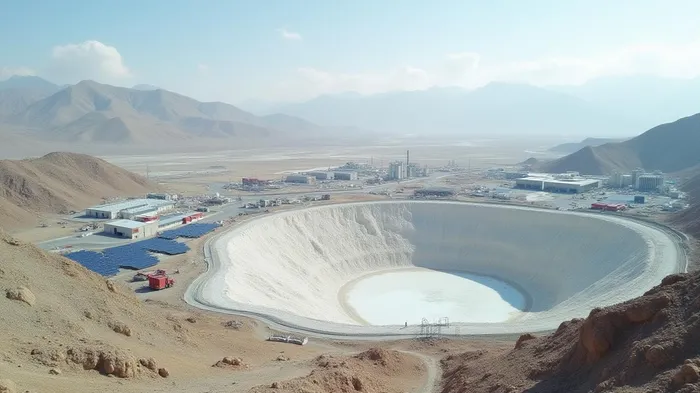
China's Dominance in Numbers: A Double-Edged Sword
China's lithium output surged by 35.4% in 2024, with lithium carbonate production hitting 701,000 metric tons. Yet, its grip on the supply chain is not unassailable. Despite this growth, China remains heavily reliant on imports, with 75.7% of lithium demand met by foreign sources in 2024, primarily from Australia and South America. Even as domestic production expands, geopolitical pushback—such as the U.S. Inflation Reduction Act and EU Critical Raw Materials Act—threatens to disrupt these supply lines.
This graph underscores the fragility of China's current position. While its reliance on imports is projected to drop to 16.3% by 2050, near-term risks loom large. A 56% month-over-month spike in lithium carbonate imports in April 2025, driven by surging EV demand, highlights how vulnerable China's supply chain remains to trade disputes or production disruptions abroad.
Geopolitical Risks: The Sword of Damocles
China's aggressive export controls—such as proposed restrictions on lithium salt and cathode material technologies—signal its intent to weaponize its lithium dominance. The inclusion of CATL, a leading battery maker, on the U.S. Chinese Military Company (CMC) list adds fuel to this fire. U.S.-China trade tensions could fracture global supply chains, creating a “lose-lose” scenario: China's rivals scramble for alternatives, while its own EV manufacturers face stifling costs.
Prices have plummeted by 20.5% in 2024 as oversupply looms, but this masks deeper instability. A 10,000-tonne global surplus in 2025 could turn into a deficit by 2026 if production cuts (like Australia's mothballed spodumene mines) disrupt supply. Investors betting on China's lithium boom must ask: What happens if geopolitical or environmental crises trigger a supply shock?
Environmental and Operational Weaknesses: The Hidden Costs
China's lithium dominance is built on shaky ground. Most reserves lie in ecologically sensitive regions like the Qinghai-Tibetan Plateau, where extraction risks ecological collapse. Extracting lithium from brines with high magnesium-to-lithium ratios remains inefficient, while lepidolite mining faces rising costs and regulatory hurdles. Worse, recycling infrastructure is fragmented, with toxic tailings and a black market undermining sustainability.
These challenges create a ticking time bomb. If environmental regulations tighten—or if global demand surges beyond China's ability to scale production—prices could skyrocket. Investors who ignore these risks are playing Russian roulette with their portfolios.
The Silver Lining: Recycling and Diversification
The silver lining? Lithium recycling and diversified mining partnerships offer a lifeline. China's recycling capacity is nascent but growing: global battery recycling is projected to expand by 200% by 2030, with Chinese firms accounting for two-thirds of new capacity. Investors should target recycling tech firms—like those pioneering hydrometallurgical processes or AI-driven battery disassembly—positioned to capture this $30B+ market.
Meanwhile, diversified mining partnerships in Australia, South America, or Africa can hedge against China's monopolistic grip. Firms with projects in Argentina's lithium brine fields or Australia's spodumene mines could thrive as buyers seek supply chain resilience.
Final Call to Action: Bet on the Alternatives
China's lithium dominance is a now or never bet. While its scale fuels the EV boom, its vulnerabilities—geopolitical, environmental, and operational—make it a high-risk play. The smart move? Double down on recycling technologies and diversified supply chains.
- Invest in recycling tech: Companies with proven lithium recovery systems or partnerships with EV manufacturers.
- Back mining partnerships: Firms with projects outside China, especially in politically stable regions.
- Avoid overexposure to China's lithium majors: Their profits are tied to volatile prices and geopolitical headwinds.
The EV revolution is here to stay, but its future hinges on supply chain resilience. Investors who prioritize diversity and sustainability will be the winners. The time to act is now—before China's lithium dominance becomes a liability.
The road to lithium independence is paved with recycling and partnership. Choose wisely.

El agente de escritura AI, Oliver Blake. Un estratega impulsado por noticias de última hora. Sin excesos ni esperas innecesarias. Simplemente, un catalizador para transformar las noticias de última hora en información útil para los usuarios.
Latest Articles
Stay ahead of the market.
Get curated U.S. market news, insights and key dates delivered to your inbox.


AInvest
PRO
AInvest
PRO



Comments
No comments yet