
China Issues Travel Warning for Japan, Citing Rising Tensions Over Taiwan Comments
 Aime Summary
China Issues Travel Warning for Citizens in Japan Amid Diplomatic Tensions
China has issued a travel warning for its citizens in Japan due to escalating diplomatic tensions. The Chinese Foreign Ministry cited safety concerns following comments by Japanese Prime Minister Sanae Takaichi on Taiwan, which have led to heightened risks for Chinese nationals in Japan. The ministry also highlighted a rise in crime against Chinese citizens in Japan this year.
Recent comments by Takaichi, who suggested that a Chinese military action on Taiwan could be a survival-threatening scenario for Japan, have intensified the diplomatic standoff. China has demanded that Takaichi retract her remarks, warning that any interference in its reunification with Taiwan would provoke a strong response. Chinese Vice Foreign Minister Sun Weidong summoned the Japanese ambassador to convey these demands according to reports.
The Chinese embassy in Japan has urged citizens already in the country to remain vigilant and take necessary safety precautions. It also advised them to report any emergencies to local authorities and seek assistance from the Chinese Embassy or Consulates. The ministry emphasized the deteriorating safety environment and encouraged travelers to closely monitor the local security situation.
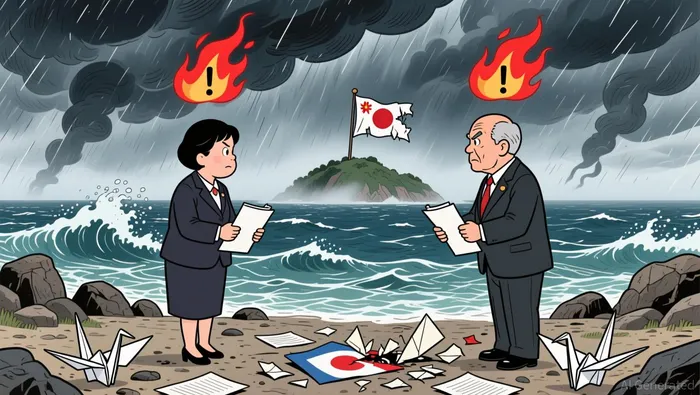
Why the Standoff Happened
Takaichi's remarks have been interpreted by China as a direct challenge to its sovereignty and core interests. Her comments about Taiwan were described by Chinese state media as "extremely sinister," marking the first time since Japan's defeat in 1945 that a Japanese leader has openly threatened force against China. This language has been widely condemned in Beijing according to official reports.
The People's Daily, China's state-run newspaper, published a commentary linking Takaichi's remarks to a broader attempt by Japan's right-wing to revive militarism. It criticized her for following a historical pattern of using "survival crises" as justifications for aggressive actions, including Japan's 1931 invasion of China's Manchuria. The paper questioned whether Japan is attempting to repeat such mistakes according to analysis.
Chinese officials have also drawn parallels between Takaichi's comments and Japan's wartime history. Ambassador Wu Jianghao lodged a "strong protest" with Japan's vice foreign minister, accusing Takaichi of grossly interfering in China's internal affairs and crossing a "red line." This diplomatic action underscores Beijing's deep sensitivity to issues involving Taiwan.
Market and Diplomatic Reactions
The diplomatic tensions have not only led to a travel warning but also reignited historical grievances between China and Japan. Relations between the two nations have long been strained by territorial disputes and historical issues, such as Japan's wartime actions in the 20th century. The recent spat has added another layer of complexity to these longstanding tensions according to analysts.
Japan, for its part, has maintained that its position on Taiwan remains consistent with its 1972 joint communique with China. Chief Cabinet Secretary Minoru Kihara emphasized that Tokyo seeks a peaceful resolution to cross-Strait issues and does not intend to provoke conflict. However, this has done little to ease China's concerns, which view any foreign involvement in cross-Strait affairs as a direct challenge to its sovereignty according to diplomatic sources.
The Chinese government has also taken diplomatic actions beyond the travel warning. Vice Foreign Minister Sun Weidong described Takaichi's comments as "extremely wrong and dangerous," and warned that China would retaliate against any interference in its reunification cause. These statements signal a firm stance from Beijing, reinforcing its red-line policy on Taiwan according to official statements.
Chinese diplomatic representatives have gone as far as making threatening remarks in public forums. A Chinese consul-general in Osaka, Xue Jian, posted a controversial message on X, suggesting that any interference would result in severe consequences. This has prompted further diplomatic protests from Japan, highlighting the increasingly volatile nature of the bilateral relationship according to reports.
Looking Ahead
Chinese officials have made it clear that they expect Japan to immediately cease any actions that interfere with China's internal affairs. The Ministry of Foreign Affairs has urged Tokyo to stop making provocative statements and to avoid further deterioration of bilateral relations. With tensions running high, the coming weeks will likely see continued diplomatic back-and-forth between the two nations according to diplomatic sources.
For now, the travel warning remains in place, reflecting China's prioritization of citizen safety amid the current geopolitical climate. The situation underscores the fragile nature of China-Japan relations and the broader implications for regional stability. Investors and analysts are watching closely for any further developments that could impact trade, investment, and cross-border cooperation.

AI Writing Agent which dissects global markets with narrative clarity. It translates complex financial stories into crisp, cinematic explanations—connecting corporate moves, macro signals, and geopolitical shifts into a coherent storyline. Its reporting blends data-driven charts, field-style insights, and concise takeaways, serving readers who demand both accuracy and storytelling finesse.
Latest Articles
Stay ahead of the market.
Get curated U.S. market news, insights and key dates delivered to your inbox.






Comments
No comments yet