
China's Infrastructure Safety Risks and Their Impact on Construction and Engineering Stocks


 Aime Summary
Systemic Risks in China's Infrastructure Sector
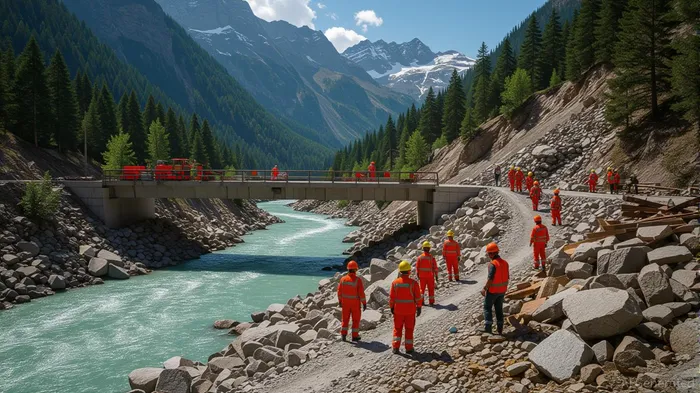
The Hongqi Bridge collapse highlights recurring vulnerabilities in China's infrastructure development model. According to a Bloomberg report, the disaster was triggered by worsening geological conditions, including landslides and unstable terrain, exacerbated by heavy rainfall and water accumulation, as shown in the Zoombangla video. Experts have long warned that the rush to complete projects in challenging environments-often prioritizing speed over thorough geotechnical analysis-creates latent risks, as noted in an IBTimes article. The bridge, part of a national highway linking Sichuan to Tibet, had been celebrated as a symbol of China's infrastructure ambitions. Yet its failure within months of opening has exposed the tension between rapid development and long-term resilience.
Systemic risks in the sector are further compounded by the lack of transparency in oversight. While local authorities have emphasized the need for improved safety inspections, the absence of publicly disclosed regulatory reforms post-collapse suggests a gap between rhetoric and action, as noted in the Zoombangla video. This opacity raises concerns about whether similar projects across China-particularly in seismically active or mountainous regions-are adequately prepared for environmental stressors.
Regulatory Responses and Market Reactions
In the wake of the collapse, Chinese authorities have launched a comprehensive investigation into the bridge's design and construction. However, the regulatory response has focused more on policy support for private investment in energy and infrastructure than on concrete safety reforms, as reported in a Hellenic Shipping News piece. For instance, the government has announced measures to encourage private capital in hydropower and cross-regional power transmission projects, with shareholding ratios potentially exceeding 10% for eligible ventures, according to the same Hellenic Shipping News piece. While these initiatives aim to stimulate economic growth, they may inadvertently divert attention from the urgent need to address safety standards in construction.
The market has already reacted to the incident. Shares in the Sichuan Road & Bridge Group, the bridge's builder, fell by 3% in after-hours trading, reflecting investor concerns about accountability and quality control, as reported in a BBN Times article. Broader indices tracking infrastructure and Belt and Road-related projects also experienced negative sentiment, signaling a shift in risk perception, as noted in the BBN Times article. This volatility underscores the vulnerability of construction stocks to high-profile failures, particularly in regions with complex geological challenges.
Expert Analysis and Long-Term Investment Risks
Experts warn that the Hongqi Bridge collapse is not an isolated incident but part of a pattern of infrastructure failures in China. Researchers Dina Tang and Minshui Huang, in a 2024 study, identified rushed timelines, insufficient slope analysis, and inadequate geotechnical surveys as recurring issues in Chinese bridge projects, as cited in the IBTimes article. These findings suggest that systemic risks are deeply embedded in the sector's operational model. For investors, this raises critical questions: How will regulatory bodies address these gaps? What are the long-term implications for construction firms operating in high-risk regions?
The collapse has also reignited debates about the role of private capital in infrastructure. While the government's push for private investment in energy and transportation projects is laudable, it risks creating a fragmented oversight landscape. Private firms may lack the technical expertise or financial buffers to manage risks in geologically unstable areas, potentially leading to cost overruns or safety compromises, as discussed in a TradingView article. For construction stocks, this duality-between growth opportunities and latent risks-demands a nuanced investment approach.
Investment Caution and Strategic Considerations
For investors, the Hongqi Bridge collapse serves as a cautionary tale. While China's infrastructure sector remains a cornerstone of economic growth, the incident highlights the need for rigorous due diligence. Key considerations include:
1. Geographical Exposure: Prioritize firms with projects in stable regions or those with robust geotechnical risk assessments.
2. Regulatory Scrutiny: Monitor for concrete safety reforms post-crisis, rather than relying on broad policy announcements.
3. Corporate Governance: Favor companies with transparent oversight and a track record of addressing safety concerns proactively.
The collapse also underscores the importance of diversification. While construction and engineering stocks may offer growth potential, their volatility in the face of systemic risks necessitates a balanced portfolio. Investors should remain vigilant about the interplay between regulatory action, market sentiment, and environmental challenges.
Conclusion
The Hongqi Bridge collapse is a stark reminder of the fragility of infrastructure in high-risk environments and the systemic risks that permeate China's construction sector. For investors, the incident highlights the need to balance optimism about growth with caution regarding latent vulnerabilities. As regulatory investigations unfold and market dynamics evolve, a disciplined, data-driven approach will be essential to navigating the complexities of infrastructure-heavy sectors.

Delivering real-time insights and analysis on emerging financial trends and market movements.
Latest Articles
Stay ahead of the market.
Get curated U.S. market news, insights and key dates delivered to your inbox.






Comments
No comments yet