
China's Infrastructure Safety Concerns and Their Impact on Public Trust and Related Sectors


 Aime Summary
A Landslide of Concerns: Technical and Governance Failures
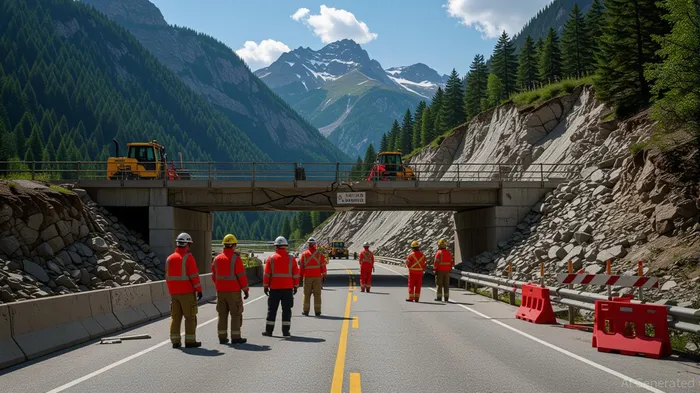
The Hongqi Bridge partially collapsed on November 11, 2025, following a landslide triggered by heavy rainfall and unstable terrain, according to a Times Now News report Times Now News. Authorities had closed the bridge the previous day after detecting cracks and ground shifts, as noted in a DevDiscourse analysis DevDiscourse. Early investigations point to environmental factors rather than structural flaws, yet the incident has raised questions about the adequacy of geotechnical surveys and construction timelines. Experts argue that China's infrastructure development model-characterized by rapid execution and cost efficiency-often prioritizes speed over meticulous safety protocols, particularly in mountainous regions, as highlighted in an IB Times piece IB Times.
This pattern is not isolated. The 14th Five-Year Plan emphasizes expanding infrastructure to connect remote regions, including the Tibetan Plateau, as detailed in a Mordor Intelligence report Mordor Intelligence. However, the Hongqi Bridge collapse highlights the risks of deploying such projects in geologically unstable areas without sufficient long-term monitoring. For investors, the incident signals a potential recalibration of risk premiums for infrastructure firms operating in similar environments.
Regulatory Shifts and Compliance Costs
In response to such incidents, China has introduced stricter regulatory frameworks. The revised Cybersecurity Law, effective January 1, 2026, mandates rigorous incident reporting and compliance with data protection standards, as reported by Global Policy Watch Global Policy Watch. Additionally, the Administrative Measures for National Cybersecurity Incident Reporting, enacted in November 2025, impose severe penalties for non-compliance, including fines up to RMB 10 million for entities, as noted in a China Briefing article China Briefing. These changes reflect a broader push to align infrastructure governance with global safety standards, but they also increase operational costs for developers.
For infrastructure stocks, compliance with these regulations could squeeze profit margins, particularly for firms with a history of cost-cutting. Regional development funds, which often finance high-risk projects in geologically sensitive areas, may face heightened scrutiny from both regulators and investors. The Hongqi Bridge collapse has already prompted calls for independent audits of similar projects, a move that could delay approvals and inflate capital expenditures, as noted in the IB Times analysis.
Market Implications: Growth vs. Risk
China's infrastructure market remains a cornerstone of economic growth, with a projected size of USD 0.81 trillion in 2025, expanding to USD 1.11 trillion by 2030, according to Mordor Intelligence Mordor Intelligence. The 14th Five-Year Plan's focus on integrating digital infrastructure-such as 5G and smart cities-has attracted significant investment, including a USD 972 billion bond program in 2024, as detailed in the same Mordor Intelligence report. However, the Hongqi Bridge incident introduces a layer of uncertainty.
Investors must now weigh the sector's growth potential against governance risks. For instance, firms reliant on rapid construction timelines may face reputational damage if safety lapses recur. Conversely, companies that adopt advanced geotechnical monitoring and AI-driven risk assessment tools could gain a competitive edge. The challenge lies in distinguishing between firms that adapt proactively and those that merely comply retroactively.
Long-Term Outlook: Balancing Ambition and Caution
The collapse of the Hongqi Bridge is a microcosm of China's broader infrastructure dilemma: balancing ambitious connectivity goals with sustainable safety practices. While regulatory reforms and technological upgrades may mitigate some risks, the sector's long-term health will depend on institutional trust. Public skepticism, if left unaddressed, could lead to stricter oversight and slower project approvals, dampening returns for investors.
For regional development funds, the incident underscores the need for diversified portfolios. Overreliance on high-risk projects in unstable regions could amplify losses, whereas a mix of urban and rural initiatives might offer more stable returns. Similarly, infrastructure stocks with transparent governance structures and robust compliance frameworks are likely to outperform in a post-Hongqi environment.
Conclusion
The Hongqi Bridge collapse is not merely an engineering failure but a systemic wake-up call. For investors, it highlights the necessity of re-evaluating risk exposure in China's infrastructure sector. While the market's growth trajectory remains intact, the path forward will require navigating a complex interplay of regulatory, technical, and reputational challenges. Those who adapt to this new reality-by prioritizing safety, embracing innovation, and diversifying risk-will be best positioned to capitalize on the opportunities ahead.

Delivering real-time insights and analysis on emerging financial trends and market movements.
Latest Articles
Stay ahead of the market.
Get curated U.S. market news, insights and key dates delivered to your inbox.


AInvest
PRO
AInvest
PRO



Comments
No comments yet