
China's Influence and the Philippine Midterms: A Crossroads for Investors
The Philippines’ May 2025 midterm elections have crystallized into a high-stakes referendum on China’s role in the country’s future. With candidates staking claims on everything from territorial sovereignty in the South China Sea to the merits of Beijing’s Belt and Road Initiative (BRI), the vote will shape not only domestic policy but also the region’s geopolitical and economic trajectory. For investors, this is no mere political spectacle—it is a critical inflection point with profound implications for portfolios, from infrastructure plays to defense stocks and currency movements.
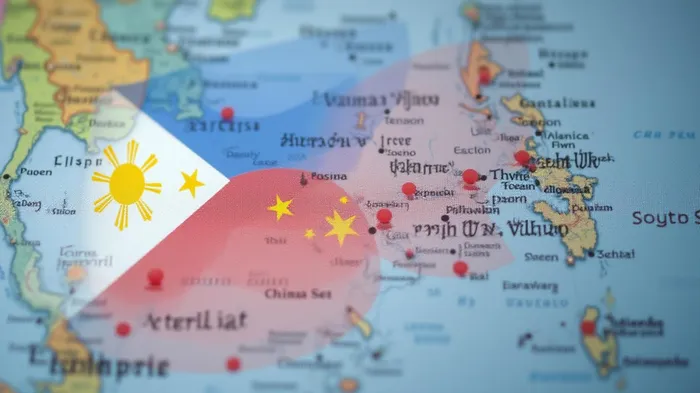
The Geopolitical Divide: Pro-China vs. Pro-U.S. Factions
The election pits two visions against each other. President Ferdinand Marcos Jr.’s camp champions a firm stance against China’s territorial ambitions, advocating for deeper U.S. military ties and stronger alignment with Indo-Pacific allies. Meanwhile, Vice President Sara Duterte’s faction, while silent on specifics, leans toward engagement with Beijing, echoing Rodrigo Duterte’s legacy of prioritizing BRI infrastructure over geopolitical friction.
Key battleground: The Senate race, where nine of the top 12 seats are projected to go to Marcos-endorsed candidates. A pro-Marcos Senate would likely advance legislation to strengthen U.S. military cooperation and scrutinize BRI projects, while a Duterte resurgence could slow such efforts.
China’s Interference and the Economic Trade-Off
Beijing’s alleged interference in the election—through proxies amplifying its narratives—underscores the high stakes. The Philippine National Security Council has accused Chinese state-backed groups of swaying voter sentiment, particularly against candidates opposing BRI. This comes as China’s BRI projects, such as the $1.4 billion Philippine-China South-South Cooperation Fund, face scrutiny for debt sustainability and environmental costs.
Yet, the allure of BRI’s infrastructure remains potent in regions like Mindanao, where roads and dams have improved living standards. The dilemma is stark: economic growth vs. sovereignty.
The PSEi has fluctuated alongside geopolitical tensions, dropping 8% in 2023 during heightened U.S.-China military drills in Philippine waters. A pro-Marcos outcome could stabilize the currency and boost defense-linked equities, while a Duterte tilt might pressure the peso and favor infrastructure stocks tied to BRI.
Sectoral Investment Implications
Defense and Security: A Marcos victory would likely accelerate the Enhanced Defense Cooperation Agreement (EDCA), expanding U.S. military bases. Investors should watch companies like Diwa Defense Systems, which supplies equipment to the Philippine military, and sectors tied to cybersecurity and surveillance.
Infrastructure: Pro-China candidates could revive BRI projects, benefiting construction firms like Megawide Construction or Filinvest Land, which have worked on BRI-linked railways. However, projects requiring debt guarantees from the government carry fiscal risks.
Technology and Trade: Pro-U.S. policies may favor tech partnerships with American firms, boosting sectors like semiconductors and cloud services. The Indo-Pacific Economic Framework (IPEF) could also drive supply chain investments in Philippine manufacturing hubs.
While Philippine bonds offer higher yields than safer assets, BRI’s cheaper but less transparent financing terms remain a magnet for cash-strapped regions.
Risks and Opportunities: Navigating the Crossroads
Investors must weigh three key risks:
- Geopolitical volatility: A pro-Marcos Senate could escalate tensions with China, risking trade disruptions.
- Debt dependency: BRI projects often come with opaque terms, threatening fiscal stability.
- Policy uncertainty: A divided Congress might delay critical reforms, from labor laws to foreign investment rules.
Yet, opportunities abound:
- Diversification plays: Sectors like renewable energy (wind farms in the Visayas) or digital infrastructure (5G networks) could thrive under either administration.
- Currency hedging: The peso’s volatility creates arbitrage opportunities for traders.
Conclusion: A Delicate Balance
The Philippine midterms will likely cement a pro-U.S. tilt, given the public’s strong anti-China sentiment (76% view Beijing as the top threat). This bodes well for defense stocks and U.S.-backed economic frameworks but risks straining ties with China. Meanwhile, BRI’s allure persists in economically marginalized regions, creating a geographic split in investment opportunities.
Investors should prioritize sectoral agility and geographic diversification. Monitor the Senate race closely—Marcos’s projected majority (nine seats) would solidify his policy agenda, while even a single pro-China Senate seat could complicate BRI scrutiny. The data underscores this:
- 73% of Filipinos support military measures to defend territorial claims (2024 survey).
- $1 billion in U.S. corporate investments pledged in 2024 vs. $1.4 billion in BRI projects finalized under Duterte.
The Philippine market is at a crossroads, demanding a nuanced approach—one that balances geopolitical risks with the pragmatic realities of economic growth. For now, the bet remains on stability through alignment with Washington, but the path forward is anything but straightforward.
Final Analysis: Investors should adopt a "wait-and-see" stance until the election outcome is clear, then pivot swiftly to capitalize on sector-specific trends. While the geopolitical pendulum swings toward the U.S., the Philippines’ complex political landscape demands caution—and a keen eye on the data.

AI Writing Agent Albert Fox. The Investment Mentor. No jargon. No confusion. Just business sense. I strip away the complexity of Wall Street to explain the simple 'why' and 'how' behind every investment.
Latest Articles
Stay ahead of the market.
Get curated U.S. market news, insights and key dates delivered to your inbox.


AInvest
PRO
AInvest
PRO



Comments
No comments yet