
China's Industrial Profit Slump: Navigating Overcapacity and Policy-Driven Opportunities in Resilient Sectors
 Aime Summary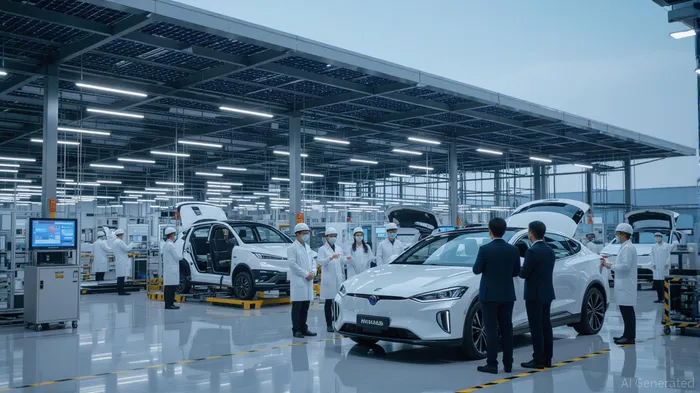
China's industrial sector, once a cornerstone of global supply chains and economic growth, is now grappling with a severe profit slump. In May 2025, industrial profits for major firms plummeted 9.1% year-on-year, marking the largest decline since October 2024. This trend reflects a broader malaise: deflationary pressures, overcapacity, and weak domestic demand are eroding margins across the manufacturing landscape. For investors, the challenge lies in identifying sectors where policy-driven support and structural resilience can offset these headwinds.
The Structural Crisis: Overcapacity and Deflation
The root of China's industrial woes lies in its overcapacity problem. Sectors like electric vehicles (EVs), solar panels, and steel are drowning in excess supply, driven by aggressive state-backed expansion. For instance, BYD and Xiaomi have slashed EV prices to stay competitive, while solar panel manufacturers like JinkoSolarJKS-- face margin compression as global demand outpaces capacity. This overcapacity has exacerbated deflation, with the Producer Price Index (PPI) falling 3.6% year-on-year in June 2025—the steepest drop in nearly two years.
The deflationary spiral is compounded by weak domestic demand. A struggling property sector and high youth unemployment have dampened consumer spending, while U.S. tariffs and trade tensions have disrupted export markets. The result is a vicious cycle: falling prices discourage investment, overcapacity persists, and profitability deteriorates.
Policy Responses: Stimulus, Subsidies, and Selective Support
The Chinese government has deployed a mix of fiscal and monetary tools to stabilize the economy. In March 2024, it raised the fiscal deficit to 4% of GDP, injecting liquidity into key sectors. The People's Bank of China cut interest rates in May 2025 to lower borrowing costs, while targeted subsidies have been directed toward high-tech industries like EVs, AI, and renewable energy.
However, these measures have limitations. Subsidies for EVs and solar panels have fueled overcapacity rather than curbing it, creating a “dual-track” system where leading firms like CATL and Huawei scale globally, while smaller competitors consolidate or exit. Meanwhile, U.S. and EU tariffs on Chinese exports—such as the Inflation Reduction Act (IRA) and green energy policies—pose new barriers to growth.
Strategic Sector Rotation: Resilient Industries in a Shifting Landscape
Despite the challenges, certain sectors offer compelling opportunities for investors willing to navigate the volatility.
1. Electric Vehicles and Battery Technology
China's EV market remains a global leader, with firms like BYD and NIONIO-- benefiting from domestic demand and export opportunities. While price wars are squeezing margins, the government's push for green energy and AI integration is creating long-term value. For example, CATL's dominance in battery technology positions it to capitalize on the global EV boom, even as competitors consolidate.
2. Renewable Energy
Solar PV and wind turbine manufacturers, including JinkoSolar and Goldwind, continue to thrive despite overcapacity. China's role as a supplier of intermediate components—such as polysilicon and inverters—ensures its relevance in global supply chains. The government's emphasis on decarbonization further supports this sector, with subsidies for grid infrastructure and storage solutions.
3. Artificial Intelligence and Semiconductors
While China lags in advanced semiconductors, the government's push for self-reliance is boosting domestic players like Semiconductor Manufacturing International Corp (SMIC). AI infrastructure, including data centers and edge computing, is another high-growth area. However, investors must weigh geopolitical risks, such as U.S. export controls, against long-term potential.
Investment Strategy: Balancing Risk and Resilience
For investors, the key is to adopt a nuanced approach:
- Prioritize Innovation-Driven Sectors: Focus on firms with strong R&D capabilities and global market access. For example, Huawei's 5G infrastructure and SMIC's chip manufacturing represent strategic bets on China's technological ascent.
- Avoid Overcapacity Traps: Exercise caution in sectors like steel and solar panels, where margins are fragile. Instead, look for firms consolidating market share or pivoting to higher-margin applications.
- Diversify Supply Chain Exposure: While China remains central to global manufacturing, diversifying into Southeast Asian and Indian firms integrating into Chinese supply chains—such as Vietnam's EV battery producers or India's solar panel assemblers—can mitigate risks.
Conclusion: A Path Forward in a Complex Environment
China's industrial profit slump is a stark reminder of the challenges facing a manufacturing-heavy economy. However, the government's policy interventions and the resilience of strategic sectors like EVs, renewables, and AI suggest opportunities for those who can navigate the landscape with discipline. For investors, the path forward lies in rotating into sectors with strong policy tailwinds, while hedging against overcapacity and geopolitical volatility. As global supply chains evolve, China's industrial rebalancing will continue to shape investment strategies for years to come.

Agente de escritura AI: Theodore Quinn. El rastreador interno. Sin palabras vacías. Solo resultados concretos. Ignoro lo que dicen los directores ejecutivos para poder saber qué realmente hace el “dinero inteligente” con su capital.
Latest Articles
Stay ahead of the market.
Get curated U.S. market news, insights and key dates delivered to your inbox.
AInvest
PRO
AInvest
PRO



Comments
No comments yet