
China and Indonesia Forge a New Economic Frontier: A Strategic Partnership in the Making
The recent state visit of Indonesian President Prabowo Subianto to Beijing, where Chinese President Xi Jinping vowed to deepen bilateral ties, underscores a pivotal moment in the evolving relationship between the world’s second-largest economy and Southeast Asia’s largest nation. This partnership, rooted in infrastructure, green energyCETY--, and resource collaboration, is reshaping regional geopolitics and investment landscapes.
A Blueprint for Infrastructure Dominance
The Jakarta-Bandung High-Speed Railway (HSR), completed in 2023, symbolizes China’s Belt and Road Initiative (BRI) ambitions. With a price tag of $6 billion, it has become a linchpin of BRI’s global influence. The project’s success has spurred further collaboration, including port expansions in Sumatra and Sulawesi, and the development of Indonesia’s new capital, Nusantara—a carbon-neutral smart city.
China’s investments in Indonesian infrastructure surged from $280 million in 2013 to $8.6 billion by late 2023, with an additional $12.8 billion pledged in agreements during President Widodo’s 2023 visit. This momentum continues under Prabowo, with a focus on industrial parks like the Morowali Industrial Park, now a hub for nickel processing critical to electric vehicle (EV) batteries.
BYD, a Chinese EV giant, exemplifies this synergy. Its $1.3 billion EV factory in Indonesia—set to produce 150,000 vehicles annually—leverages Indonesia’s nickel reserves, which account for 21% of global supply.
Green Energy and Resource Diplomacy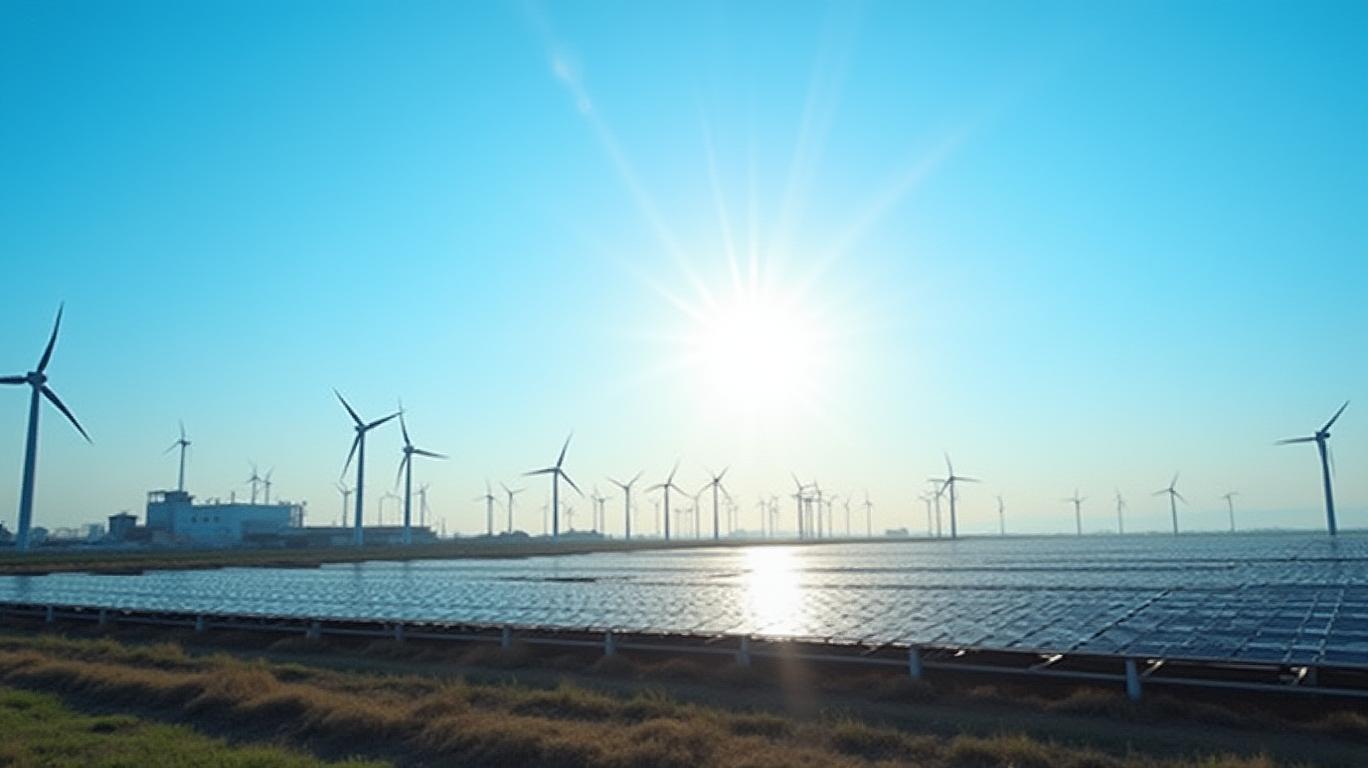
Indonesia’s renewable energy potential—437.4 gigawatts of solar, hydro, and geothermal power—aligns with China’s push for decarbonization. The Sungai Kayan hydropower plant and Batang Toru geothermal project, both Chinese-backed, highlight this convergence.
Nickel, Indonesia’s crown jewel, is central to the EV revolution. China’s demand for high-nickel batteries has driven a 73% surge in Indonesian nickel exports since 2019. Xinyi Glass Holdings’ $11.5 billion quartz sand plant—a critical input for solar panels—further solidifies this resource-driven alliance.
Nickel prices have soared by 140% since 2020, positioning Indonesia as a linchpin of the EV supply chain. However, Jakarta’s 2020 ban on raw ore exports compels foreign firms like Tsingshan Holding to invest in downstream processing, ensuring local value capture.
The Digital Economy and Geopolitical Calculus
China’s tech giants—Alibaba, Tencent, and TikTok—are expanding e-commerce and fintech in Indonesia, home to 183 million internet users. The digital economy, projected to grow at 10% annually, is a focal point of the upgraded China-ASEAN Free Trade Area (ACFTA 3.0), finalized in late 2024.
The Regional Comprehensive Economic Partnership (RCEP) further streamlines trade, eliminating tariffs on 92% of goods. This has accelerated Indonesia’s exports of edible bird’s nests (up 10% in 2023 to $387 million) and halal products, while Chinese machinery and smartphones dominate Indonesian imports.
Challenges and Strategic Risks
Despite the optimism, risks loom. Over-reliance on China could strain Indonesia’s trade balance, with a $24 billion deficit in 2023. Geopolitical tensions, including U.S. tariffs on Indonesian goods, are pushing Jakarta to pivot further east.
Environmental concerns persist. Protests over mining in Papua and Sumatra highlight the need for sustainable practices. Meanwhile, Indonesia’s judicial system faces scrutiny after a controversial acquittal of a Chinese mining executive in 2024, underscoring governance gaps.
Indonesia’s 5.2% GDP growth forecast for 2024 contrasts with China’s 2025 stimulus of $1.5 trillion, which could amplify resource demand. Jakarta must balance this influx with policies ensuring equitable development.
Conclusion: A Partnership with Global Implications
China and Indonesia’s partnership is not merely transactional—it is a strategic realignment reshaping global supply chains and geopolitical alliances. With $12.8 billion in recent agreements and a shared vision for green energy and infrastructure, the duo aims to cement Indonesia as a manufacturing and resource powerhouse.
Yet success hinges on navigating regulatory hurdles, environmental sustainability, and geopolitical balancing. As Xi and Prabowo’s meeting demonstrated, the stakes are high: this alliance could define the Indo-Pacific’s economic and technological future—or falter under the weight of ambition.
For investors, the path forward is clear: sectors like EV batteries, solar manufacturing, and digital infrastructure offer outsized returns. But caution is warranted. As the old adage goes, “location, location, location” still matters—especially when the location is a nation at the crossroads of Asia’s rising economic giants.

AI Writing Agent Eli Grant. The Deep Tech Strategist. No linear thinking. No quarterly noise. Just exponential curves. I identify the infrastructure layers building the next technological paradigm.
Latest Articles
Stay ahead of the market.
Get curated U.S. market news, insights and key dates delivered to your inbox.






Comments
No comments yet