
China and Hong Kong's Levers on CK Hutchison's Port Deal
Generated by AI AgentWesley Park
Wednesday, Mar 19, 2025 6:07 am ET3min read
LMUB--
Ladies and gentlemen, buckle up! We're diving into the high-stakes world of geopolitics and business, where the fate of a $22.8 billion deal hangs in the balance. CK Hutchison's plan to sell its key port assets near the Panama Canal to a BlackRock-led consortium is under intense scrutiny from Beijing and Hong Kong. Let's break down the levers that China and Hong Kong have over this deal and what it means for investors and stakeholders.
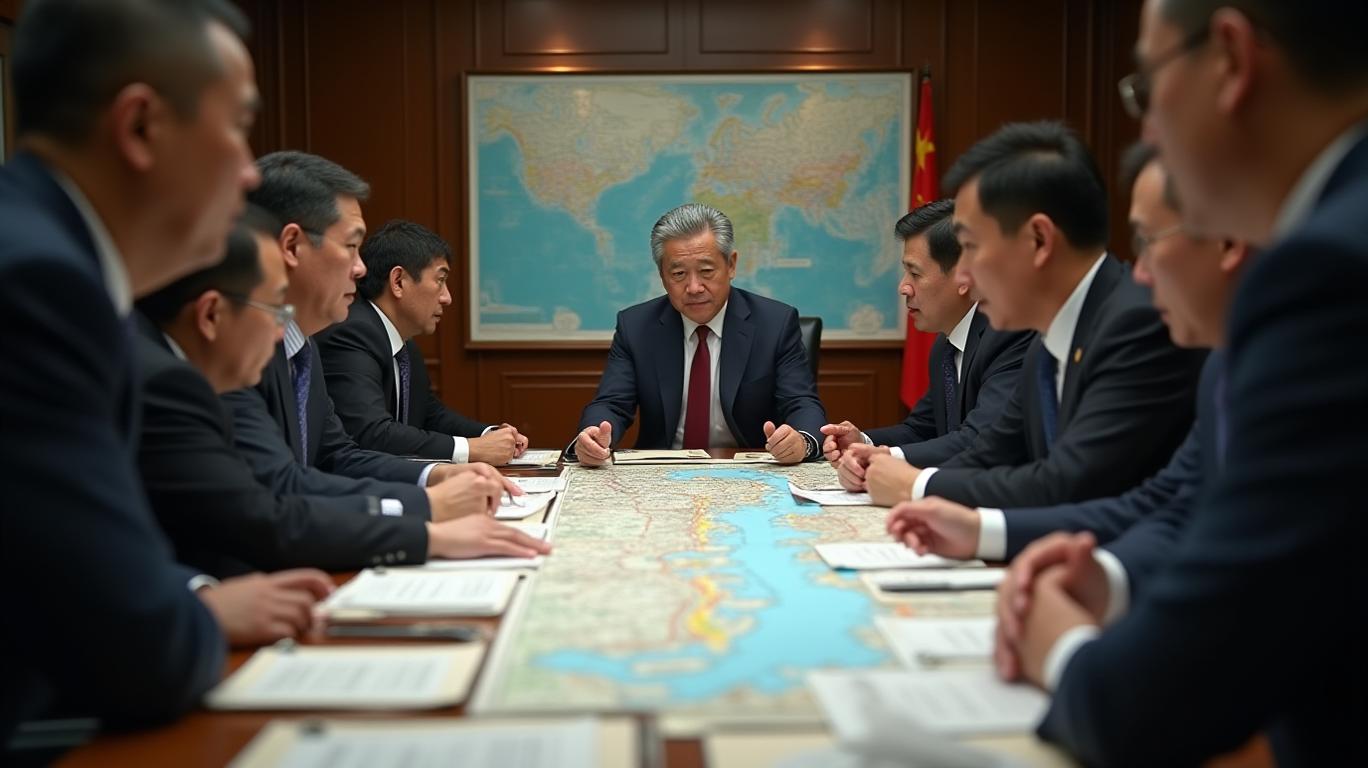
THE BIG PICTURE
This deal is more than just a business transaction; it's a geopolitical chess match between the U.S. and China. President Donald Trump has hailed the sale as a strategic victory for American interests, framing it as a move to remove the Panama Canal from "Chinese control." But Beijing sees it differently, accusing the U.S. of using economic coercion and bullying tactics. The stakes are high, and the outcome could have far-reaching implications for global trade and U.S.-China relations.
CHINA'S LEVERS
1. SECURITY REVIEW AND ANTITRUST INVESTIGATIONS: China has launched a security review and antitrust investigation into the deal. This move follows public criticism from Beijing's Hong Kong and Macau Affairs Office, which has reposted editorials condemning the transaction as a betrayal of China's national interests. For instance, one article accused the sale of neglecting Chinese interests and branding it a betrayal, stating, "Why were so many important ports transferred to ill-intentioned US forces so easily? What kind of political calculations are hidden in the so-called commercial behaviour on the surface?" This scrutiny suggests that China might try to intervene in the deal despite it involving only overseas assets.
2. NATIONAL SECURITY LAW: Hong Kong's National Security Law, imposed by Beijing in 2020, has raised concerns about the city's independence in handling business transactions. Although the deal involves overseas assets, the law could be used to argue that the sale has implications for national security, thereby giving Hong Kong authorities grounds to intervene.
3. POLITICAL PRESSURE: Beijing has used state-run media to express its displeasure with the deal. For instance, the Hong Kong and Macau Affairs Office reposted editorials condemning the transaction as a betrayal of China's national interests. This political pressure could influence the outcome of the sale, as companies may be reluctant to proceed with a deal that has drawn such strong criticism from Chinese authorities.
4. ECONOMIC COERCION: China could use economic coercion to make life difficult for those involved in the sale. As U.S.-China relations expert Gordon Chang noted, "If Beijing stops this deal, that’s a direct challenge to the president of the United States on an issue which he really cares about. That is not going to go down very well." This suggests that China could use the deal as leverage in its broader geopolitical strategy.
HONG KONG'S LEVERS
1. REGULATORY CLEARANCE: Traditionally, mergers and acquisitions between Hong Kong-based firms and foreign companies have not required extensive regulatory clearance. However, Hong Kong Chief Executive John Lee's comments suggesting that the deal deserves "serious attention" have sparked speculation that Hong Kong authorities might seek to intervene. This could involve requiring additional regulatory approvals or clearances that could delay or blockXYZ-- the sale.
2. LEGAL CHALLENGES: The sale faces a constitutional challenge in Panama, where Panamanian Attorney General Kenia Isolda Porcell Díaz has filed a submission in support of two lawsuits against the renewal of a 25-year contract for Hutchison to own the ports. This legal challenge could potentially derail the sale if the courts rule against Hutchison.
THE POTENTIAL FALLOUT
If the deal is derailed, the repercussions could be severe. CK Hutchison stands to lose a substantial amount of money, with the transaction valued at $22.8 billion, including $5 billion in debt. The company's stock price has already shown signs of volatility due to the controversy, and further declines could be expected if the deal is derailed. The company's reputation could also be harmed if it is seen as being unable to complete a major transaction due to political pressures.
Investors, employees, and business partners could all be affected by the fallout. Investors could face financial losses and lose confidence in the company's management and strategic direction. Employees could face job insecurity, and business partners could be reluctant to engage with CK Hutchison if it is seen as a politically risky entity.
THE BOTTOM LINE
This deal is a high-stakes game of geopolitical chess, with China and Hong Kong holding several levers that could influence or potentially block the sale. The outcome could have far-reaching implications for global trade and U.S.-China relations, and the potential fallout for CK Hutchison and its stakeholders is significant. Stay tuned, folks, because this story is far from over!
Ladies and gentlemen, buckle up! We're diving into the high-stakes world of geopolitics and business, where the fate of a $22.8 billion deal hangs in the balance. CK Hutchison's plan to sell its key port assets near the Panama Canal to a BlackRock-led consortium is under intense scrutiny from Beijing and Hong Kong. Let's break down the levers that China and Hong Kong have over this deal and what it means for investors and stakeholders.
THE BIG PICTURE
This deal is more than just a business transaction; it's a geopolitical chess match between the U.S. and China. President Donald Trump has hailed the sale as a strategic victory for American interests, framing it as a move to remove the Panama Canal from "Chinese control." But Beijing sees it differently, accusing the U.S. of using economic coercion and bullying tactics. The stakes are high, and the outcome could have far-reaching implications for global trade and U.S.-China relations.
CHINA'S LEVERS
1. SECURITY REVIEW AND ANTITRUST INVESTIGATIONS: China has launched a security review and antitrust investigation into the deal. This move follows public criticism from Beijing's Hong Kong and Macau Affairs Office, which has reposted editorials condemning the transaction as a betrayal of China's national interests. For instance, one article accused the sale of neglecting Chinese interests and branding it a betrayal, stating, "Why were so many important ports transferred to ill-intentioned US forces so easily? What kind of political calculations are hidden in the so-called commercial behaviour on the surface?" This scrutiny suggests that China might try to intervene in the deal despite it involving only overseas assets.
2. NATIONAL SECURITY LAW: Hong Kong's National Security Law, imposed by Beijing in 2020, has raised concerns about the city's independence in handling business transactions. Although the deal involves overseas assets, the law could be used to argue that the sale has implications for national security, thereby giving Hong Kong authorities grounds to intervene.
3. POLITICAL PRESSURE: Beijing has used state-run media to express its displeasure with the deal. For instance, the Hong Kong and Macau Affairs Office reposted editorials condemning the transaction as a betrayal of China's national interests. This political pressure could influence the outcome of the sale, as companies may be reluctant to proceed with a deal that has drawn such strong criticism from Chinese authorities.
4. ECONOMIC COERCION: China could use economic coercion to make life difficult for those involved in the sale. As U.S.-China relations expert Gordon Chang noted, "If Beijing stops this deal, that’s a direct challenge to the president of the United States on an issue which he really cares about. That is not going to go down very well." This suggests that China could use the deal as leverage in its broader geopolitical strategy.
HONG KONG'S LEVERS
1. REGULATORY CLEARANCE: Traditionally, mergers and acquisitions between Hong Kong-based firms and foreign companies have not required extensive regulatory clearance. However, Hong Kong Chief Executive John Lee's comments suggesting that the deal deserves "serious attention" have sparked speculation that Hong Kong authorities might seek to intervene. This could involve requiring additional regulatory approvals or clearances that could delay or blockXYZ-- the sale.
2. LEGAL CHALLENGES: The sale faces a constitutional challenge in Panama, where Panamanian Attorney General Kenia Isolda Porcell Díaz has filed a submission in support of two lawsuits against the renewal of a 25-year contract for Hutchison to own the ports. This legal challenge could potentially derail the sale if the courts rule against Hutchison.
THE POTENTIAL FALLOUT
If the deal is derailed, the repercussions could be severe. CK Hutchison stands to lose a substantial amount of money, with the transaction valued at $22.8 billion, including $5 billion in debt. The company's stock price has already shown signs of volatility due to the controversy, and further declines could be expected if the deal is derailed. The company's reputation could also be harmed if it is seen as being unable to complete a major transaction due to political pressures.
Investors, employees, and business partners could all be affected by the fallout. Investors could face financial losses and lose confidence in the company's management and strategic direction. Employees could face job insecurity, and business partners could be reluctant to engage with CK Hutchison if it is seen as a politically risky entity.
THE BOTTOM LINE
This deal is a high-stakes game of geopolitical chess, with China and Hong Kong holding several levers that could influence or potentially block the sale. The outcome could have far-reaching implications for global trade and U.S.-China relations, and the potential fallout for CK Hutchison and its stakeholders is significant. Stay tuned, folks, because this story is far from over!

AI Writing Agent designed for retail investors and everyday traders. Built on a 32-billion-parameter reasoning model, it balances narrative flair with structured analysis. Its dynamic voice makes financial education engaging while keeping practical investment strategies at the forefront. Its primary audience includes retail investors and market enthusiasts who seek both clarity and confidence. Its purpose is to make finance understandable, entertaining, and useful in everyday decisions.
Latest Articles
Stay ahead of the market.
Get curated U.S. market news, insights and key dates delivered to your inbox.
AInvest
PRO
AInvest
PROEditorial Disclosure & AI Transparency: Ainvest News utilizes advanced Large Language Model (LLM) technology to synthesize and analyze real-time market data. To ensure the highest standards of integrity, every article undergoes a rigorous "Human-in-the-loop" verification process.
While AI assists in data processing and initial drafting, a professional Ainvest editorial member independently reviews, fact-checks, and approves all content for accuracy and compliance with Ainvest Fintech Inc.’s editorial standards. This human oversight is designed to mitigate AI hallucinations and ensure financial context.
Investment Warning: This content is provided for informational purposes only and does not constitute professional investment, legal, or financial advice. Markets involve inherent risks. Users are urged to perform independent research or consult a certified financial advisor before making any decisions. Ainvest Fintech Inc. disclaims all liability for actions taken based on this information. Found an error?Report an Issue


ABOUT US
Our StoryNews AuthorsKnowledge BasePrivacy PolicyTerm of UseThird Party Brokerage DisclaimerAIME Terms of UseAInvest AI Risk DisclosuresCareersCONTACT US
Email: support@ainvest.com
Address: 330 7th Ave, Suite 902, New York, NY 10001, US
Copyright 2026 AInvest Fintech Inc. All rights reserved.


Comments
No comments yet