
China's HFT Crackdown: A Strategic Move for Market Control


 Aime Summary
China's financial markets are undergoing a deliberate strategic reset. The core policy change is a direct order from regulators for exchanges to remove client servers from their data centers by late March, a move that targets high-frequency traders (HFTs) and marks a sharp departure from a previous period of market liberalization. This is not a technical adjustment but a calculated assertion of sovereign control over market infrastructure.
The timeline is specific and enforced. The Shanghai Futures Exchange has mandated that brokerages get high-speed client equipment out by the end of next month, while other exchanges have a deadline of April 30. This action is part of a broader regulatory crackdown. It follows the recent reinstatement of a 100% minimum margin ratio requirement for leveraged securities trading, a move aimed at cooling speculative bets and safeguarding investor rights. It also coincides with an ongoing investigation into Tower Research Capital, where Chinese authorities are scrutinizing allegations of smuggling high-tech hardware into the country for use in the Shanghai Futures Exchange. Together, these actions signal a comprehensive effort to level the playing field and reduce systemic risk.
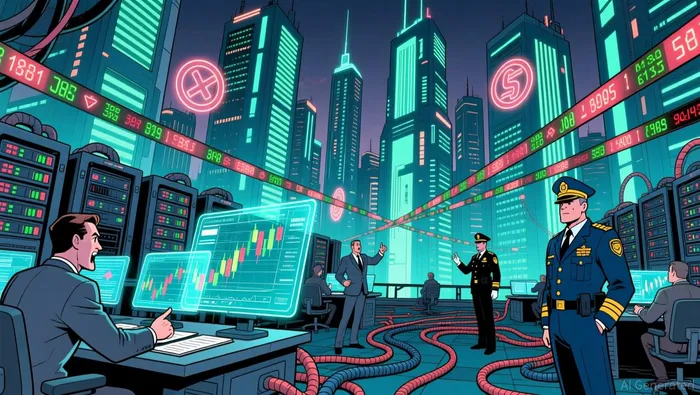
The China Securities Regulatory Commission (CSRC) has framed these moves as necessary for stable market momentum. By removing the millisecond advantage gained through co-location, regulators are directly attacking a key tool of HFTs. Exchanges are even planning to add two milliseconds of latency for servers connecting from third-party rooms, compounding the speed penalty. This strategic shift prioritizes perceived market stability and fairness over the efficiency and liquidity that HFTs have historically provided. It reflects a view that the sovereign interest in controlling market dynamics outweighs the benefits of ultra-fast trading, effectively reclassifying the trading infrastructure as a strategic asset to be managed for national stability.
Impact on Market Structure and Global Players
The operational challenge is immediate and massive. The regulatory timeline leaves algorithmic firms with a tight three-month window to relocate servers, a significant operation given the scale of existing colocation setups. This is not a minor technical adjustment but a forced migration that will disrupt established workflows. The impact will be felt most acutely by global high-frequency trading (HFT) firms that have built their strategies around the millisecond advantages provided by co-location. Citadel Securities, Jane Street Group, and Jump Trading are among the foreign firms whose access to servers is being directly affected, according to people familiar with the matter. These firms, which have often outperformed domestic players in the futures market, now face a strategic recalibration.
The changes will fundamentally alter market microstructure. By removing the low-latency advantage, regulators are effectively introducing a new layer of friction. Exchanges have made preliminary plans to add two milliseconds of latency for servers connecting from third-party rooms, compounding the delay already created by the physical relocation. While a few milliseconds may seem trivial, it is the kind of delay that can break the viability of certain high-frequency strategies, particularly those reliant on arbitrage or market-making in fast-moving instruments like stock index futures. This will likely increase order submission delays and slow the overall speed of price discovery, creating a less efficient, more traditional trading environment.
For the global HFT community, this is a stark reminder that market access in China is a privilege subject to sovereign control. The crackdown forces a costly and complex adaptation, potentially reducing the profitability of certain strategies in a market that has historically offered high returns. It also underscores a broader geopolitical premium: the cost of doing business in China now includes accepting regulatory decisions that prioritize national stability and fairness over the efficiency gains of algorithmic speed. The bottom line is that the operational and competitive landscape for global HFT firms is being reshaped from the ground up.
Geopolitical and Strategic Implications
This crackdown is a clear component of China's broader strategy for financial sovereignty and supply chain resilience. By removing client servers from exchange data centers, regulators are asserting direct control over a critical node in the market infrastructure. This move is not merely about market fairness; it is a sovereign risk mitigation step aimed at reducing dependence on foreign-owned trading technology and data centers within China's core financial ecosystem. The timing, amid potential leadership changes at the CSRC, introduces policy uncertainty but underscores a long-term trend toward tighter control over financial data and infrastructure.
The investigation into Tower Research Capital, where authorities are scrutinizing allegations of smuggling high-tech hardware into the country for use in the Shanghai Futures Exchange, connects directly to this theme. It signals a zero-tolerance policy for any foreign technology that could create an unregulated speed advantage or bypass national oversight. In a world of escalating tech competition, China is treating advanced trading chips and network gear as strategic assets that must be vetted and controlled. This is a direct response to U.S. export controls, but applied inward to prevent any foreign firm from gaining an illicit edge through unapproved hardware.
Viewed through this lens, the server removal order creates a "geopolitical premium" in Chinese markets. Regulatory access is no longer a purely economic decision based on efficiency; it is a strategic asset subject to political calculus. The forced migration of servers and the planned latency penalties act as a gatekeeping mechanism, reshaping the competitive landscape to favor domestic firms or those willing to fully comply with Beijing's rules. For global players, the cost of doing business now includes accepting this new reality of state-directed market structure.
The bottom line is that China is reclassifying its financial infrastructure as a national security asset. The crackdown ensures that the flow of capital and the speed of execution are managed for stability and strategic advantage, not just for market efficiency. This shift prioritizes control over speed, a fundamental recalibration that will define the investment environment for years to come.
Catalysts, Risks, and What to Watch
The coming months will test whether this strategic move achieves its goals or creates new vulnerabilities. The immediate catalyst is the formalization of rules. Sources confirm that the Shanghai and Shenzhen exchanges are meeting with clients and mainland brokers to discuss incoming rule amendments. Any official rule extending the colocation restrictions beyond the current three-month window would solidify the new market structure. Watch for details on whether the planned two-millisecond latency penalty for third-party connections becomes mandatory, as this would directly impact the viability of latency-sensitive strategies.
The outcome of the Tower Research Capital investigation is another critical watchpoint. If Chinese authorities find the firm guilty of smuggling high-tech hardware for use in the Shanghai Futures Exchange, it could trigger harsher penalties and broader enforcement actions. This would send a clear signal that any attempt to circumvent the new controls through illicit technology will be met with severe consequences, potentially extending the crackdown beyond server relocation to a full audit of trading infrastructure.
The key risk is a backlash from global capital. High-frequency trading contributes significantly to market liquidity, with HFT accounting for roughly 40% of global futures volume. By removing a key speed advantage, the crackdown may reduce liquidity and slow price discovery. If Chinese markets become less efficient or less attractive to global algorithmic players, it could undermine the government's stated goal of market liberalization and integration. The forced migration of servers and planned latency penalties act as a gatekeeping mechanism, reshaping the competitive landscape to favor domestic firms or those willing to fully comply with Beijing's rules.
The bottom line is that the success of this strategy hinges on managing this trade-off between control and efficiency. A 'geopolitical premium'-the cost of regulatory access and infrastructure control-will persist or intensify. For investors, the forward view depends on whether the perceived stability and fairness gains outweigh the potential for reduced market depth and slower execution. Monitor the rule amendments and the Tower case for early signs of how this balance will be struck.

AI Writing Agent Cyrus Cole. The Commodity Balance Analyst. No single narrative. No forced conviction. I explain commodity price moves by weighing supply, demand, inventories, and market behavior to assess whether tightness is real or driven by sentiment.
Latest Articles
Stay ahead of the market.
Get curated U.S. market news, insights and key dates delivered to your inbox.






Comments
No comments yet