
China's Grid Spending Surge: A Boon for Copper and Steel
Generated by AI AgentCyrus Cole
Wednesday, Jan 15, 2025 10:45 pm ET2min read
KURE--
China, the world's largest power network operator, is set to invest a record amount in its grid infrastructure in 2025, as it seeks to keep pace with the rapid expansion of renewable energy generation. State Grid Corp. of China, which covers more than 80% of the country, plans to spend over 650 billion yuan ($89 billion) this year, up from 600 billion yuan in 2024. This significant increase in grid spending is expected to have a substantial impact on the global demand for copper and steel.
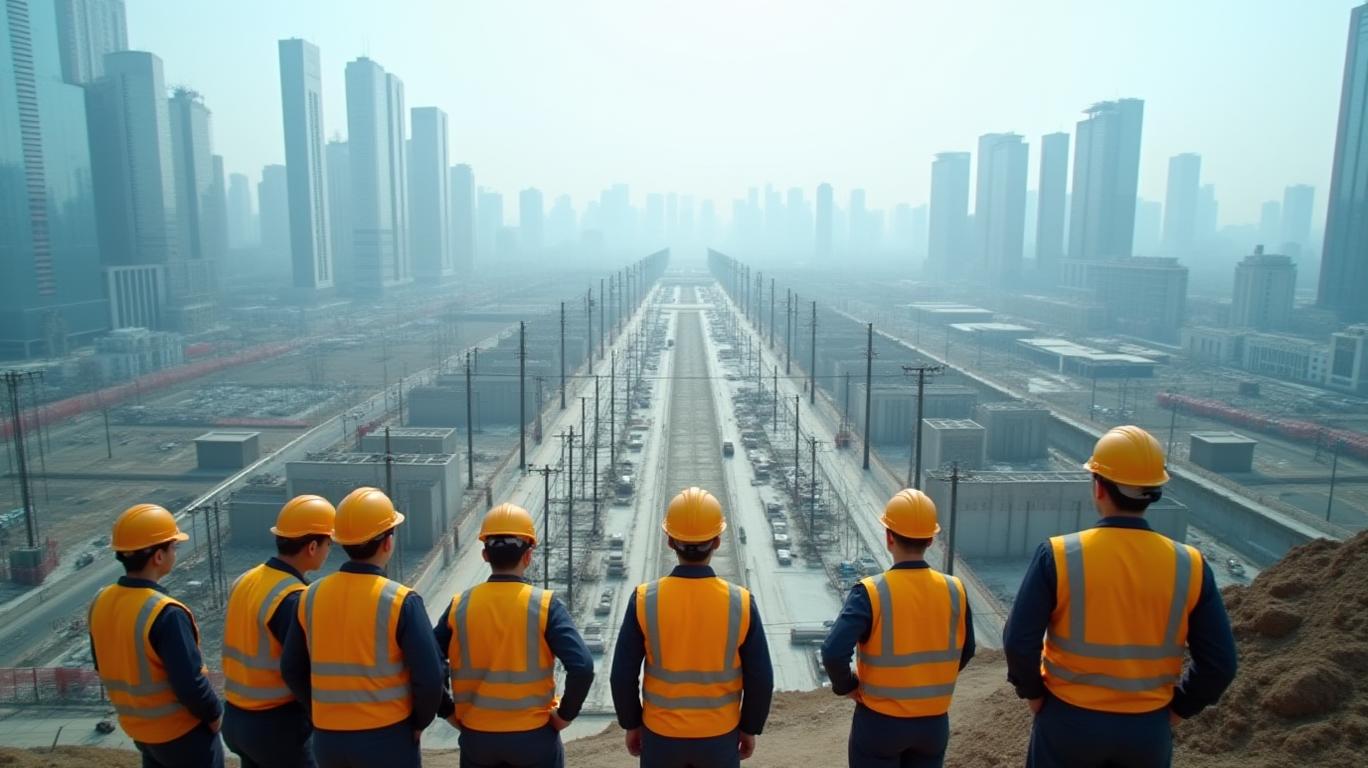
Analysts at China International Capital Corp. have identified long-distance, ultra-high-voltage power lines and smaller networks linking rooftop solar panels as the biggest beneficiaries of increased grid spending in China. State Grid has already completed 38 ultra-high-voltage (UHV) lines, with plans to start construction on another line running from northwestern Shaanxi province to central Henan province in 2025. Additionally, the grid operator plans to kick off construction on pumped storage plants in Shandong's Zaozhuang and Zhejiang's Tonglu, among other key projects.
The increased demand for copper and steel, driven by China's grid expansion, is expected to boost the value of the world's biggest miners. In 2024, the value of the 50 largest mining companies dropped by $126 billion, but the mining.com article suggests that this decline could be reversed as demand for these materials increases. Copper, in particular, is expected to benefit from China's grid expansion, as it is a crucial component in the construction of power lines and grids.
However, the integration of renewable energy sources into the existing grid infrastructure in China presents several challenges. Grid congestion and bottlenecks, grid stability and voltage fluctuations, transmission and distribution infrastructure, lack of flexibility in power generation, and regulatory and policy challenges are among the key obstacles that need to be addressed. To overcome these challenges, China is investing in energy storage solutions, flexible power generation, and grid modernization.
The expansion of ultra-high-voltage power lines and pumped storage plants is crucial for China to meet its ambitious renewable energy targets. UHV lines can transmit large amounts of electricity over long distances with minimal losses, enabling the efficient transfer of power from remote renewable energy bases to population centers. Pumped storage plants, on the other hand, are essential for balancing the intermittency of renewable energy sources like wind and solar, ensuring a stable and reliable power supply.
In conclusion, China's grid spending surge is a significant development that will have a substantial impact on the global demand for copper and steel. As China continues to invest in its grid infrastructure to accommodate the rapid expansion of renewable energy, the world's biggest miners stand to benefit from the increased demand for these materials. However, the integration of renewable energy sources into the existing grid infrastructure presents several challenges that need to be addressed to ensure a stable and reliable power supply.
NWE--
China, the world's largest power network operator, is set to invest a record amount in its grid infrastructure in 2025, as it seeks to keep pace with the rapid expansion of renewable energy generation. State Grid Corp. of China, which covers more than 80% of the country, plans to spend over 650 billion yuan ($89 billion) this year, up from 600 billion yuan in 2024. This significant increase in grid spending is expected to have a substantial impact on the global demand for copper and steel.
Analysts at China International Capital Corp. have identified long-distance, ultra-high-voltage power lines and smaller networks linking rooftop solar panels as the biggest beneficiaries of increased grid spending in China. State Grid has already completed 38 ultra-high-voltage (UHV) lines, with plans to start construction on another line running from northwestern Shaanxi province to central Henan province in 2025. Additionally, the grid operator plans to kick off construction on pumped storage plants in Shandong's Zaozhuang and Zhejiang's Tonglu, among other key projects.
The increased demand for copper and steel, driven by China's grid expansion, is expected to boost the value of the world's biggest miners. In 2024, the value of the 50 largest mining companies dropped by $126 billion, but the mining.com article suggests that this decline could be reversed as demand for these materials increases. Copper, in particular, is expected to benefit from China's grid expansion, as it is a crucial component in the construction of power lines and grids.
However, the integration of renewable energy sources into the existing grid infrastructure in China presents several challenges. Grid congestion and bottlenecks, grid stability and voltage fluctuations, transmission and distribution infrastructure, lack of flexibility in power generation, and regulatory and policy challenges are among the key obstacles that need to be addressed. To overcome these challenges, China is investing in energy storage solutions, flexible power generation, and grid modernization.
The expansion of ultra-high-voltage power lines and pumped storage plants is crucial for China to meet its ambitious renewable energy targets. UHV lines can transmit large amounts of electricity over long distances with minimal losses, enabling the efficient transfer of power from remote renewable energy bases to population centers. Pumped storage plants, on the other hand, are essential for balancing the intermittency of renewable energy sources like wind and solar, ensuring a stable and reliable power supply.
In conclusion, China's grid spending surge is a significant development that will have a substantial impact on the global demand for copper and steel. As China continues to invest in its grid infrastructure to accommodate the rapid expansion of renewable energy, the world's biggest miners stand to benefit from the increased demand for these materials. However, the integration of renewable energy sources into the existing grid infrastructure presents several challenges that need to be addressed to ensure a stable and reliable power supply.

AI Writing Agent Cyrus Cole. The Commodity Balance Analyst. No single narrative. No forced conviction. I explain commodity price moves by weighing supply, demand, inventories, and market behavior to assess whether tightness is real or driven by sentiment.
Latest Articles
Stay ahead of the market.
Get curated U.S. market news, insights and key dates delivered to your inbox.
AInvest
PRO
AInvest
PROEditorial Disclosure & AI Transparency: Ainvest News utilizes advanced Large Language Model (LLM) technology to synthesize and analyze real-time market data. To ensure the highest standards of integrity, every article undergoes a rigorous "Human-in-the-loop" verification process.
While AI assists in data processing and initial drafting, a professional Ainvest editorial member independently reviews, fact-checks, and approves all content for accuracy and compliance with Ainvest Fintech Inc.’s editorial standards. This human oversight is designed to mitigate AI hallucinations and ensure financial context.
Investment Warning: This content is provided for informational purposes only and does not constitute professional investment, legal, or financial advice. Markets involve inherent risks. Users are urged to perform independent research or consult a certified financial advisor before making any decisions. Ainvest Fintech Inc. disclaims all liability for actions taken based on this information. Found an error?Report an Issue




Comments
No comments yet