
China's Green Hydrogen and Nuclear Push Drive Global Climate Shift


 Aime Summary
China's climate action leadership is gaining momentum as the nation accelerates investments in green hydrogen, refines fiscal policies to support sustainability, and signals its commitment to global climate goals, according to industry figures and recent policy developments. With the 15th Five-Year Plan prioritizing fiscal sustainability, China's proactive approach is drawing attention as it seeks to balance economic growth with decarbonization.
A key focus area is green hydrogen, where China is rapidly expanding capacity. BloombergNEF projects that the country's green hydrogen output will surge from 125,000 tons in 2024 to 1.2 million tons by 2030, driven by demand in industries such as oil refining and coal-to-chemicals. 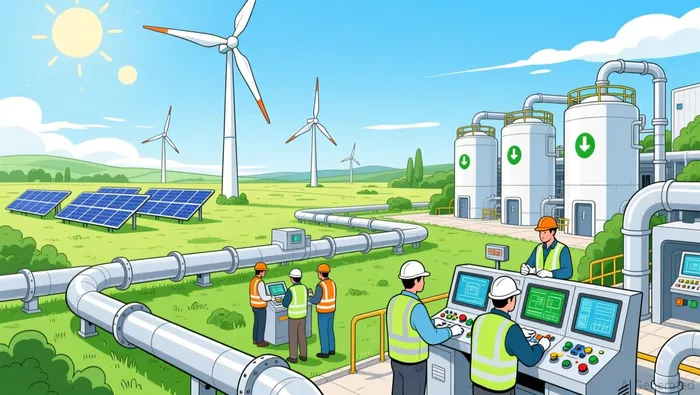 This growth is underpinned by the 15th Five-Year Plan, which emphasizes technological innovation and infrastructure development. However, challenges remain, as existing projects operate at only a fraction of their capacity, highlighting the need for improved efficiency and investment.
China's influence on global climate policy is also evident. South Korea's recent pledge to phase out coal-fired power plants by 2040, announced at COP30, has been linked to broader regional shifts in energy strategy, with analysts noting that China's own coal phaseout efforts could shape similar transitions in neighboring economies. Meanwhile, Chinese companies are deepening their involvement in carbon markets. Sadot Group Inc. has invested in an Indonesian carbon project, acquiring stakes in initiatives that aim to generate high-integrity carbon credits through peatland and mangrove restoration.
The COP30 summit in Brazil further underscored China's role in climate diplomacy. While the conference focused on adaptation funding and the need to balance mitigation with preparedness for climate impacts, China's participation in expanding nuclear power-alongside 32 other nations-highlighted its dual approach to decarbonization. The country's rapid nuclear expansion, including the Zhangzhou facility in Fujian province, demonstrates its capacity to scale clean energy infrastructure quickly, a model other nations are studying.
Domestically, China's fiscal strategy is being recalibrated to support these goals. The finance ministry's establishment of a debt-management department aims to curb local debt risks while freeing up resources for green initiatives. January-October 2025 fiscal revenue grew 0.8% year-on-year, with expenditure rising 2%, reflecting a cautious approach to balancing economic stability with long-term sustainability.
Industry leaders caution that while China's efforts are significant, global cooperation remains critical. At COP30, the U.S. warned South Africa against issuing a G-20 statement that might diverge from Western climate priorities, illustrating the geopolitical tensions underpinning climate negotiations. Despite such challenges, China's investments in renewables and its push for international partnerships-such as its role in India's solar expansion through companies like Arctech-signal its intent to position itself as a central player in the global energy transition.
As the 15th Five-Year Plan unfolds, the success of China's climate strategy will depend on maintaining momentum in technology adoption, securing international collaboration, and addressing domestic challenges like local debt and project efficiency. With green hydrogen, nuclear power, and carbon markets as focal points, the nation's actions could shape the trajectory of global climate progress in the coming decade.

Stay ahead of the market.
Get curated U.S. market news, insights and key dates delivered to your inbox.






Comments
No comments yet