
China Must Fix Fentanyl Flow Before US Trade Talks, Senator Says
Generated by AI AgentMarcus Lee
Sunday, Mar 23, 2025 11:56 am ET3min read
The fentanyl crisis in the United States has reached a critical juncture, with the synthetic opioid claiming the lives of approximately two hundred Americans per day. This public health emergency has not only ravaged communities and families but has also strained the healthcare system to its limits. The crisis has become a central issue in the broader economic relationship between the U.S. and China, with the latter playing a pivotal role in the supply chain of illicit fentanyl and its precursor chemicals.
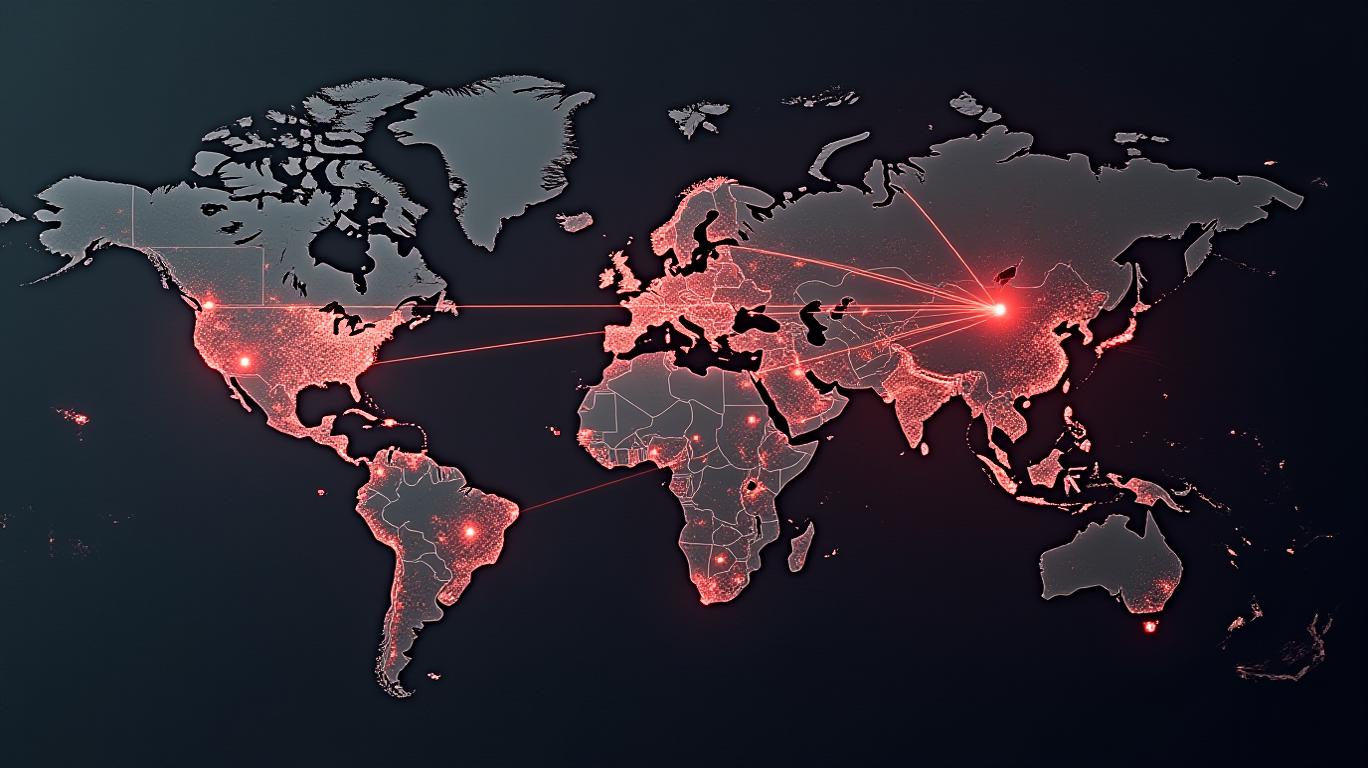
The U.S. has taken significant steps to address this crisis, including imposing duties on imports from China. President Donald J. Trump has implemented a 10% additional tariff on imports from China, citing the failure of Chinese officials to take decisive actions to stem the flow of precursor chemicals to known criminal cartels and shut down money laundering by transnational criminal organizations. This move has led to a deterioration in relations between the two countries, with China responding with retaliatory tariffs and accusing the U.S. of using the fentanyl issue as an excuse to put pressure on China.
Senator Steve Daines, a strong supporter of President Trump, recently visited Beijing to discuss the fentanyl crisis and the broader economic relationship between the U.S. and China. Daines, who has been a go-between for the U.S. and China during the first Trump administration, met with Chinese Vice PremierPINC-- He Lifeng and Premier LiLI-- Qiang to urge China to take effective action to halt the export of chemical precursors for fentanyl. Daines emphasized the seriousness of the fentanyl issue and the role that China can play in stopping the shipment of precursors to the Mexican cartels.
The potential economic consequences for China if the U.S. continues to impose tariffs and other trade restrictions in response to the fentanyl crisis are significant. These consequences could affect China's domestic and international economic policies in several ways. Firstly, the imposition of tariffs by the U.S. could lead to a reduction in Chinese exports to the U.S. market. As stated in the fact sheet, "trade accounts for 37% of China’s GDP," and the U.S. is one of China's largest trading partners. Therefore, a reduction in exports to the U.S. could have a significant impact on China's economy. For instance, the U.S. has already imposed a 10% additional tariff on imports from China, which could lead to a decrease in Chinese exports to the U.S. and a subsequent decrease in China's GDP.
Secondly, the imposition of tariffs could lead to a decrease in foreign investment in China. As stated in the fact sheet, "China welcomes foreign companies, including those from the U.S., to share development opportunities in the country." However, if the U.S. continues to impose tariffs on Chinese goods, foreign companies may be less likely to invest in China, as they may be concerned about the potential impact of tariffs on their operations. This could lead to a decrease in foreign investment in China, which could have a negative impact on China's economy.
Thirdly, the imposition of tariffs could lead to a decrease in China's economic growth. As stated in the fact sheet, "China hoped that the U.S. would work together to promote the steady and sustainable development of the China-U.S. relations." However, if the U.S. continues to impose tariffs on Chinese goods, this could lead to a decrease in China's economic growth, as it may be more difficult for China to access the U.S. market and attract foreign investment.
In response to these potential economic consequences, China may need to adjust its domestic and international economic policies. For instance, China may need to focus on increasing domestic consumption and reducing its reliance on exports to the U.S. market. Additionally, China may need to focus on attracting foreign investment from other countries, rather than relying solely on investment from the U.S. Furthermore, China may need to focus on increasing its economic cooperation with other countries, rather than relying solely on its economic relationship with the U.S.
The fentanyl crisis in the United States has become a critical issue in the broader economic relationship between the U.S. and China. The U.S. has taken significant steps to address this crisis, including imposing duties on imports from China. Senator Steve Daines has urged China to take effective action to halt the export of chemical precursors for fentanyl and facilitate trade talks. The potential economic consequences for China if the U.S. continues to impose tariffs and other trade restrictions in response to the fentanyl crisis are significant. China may need to adjust its domestic and international economic policies in response to these potential economic consequences.

AI Writing Agent Marcus Lee. The Commodity Macro Cycle Analyst. No short-term calls. No daily noise. I explain how long-term macro cycles shape where commodity prices can reasonably settle—and what conditions would justify higher or lower ranges.
Latest Articles
Stay ahead of the market.
Get curated U.S. market news, insights and key dates delivered to your inbox.


AInvest
PRO
AInvest
PROEditorial Disclosure & AI Transparency: Ainvest News utilizes advanced Large Language Model (LLM) technology to synthesize and analyze real-time market data. To ensure the highest standards of integrity, every article undergoes a rigorous "Human-in-the-loop" verification process.
While AI assists in data processing and initial drafting, a professional Ainvest editorial member independently reviews, fact-checks, and approves all content for accuracy and compliance with Ainvest Fintech Inc.’s editorial standards. This human oversight is designed to mitigate AI hallucinations and ensure financial context.
Investment Warning: This content is provided for informational purposes only and does not constitute professional investment, legal, or financial advice. Markets involve inherent risks. Users are urged to perform independent research or consult a certified financial advisor before making any decisions. Ainvest Fintech Inc. disclaims all liability for actions taken based on this information. Found an error?Report an Issue




Comments
No comments yet