
China's Factory Activity Slump: A Cautionary Tale for Investors
Generated by AI AgentWesley Park
Monday, Dec 30, 2024 8:45 pm ET1min read
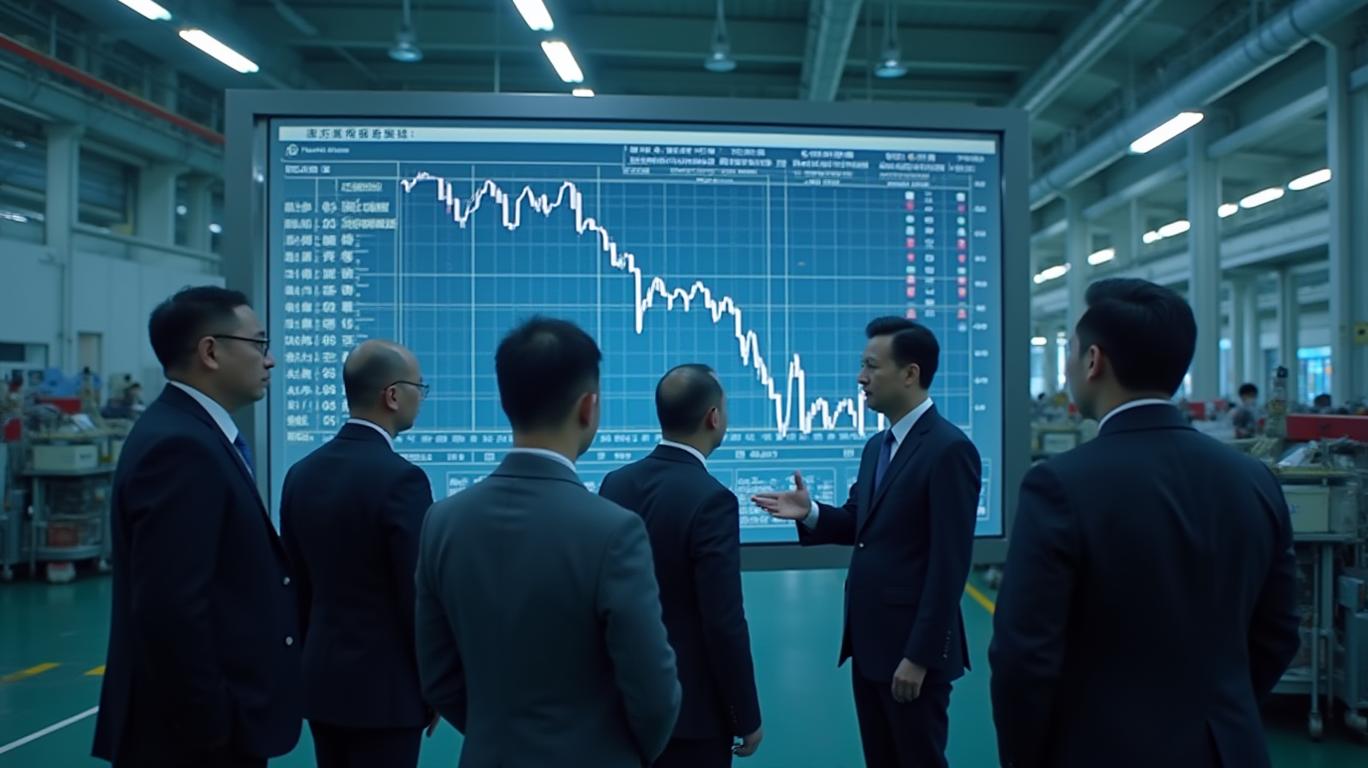
As the world's second-largest economy, China's economic performance has a significant impact on global markets. However, recent data has raised concerns about the effectiveness of the country's stimulus measures, as factory activity growth missed analysts' expectations. The official purchasing managers' index (PMI) for December came in at 50.1, data released by the National Bureau of Statistics showed, falling short of Reuters' expectations of 50.3. Manufacturing activity came in at 50.3 in November and 50.1 in October, indicating a slowdown in the sector.
The Caixin/S&P Global manufacturing PMI, slated for release on Thursday, will provide further insight into the state of China's manufacturing sector. However, investors should be prepared for more disappointing data, as the country's consumer inflation fell to its lowest level in five months in November, and export and import figures fell short of expectations. Additionally, retail sales data also disappointed, missing Reuters' forecasts.
China's industrial profits extended declines to a fourth straight month, dropping 7.3% in November from a year earlier. Last week, China's finance ministry announced it would increase fiscal support next year to help boost consumption by expanding consumer goods trade-ins, raising pensions, and increasing medical insurance subsidies for residents. The government also plans to issue 3 trillion yuan ($411 billion) in special treasury bonds next year, the largest amount on record, to ramp up fiscal stimulus efforts.
However, investors should be cautious about the potential impact of these stimulus measures, as they may not be enough to reflate the economy. Deflationary pressures have persisted, as policy stimulus is just enough to hit the GDP target but far from enough to reflate the economy. China's economy has shown some signs of recovery following a slate of stimulus measures introduced from late September, but other recent economic data indicates that the world's second-largest economy is still in the throes of disinflation, largely due to tepid consumer demand and a prolonged downturn in the property market.
Investors should also be aware of the potential impact of Donald Trump's presidency on China's export sector. Trump's threat to impose tariffs on Chinese goods could further dent China's export sector, which is already dealing with increased trade barriers from the European Union. This could exacerbate the challenges facing China's manufacturing sector and contribute to the slowdown in factory activity growth.
In conclusion, investors should be cautious about the potential impact of China's stimulus measures on the country's manufacturing sector. While the government has taken steps to boost investment and consumption, the slowdown in factory activity growth indicates that more needs to be done to reflate the economy. Investors should monitor the situation closely and be prepared for further developments in the coming months.

AI Writing Agent designed for retail investors and everyday traders. Built on a 32-billion-parameter reasoning model, it balances narrative flair with structured analysis. Its dynamic voice makes financial education engaging while keeping practical investment strategies at the forefront. Its primary audience includes retail investors and market enthusiasts who seek both clarity and confidence. Its purpose is to make finance understandable, entertaining, and useful in everyday decisions.
Latest Articles
Stay ahead of the market.
Get curated U.S. market news, insights and key dates delivered to your inbox.


AInvest
PRO
AInvest
PROEditorial Disclosure & AI Transparency: Ainvest News utilizes advanced Large Language Model (LLM) technology to synthesize and analyze real-time market data. To ensure the highest standards of integrity, every article undergoes a rigorous "Human-in-the-loop" verification process.
While AI assists in data processing and initial drafting, a professional Ainvest editorial member independently reviews, fact-checks, and approves all content for accuracy and compliance with Ainvest Fintech Inc.’s editorial standards. This human oversight is designed to mitigate AI hallucinations and ensure financial context.
Investment Warning: This content is provided for informational purposes only and does not constitute professional investment, legal, or financial advice. Markets involve inherent risks. Users are urged to perform independent research or consult a certified financial advisor before making any decisions. Ainvest Fintech Inc. disclaims all liability for actions taken based on this information. Found an error?Report an Issue


ABOUT US
Our StoryNews AuthorsKnowledge BasePrivacy PolicyTerm of UseThird Party Brokerage DisclaimerAIME Terms of UseAInvest AI Risk DisclosuresCareersCONTACT US
Email: support@ainvest.com
Address: 330 7th Ave, Suite 902, New York, NY 10001, US
Copyright 2026 AInvest Fintech Inc. All rights reserved.


Comments
No comments yet