
China's Export Recovery: Navigating the Trade Truce and Seizing Sectoral Opportunities
The global trade landscape in 2025 is defined by China's uneven export recovery, driven by high-tech innovation and geopolitical diversification, amid a fragile U.S.-China trade truce. As tariffs remain elevated and negotiations linger, investors must parse sectoral winners and losers while calibrating risk exposure to shifting trade dynamics. This analysis explores which industries are positioned for sustained growth and how the trade truce's sustainability will shape opportunities.
The Sectors Fueling China's Export Resilience
China's export growth in Q2 2025 has been uneven, but select sectors are defying headwinds:
- Electric Vehicles (EVs) & Advanced Manufacturing
- Growth Driver: EV exports surged by +31.7% year-on-year, fueled by demand in Europe and ASEAN. Companies like BYD and NIO are leveraging green policies in the EU (e.g., stricter emissions standards) and ASEAN's EV infrastructure push.
- Geopolitical Edge: EVs and batteries bypass U.S. tariffs, making them a strategic growth lever.
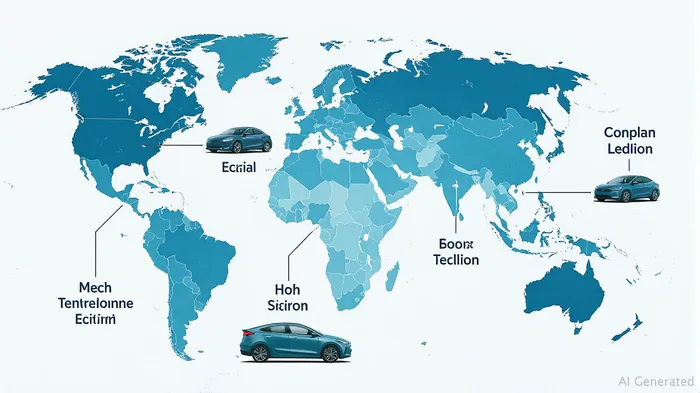
Investment Play: Exposure to EV supply chains (e.g., battery makers Contemporary Amperex Technology CATL or Xinyi Solar) could yield strong returns as global EV adoption accelerates.
Semiconductors & High-Tech Goods
- Growth Driver: Despite U.S. export controls, China's semiconductor exports rose +18% year-on-year in May 2025, driven by domestic production and non-U.S. markets. Firms like SMIC and HiSilicon are pivoting to ASEAN and the EU.
- Policy Boost: State subsidies for semiconductor R&D and the Made in China 2025 initiative prioritize this sector.
Renewables & Energy Equipment
- Growth Driver: Solar panels and wind turbines remain stable export pillars, with ASEAN and the EU as key buyers. China's coal exports to Southeast Asia also grew as energy demand rises.
- Investment Play: Firms like LONGi Green Energy (solar) and Goldwind (wind turbines) are poised for growth as Asia's energy transition gains momentum.
The Fragile Trade Truce: Risks and Sustainability
The U.S.-China trade truce, extended to August 12, 2025, is a stopgap measure, not a resolution. Key risks to its sustainability include:
Layered Tariffs: Effective U.S. tariffs on Chinese goods average >30%, combining baseline tariffs, fentanyl penalties (20%), and Section 301 duties (25%). Even if the 90-day truce is extended, sectors like furniture and low-end electronics face permanent damage.
Unresolved Disputes: The truce excludes long-standing issues like forced tech transfers, overcapacity in steel/aluminum, and China's rare earth export controls. Legal challenges (e.g., U.S. courts striking down tariffs) add further uncertainty.
Geopolitical Pressure: U.S. allies are under pressure to reduce reliance on Chinese supply chains. Vietnam's 40% transshipment tariffs and the EU's scrutiny of China's EV subsidies threaten to redirect trade flows permanently.
Investment Implications: Assume the truce expires in August. If tariffs rise further, investors should prioritize firms with diversified supply chains or exposure to non-U.S. markets.
Global Trade Implications: Winners and Losers
The trade truce's fragility is reshaping global trade patterns:
- Winners:
- ASEAN: Exports to China surged +20.8% year-on-year in April 2025, with Indonesia and Thailand benefiting from China's "friend-shoring" strategy.
- EU: Gained share in high-tech imports, but faces China's retaliatory tariffs on agricultural goods (e.g., +15% on U.S. chicken).
Regional Value Chains: Firms using ASEAN as a manufacturing hub (e.g., Foxconn in Vietnam) are insulated from U.S. tariffs.
Losers:
- U.S. Retailers: Furniture and appliance imports from China fell -34% year-on-year, forcing reliance on costlier alternatives.
- U.S. Farmers: China's retaliatory tariffs on agricultural goods (e.g., corn, wheat) have reduced U.S. exports.
Investment Strategy: Positioning for Sectors with Structural Tailwinds
Investors should focus on three themes to capitalize on China's export recovery:
- High-Tech and Green Sectors
- Why: These sectors are tariff-protected, state-backed, and aligned with global decarbonization trends.
ETF Play: The MSCI China Tech Index offers exposure to firms like BYD, TCL (semiconductors), and HITACHI Energy (grid tech).
ASEAN Exposed Firms
- Why: ASEAN's +20.8% export growth to China highlights its role as a manufacturing and trade hub.
ETF Play: The iShares MSCI ASEAN ETF targets companies benefiting from China's supply chain shifts.
Diversified Supply Chains
- Why: Firms with production in Mexico, Taiwan, or ASEAN can bypass U.S. tariffs.
- Example: Flex Ltd. (electronics manufacturing) and TSMC (semiconductor foundry) have expanded in Mexico and Taiwan to hedge U.S. exposure.
Conclusion: A Volatile but Opportunity-Rich Landscape
China's export recovery is sectoral and uneven, with EVs, semiconductors, and renewables leading the charge. While the trade truce buys time, its fragility means investors must prioritize firms with diversified geographies, tariff-resilient products, and exposure to non-U.S. markets. The August 12 deadline will test the truce's limits—if tariffs rise further, the world may face a new era of fragmented trade. For now, the path to profit lies in high-tech innovation and strategic diversification.

Stay ahead of the market.
Get curated U.S. market news, insights and key dates delivered to your inbox.




Comments
No comments yet