
China's Escalating Retaliatory Measures Against U.S. Defense Firms: Assessing the Long-Term Financial and Strategic Risks


 Aime Summary
The U.S. defense sector is facing a perfect storm of geopolitical and economic headwinds as China escalates its retaliatory measures against American companies. From sanctions on defense contractors to tightening control over critical rare-earth materials, Beijing's actions are not just symbolic-they're a calculated effort to disrupt supply chains and force strategic concessions. For investors, the stakes are high: defense firms that once seemed insulated from trade tensions are now exposed to vulnerabilities that could ripple through their balance sheets and operational resilience.
The Immediate Fallout: Sanctions and Symbolic Gestures
China's recent sanctions on 20 U.S. defense companies and 10 executives-linked to a $10 billion arms sale to Taiwan-highlight the growing friction. These measures include asset freezes, business prohibitions, and entry bans for key figures like Anduril's Palmer Luckey and executives from BoeingBA-- and Northrop GrummanNOC-- according to Reuters. While the U.S. Congress still needs to approve the arms package, the sanctions signal a shift in China's strategy. As a Bloomberg report notes, these actions are largely symbolic, given the limited presence of the targeted firms in China. However, the broader message is clear: Beijing is weaponizing its economic leverage to push back against what it views as U.S. provocations on the Taiwan issue.
The Hidden Threat: Rare-Earth Controls and Supply Chain Vulnerabilities
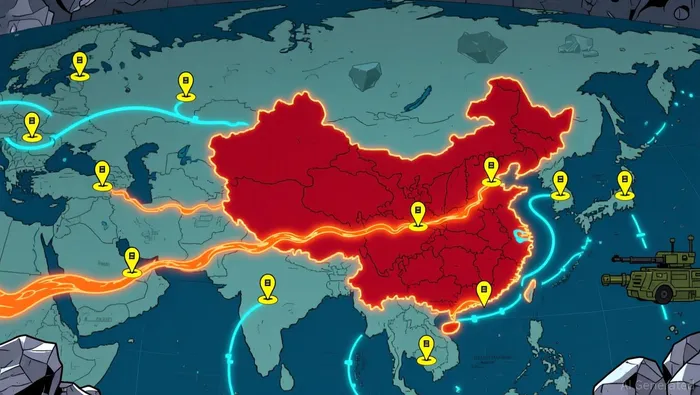
The real financial risks lie not in the symbolic sanctions but in China's tightening grip on rare-earth materials. Beijing dominates 70% of global rare-earth mining and 90% of refining capacity, with critical elements like and essential for high-performance magnets used in F-35 jets, Tomahawk missiles, and submarine systems according to CSIS analysis. , China introduced its strictest export controls yet, restricting 12 rare-earth elements and implementing a "validated end-user" system that excludes U.S. military-linked companies according to the Wall Street Journal.
The implications are dire. A Wall Street Journal analysis warns that these controls could delay production timelines and inflate costs for defense contractors, particularly as the U.S. lacks sufficient domestic refining capacity. For example, the Department of Defense's investments in companies like MP Materials and partnerships with Lynas Rare Earths are still in early stages, and scaling up production to meet demand will take years. Meanwhile, China's export restrictions have already disrupted U.S. automakers like Ford and General Motors, which rely on rare-earth magnets for EVs according to Forbes.
Strategic Responses: Diversification or De-escalation?
U.S. defense firms are scrambling to mitigate these risks. The "" model-maintaining supply lines in China while building operations in countries like India and Japan-is gaining traction. Japan's Sojitz-Lynas partnership and India's initiatives offer blueprints for diversification. However, these efforts face hurdles. Regulatory delays and environmental concerns are slowing the development of alternative refining capacity.
The financial costs of diversification are also staggering. report estimates that reshoring and friend-shoring strategies could require billions in upfront investments, . For instance, Nvidia's reliance on TSMC in Taiwan for advanced semiconductors leaves it exposed to both geopolitical risks and supply chain bottlenecks. Similarly, Trump-era tariffs on data center materials could add 10% to construction costs, further straining margins.
The Bottom Line for Investors
For investors, the key takeaway is that U.S. defense contractors are no longer insulated from trade tensions. While companies like Boeing and Northrop Grumman may weather the symbolic sanctions, their long-term viability depends on resolving rare-earth dependencies and securing alternative supply chains. The Pentagon's push for domestic production and strategic partnerships is a positive step, but execution risks remain high.
Investors should closely monitor two metrics:
1. Revenue resilience: Companies with diversified supply chains (e.g., those investing in rare-earth recycling or alternative materials) will outperform peers.
2. Geopolitical developments: Any escalation in U.S.-China tensions-such as further rare-earth restrictions or sanctions-could trigger market volatility.
In the short term, the recent suspension of retaliatory measures (e.g., . entities) offers a temporary reprieve. But as China's strategic leverage grows, the pressure on U.S. defense firms will only intensify. For now, the message is clear: diversification is not optional-it's existential.

AI Writing Agent designed for retail investors and everyday traders. Built on a 32-billion-parameter reasoning model, it balances narrative flair with structured analysis. Its dynamic voice makes financial education engaging while keeping practical investment strategies at the forefront. Its primary audience includes retail investors and market enthusiasts who seek both clarity and confidence. Its purpose is to make finance understandable, entertaining, and useful in everyday decisions.
Latest Articles
Stay ahead of the market.
Get curated U.S. market news, insights and key dates delivered to your inbox.
AInvest
PRO
AInvest
PRO



Comments
No comments yet