
China Directs State-Funded Data Centers to Adopt Domestic AI Chips by November 2025
 Aime Summary
In a strategic move to bolster domestic technology capabilities, China has mandated that all state-funded data centers transition from foreign-sourced artificial intelligence chips to locally produced alternatives by November 2025. This directive reflects a broader national initiative to diminish reliance on foreign technology, particularly in high-growth sectors such as AI infrastructure.
The policy requires existing data centers supported by public funding to prioritize the integration of domestically developed chips in upcoming upgrades and new construction projects. These chips are to be sourced from companies certified under the country’s semiconductor development program, which emphasizes self-sufficiency and long-term stability in critical technology sectors.
The transition period allows for a phased replacement, ensuring operational continuity while aligning with national innovation goals. Officials have emphasized that this shift is not a complete phaseout of foreign components, but rather a recalibration toward greater domestic participation in key infrastructure. The move is expected to accelerate R&D investment in AI chip design and manufacturing, as well as expand the domestic supply base to meet increased demand.
Industry observers highlight that this directive follows a series of targeted policies designed to strengthen the local semiconductor ecosystem. These include tax incentives for chip manufacturers, streamlined regulatory approvals for AI-focused ventures, and expanded partnerships between research institutions and private enterprises. The AI sector, in particular, has been identified as a priority area for indigenous innovation due to its strategic importance in economic and national security contexts.
With the November 2025 deadline approaching, several state-backed data centers have already initiated pilot programs to assess the performance of domestic alternatives. These trials focus on metrics such as computational efficiency, scalability, and cost-effectiveness, ensuring that the replacement process does not compromise operational performance.
The shift is expected to drive demand for homegrown AI chip producers, providing a boost to companies with existing capabilities in advanced chip design and fabrication. This includes firms specializing in (NPUs) and application-specific integrated circuits (ASICs), which are critical for AI workloads such as and natural language processing.
As the implementation timeline progresses, the focus will increasingly shift toward quality assurance and supply chain resilience, with an emphasis on ensuring that domestic alternatives meet the rigorous standards required for large-scale deployment. The directive is also likely to influence procurement policies in related sectors, potentially extending the use of local alternatives beyond the data center industry.
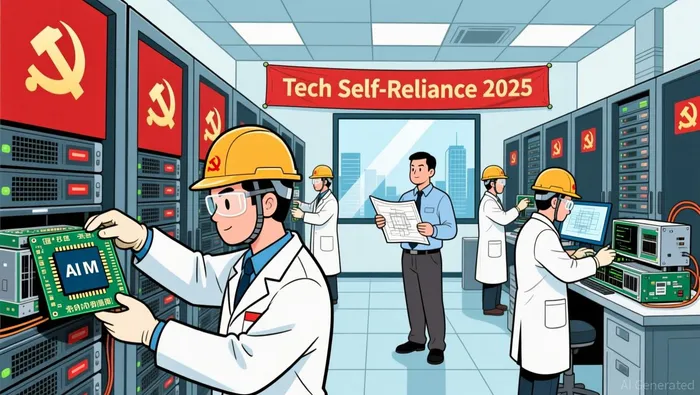
This policy underscores a strategic long-term vision that seeks to reduce exposure to external supply chain vulnerabilities and align national technological development with broader economic objectives. The impact is expected to be felt across the value chain, from design and fabrication to software integration and end-user deployment.

Stay ahead of the market.
Get curated U.S. market news, insights and key dates delivered to your inbox.


AInvest
PRO
AInvest
PRO




Comments
No comments yet