
China Deepens Military Ties With Iran: Key Details and Investor Implications
 Aime Summary
- Iran is close to acquiring advanced supersonic anti-ship missiles from China, potentially altering regional military dynamics.
- The deal involves the CM-302 missile, which is designed to evade ship-based defenses and can target aircraft carriers.
- The move may challenge U.S. naval dominance in the Persian Gulf and raise concerns over violations of a U.N. arms embargo.
The geopolitical landscape in the Middle East is shifting as Iran seeks to bolster its naval capabilities through a high-stakes deal with China. At the center of this development is the CM-302 supersonic anti-ship missile, a Chinese-made system capable of flying low at speeds difficult to counter. For investors, this signals a deepening strategic alliance between two nations increasingly at odds with U.S. interests. But what exactly is the CM-302, and why is this deal so significant? The answer lies in understanding the military, economic, and geopolitical stakes at play.
What Is the CM-302 Supersonic Anti-Ship Missile and Why Does It Matter?
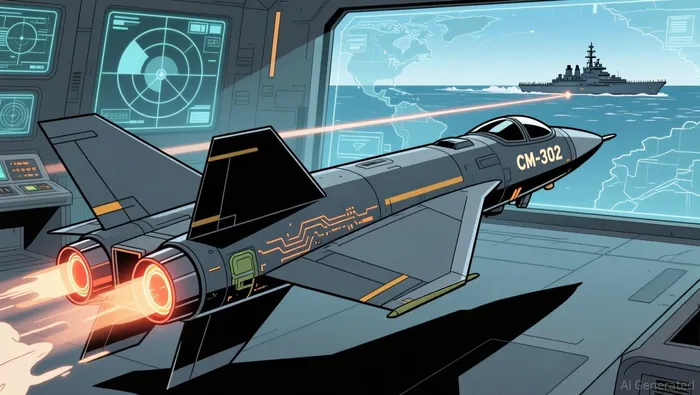
The CM-302 is a long-range, supersonic anti-ship cruise missile developed by China's state-owned China Aerospace Science and Industry Corporation. With an estimated range of 290 kilometers and the ability to fly at low altitudes to avoid radar detection, it is designed to evade ship-based defense systems according to reports. This makes it a particularly dangerous threat to U.S. and allied naval assets operating in the Persian Gulf and the Strait of Hormuz. China markets the CM-302 as one of the most advanced weapons in its arsenal, claiming it can target and potentially sink aircraft carriers.
For Iran, the acquisition of the CM-302 represents a strategic upgrade in its naval capabilities. With U.S. military presence in the region increasing, including the deployment of two aircraft carriers in recent weeks, Iran's ability to project naval power is becoming a key factor in regional stability. This shift has potential ripple effects for global energy markets and trade routes, as the Persian Gulf and the Strait of Hormuz are critical for global oil transport.
Why Is This Deal Happening Now and What Are the Risks?
The timing of the potential deal appears to coincide with heightened regional tensions. Following a 12-day war with Israel in June 2025, Iran's military infrastructure was weakened, prompting the country to seek advanced weaponry to rebuild its strategic deterrence. According to reports, an Iranian deputy defense minister recently traveled to China to advance the negotiations. This deal also reflects broader military cooperation between Iran and China, including discussions about anti-ballistic and anti-satellite systems.
However, the deal raises significant legal and political concerns. The United Nations has imposed an arms embargo on Iran since 2006, which was recently reimposed. If finalized, the CM-302 acquisition would represent a major violation of this embargo and could provoke a stronger U.S. response. Meanwhile, China has historically walked a fine line between supporting Iran and avoiding direct confrontation with the U.S. and its allies.
What This Means for Investors and Global Markets
From an investor perspective, this development highlights growing geopolitical risks in the Middle East and the potential for military escalation. The Persian Gulf is a vital artery for global energy markets, and any disruption—whether through direct conflict or increased naval posturing—could drive up oil prices and disrupt trade. Companies with significant exposure to this region, including energy firms and defense contractors, may experience volatility in the near term.
Additionally, the deepening ties between China and Iran could influence U.S.-China relations. As U.S. President Donald Trump prepares for a high-level meeting with Chinese President Xi Jinping in late March 2026, issues like this deal may dominate the discussion. Investors will be watching for signs of how the U.S. intends to respond to China's growing military influence in a region traditionally dominated by U.S. naval power.
What to Watch Next
The immediate focus will be on whether the deal is finalized and, if so, when the missiles will be delivered. Analysts note that the number of missiles and their deployment strategy could provide further insight into Iran's military intentions. Investors should also monitor diplomatic developments between the U.S. and China as well as any potential U.N. or U.S. sanctions that may follow. In the long term, the deal could signal a broader trend of China increasing its military footprint in the Middle East, a move that could have lasting implications for global security and trade dynamics.
Ultimately, while the CM-302 deal may not have an immediate impact on stock prices, it underscores a growing strategic shift in the region that investors should keep on their radar. As with any geopolitical development, the key is to assess the risk to your portfolio and adjust accordingly.

Stay ahead of the market.
Get curated U.S. market news, insights and key dates delivered to your inbox.


AInvest
PRO
AInvest
PRO



Comments
No comments yet