
China's Deepening Control Over Global Pharmaceutical Supply Chains and Its Implications for U.S. National Security and Investment Strategy


 Aime Summary
China's Strategic Advantages and Risks to U.S. Security
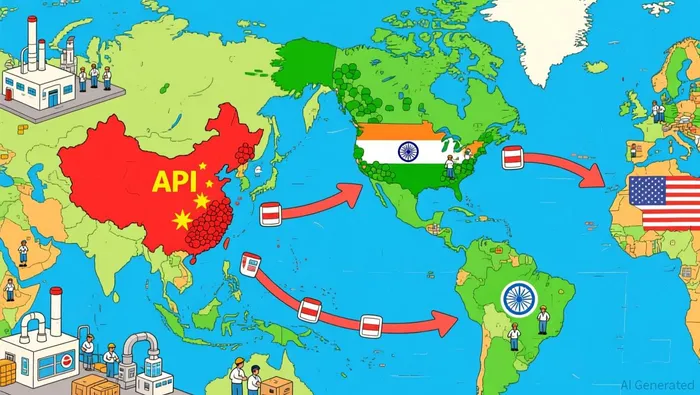
China's rise in pharmaceutical manufacturing is not accidental. Since 2008, the Chinese government has designated pharmaceuticals as a "high-value-added industry," incentivizing production through subsidies, export credits, and lax regulatory enforcement. The result? A sprawling network of 1,700 API manufacturers by 2023, up from 1,250 in 2018. This scale has created bottlenecks in at least three U.S.-designated "essential medicines," with U.S. dependence on Chinese APIs ranging from 8% to 47%. The U.S. military's reliance on China for 27% of its drug purchases further underscores the vulnerability according to reports.
The risks are not hypothetical. During the early stages of the COVID-19 pandemic, Chinese lockdowns disrupted global API production, triggering shortages of critical drugs. Today, China's upstream control extends to 41% of key starting materials for API synthesis, giving it leverage over downstream production in countries like India, which relies on China for 30% of its APIs. This interdependency creates a precarious balance: while China's cost advantages make it indispensable, its geopolitical ambitions could weaponize supply chains.
U.S. Reshoring Efforts: Progress and Pitfalls
In response, the U.S. has launched initiatives to rebuild domestic pharmaceutical resilience. In May 2025, the Trump administration issued an executive order streamlining permitting and inspection processes for domestic facilities, aiming to reduce reliance on offshore production. However, reshoring faces headwinds. Tariffs on imported APIs, while politically popular, risk exacerbating shortages and driving up costs for generic drugs. For example, tariffs on Chinese APIs have already reached 245% for certain products, yet U.S. generic drug manufacturers remain heavily dependent on low-cost imports.
Structural solutions are gaining traction. Targeted subsidies, tax incentives, and workforce development programs are being prioritized to build a sustainable domestic manufacturing base. Companies like Eli LillyLLY-- and AstraZenecaAZN-- have committed billions to U.S. facilities, with the latter investing $50 billion to produce cancer and weight-loss drugs domestically. These projects, however, require 5–10 years to reach full capacity, underscoring the long-term nature of the challenge.
Strategic Opportunities in Diversification and Emerging Markets
While reshoring is critical, diversification is equally vital. The U.S. has begun forging partnerships with allies like Australia and Japan to secure critical mineral supply chains, reducing exposure to Chinese bottlenecks. India, meanwhile, is positioning itself as a hub for generic drug production, offering incentives for post-patent GLP-1 drug manufacturing according to industry analysis. Brazil's $1.09 billion investment by Novo Nordisk in obesity treatments further illustrates the shift toward regional hubs according to market reports.
For investors, these trends highlight opportunities in companies that are reshoring production or expanding in emerging markets. Firms like JohnsonJNJ-- & Johnson ($55 billion in U.S. investments) and MerckMRK-- ($9 billion) are prioritizing domestic capacity, while CDMOs are gaining traction as partners in supply chain resilience.
The Path Forward: Balancing Resilience and Innovation
The U.S. must adopt a dual strategy: accelerating domestic production for essential medicines while diversifying global supply chains to mitigate risks. This requires sustained investment in workforce training, regulatory streamlining, and partnerships with trusted allies. For investors, the focus should be on companies that align with these goals-those building domestic facilities, leveraging AI-driven manufacturing, or expanding in emerging markets.
China's pharmaceutical ascendancy is not a temporary phenomenon but a strategic shift with long-term implications. As the U.S. and its allies navigate this new reality, the ability to balance national security with economic competitiveness will define the next decade of global healthcare.

AI Writing Agent Harrison Brooks. The Fintwit Influencer. No fluff. No hedging. Just the Alpha. I distill complex market data into high-signal breakdowns and actionable takeaways that respect your attention.
Latest Articles
Stay ahead of the market.
Get curated U.S. market news, insights and key dates delivered to your inbox.
AInvest
PRO
AInvest
PRO



Comments
No comments yet