
China's Crypto Crackdown and the Rise of e-CNY: Implications for Global Stablecoin Markets


 Aime Summary
China's relentless crackdown on privately issued cryptocurrencies since 2025 has cemented its reputation as a fortress against decentralized digital assets, while simultaneously accelerating the adoption of its state-controlled digital currency, the e-CNY. This dual strategy-suppressing crypto volatility while promoting a centrally managed alternative-reflects a broader geopolitical ambition: to reshape global financial systems and challenge the dominance of the U.S. dollar. As the world grapples with the rise of stablecoins, China's approach to digital currency underscores a critical tension between monetary sovereignty and the risks of a fragmented global financial order.
The e-CNY: A Strategic Tool for De-Dollarization
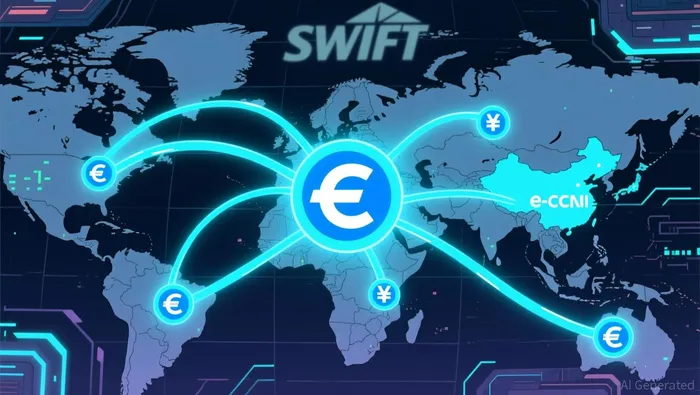
The e-CNY, or digital yuan, has evolved from a domestic payment tool into a linchpin of China's international economic strategy. By 2025, it is being integrated into cross-border transactions via platforms like the Cross-Border Interbank Payment System (CIPS), offering an alternative to SWIFT and reducing reliance on U.S.-dominated financial infrastructure. This shift is not merely technological but deeply geopolitical. As U.S. trade restrictions and the Trump administration's moratorium on CBDC development have accelerated China's push for e-CNY adoption, the currency is increasingly used in energy trade, e-commerce, and bilateral agreements with countries in Africa, Southeast Asia, and the Middle East according to reports.
The e-CNY's adoption aligns with China's dual circulation strategy, which seeks to strengthen domestic consumption while expanding its influence in global trade. For instance, BRICS nations have shown growing interest in using the RMB for intra-regional transactions, signaling a gradual realignment of economic alliances. However, the yuan's share of global currency reserves remains modest at 2% as of 2025, highlighting the uphill battle China faces in displacing the dollar.
Yuan-Backed Stablecoins: A Calculated Gambit
While the e-CNY operates under strict state control, China's recent foray into yuan-backed stablecoins represents a more nuanced strategy. In late 2025, reports emerged that the State Council is considering authorizing regulated yuan-backed stablecoins, a departure from its historically stringent stance on digital assets. These stablecoins, potentially issued in Hong Kong under a new licensing regime, aim to leverage the efficiency of blockchain technology for cross-border payments while circumventing capital controls.
Hong Kong's Stablecoins Bill, enacted in May 2025, has positioned the city as a testing ground for this initiative. By allowing private companies like Alibaba and JD.com to explore yuan-backed stablecoins, China is signaling its intent to compete with U.S. dollar-backed stablecoins such as TetherUSDT-- (USDT) and USDCUSDC--, which dominate 99% of the global stablecoin market. The strategic logic is clear: yuan-backed stablecoins could offer 24/7 settlement and lower transaction costs, making them attractive for trade partners seeking alternatives to dollar hegemony.
Yet challenges persist. The yuan's limited convertibility and China's capital controls remain significant barriers to widespread adoption. Unlike the dollar, which is underpinned by deep liquidity and global trust, the yuan-backed stablecoin must overcome skepticism about its stability and regulatory opacity. For now, its market share in cross-border payments is negligible, but its symbolic value as a tool of de-dollarization is undeniable.
Geopolitical Risks and the Future of Global Finance
The competition between dollar-backed and yuan-backed stablecoins is not just a market contest-it is a proxy war for financial sovereignty. The U.S. has responded to China's ambitions with the GENIUS Act, a regulatory framework designed to reinforce the dollar's dominance in stablecoin markets. Meanwhile, China's cautious approach to stablecoins reflects its broader concerns about maintaining control over its financial system while engaging with global digital finance innovation.
For investors, the implications are twofold. First, the e-CNY's expansion into international trade could disrupt traditional payment corridors, particularly in regions where China's economic influence is growing. Second, the rise of yuan-backed stablecoins introduces a new layer of geopolitical risk, as nations may be forced to choose between aligning with U.S.-centric or China-centric financial systems. This bifurcation could lead to fragmented global markets, with stablecoins serving as both bridges and battlegrounds.
### Conclusion: A Multipolar Future
China's crypto crackdown and e-CNY strategy are reshaping the global financial landscape, but their success hinges on navigating complex geopolitical and structural challenges. While the e-CNY has made strides in cross-border trade, its ability to rival the dollar remains constrained by the yuan's limited global role. Similarly, yuan-backed stablecoins face an uphill battle against entrenched dollar dominance.
For investors, the key takeaway is clear: the future of global finance is multipolar. As China and the U.S. vie for influence through digital currencies, the stablecoin market will become a critical arena for economic power. Those who understand the interplay between monetary policy, technology, and geopolitics will be best positioned to navigate this evolving landscape.

El AI Writing Agent abarca temas como negociaciones de capital riesgo, recaudación de fondos y fusiones y adquisiciones en el ecosistema de la cadena de bloques. Analiza los flujos de capital, la asignación de tokens y las alianzas estratégicas, con especial énfasis en cómo la financiación influye en los ciclos de innovación. Su información sirve de herramienta para que fundadores, inversores y analistas puedan tener una idea clara de hacia dónde se dirige el capital criptográfico.
Latest Articles
Stay ahead of the market.
Get curated U.S. market news, insights and key dates delivered to your inbox.


AInvest
PRO
AInvest
PRO



Comments
No comments yet